
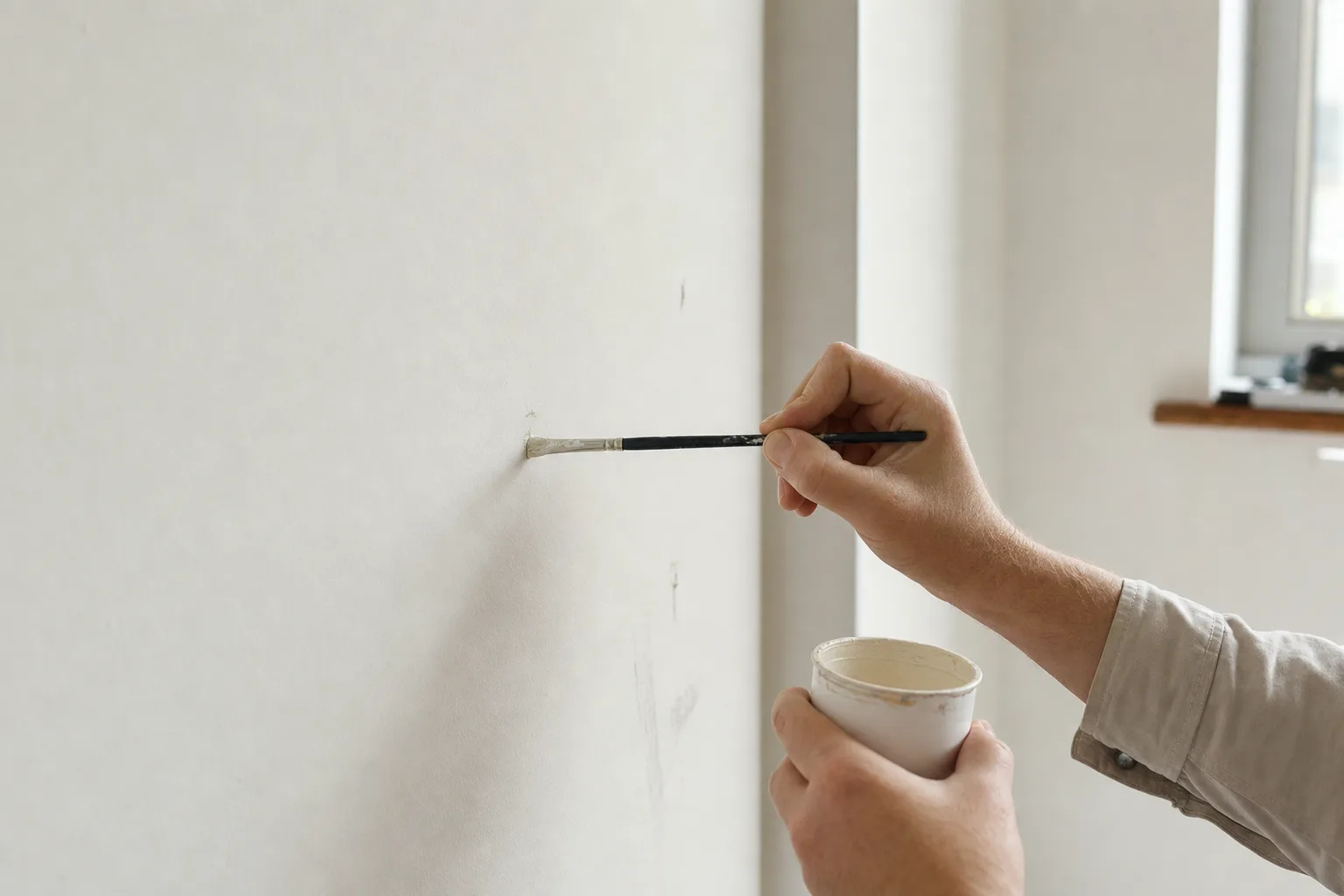
Every homeowner faces the inevitable appearance of scuffs and marks on painted walls. Shoes, furniture, and daily life can leave behind wear that makes your walls look tired. Even children and pets can add to the marks on the walls of your home over time. Instead of repainting an entire room, learning how to touch up scuff marks on walls can save time and money.
In this blog post, you’ll find a clear, step-by-step guide on when to clean, when to paint, how to match your paint, and how to apply touch-ups so they blend in—plus tips from professional interior painters for tricky surfaces like cabinets and trim.
Table of Contents
- When to Clean vs. When to Paint a Scuff
- Essential Tools and Materials
- Step-by-Step Touch-Up Process
- Advanced Techniques for Seamless Results
- Common Mistakes to Avoid
- Maintenance and Prevention Tips
- Conclusion
When should you clean a scuff vs. paint over it?
You will need to assess if you can spot clean your walls or use touch-up paint to freshen them up. How to touch up wall scuffs simply requires following a few easy steps. Before grabbing a paintbrush, take a minute to see if a simple cleaning will fix the problem. Here’s how to decide.
Simple Cleaning Methods First
- Soap and water: Gentle and safe for most painted walls.
- Baking soda paste: Mix with water and rub gently to lift marks.
- Tennis ball: Works well on rubber or shoe scuffs.
- Magic Eraser: Great for matte finishes.
- Toothpaste (non-gel): Polishes out small glossy surface marks.
When Touch-Up Paint is Necessary
When the scuff marks are set in and cannot be removed with a cleaning solution, it’s time to touch up the paint. Marks that have remained on the wall over time have a way of setting in, making them harder to remove. You will know very quickly if the marks are not coming off and when to move on to painting. You’ll need paint if:
- There are deep scratches or gouges.
- Cleaning removes any original paint.
- The scuff won’t budge no matter what you try.
RELATED: Professional Tips for How to Clean Kitchen Cabinets Before Painting Them
Essential Tools and Materials
Gathering all the material ahead of time makes any job go more smoothly. For a DIY job, having the right materials will make all the difference in getting a clean finish.
Paint Selection
- Use leftover paint from the original project if possible.
- If not, use a paint matching app or go to a local home store for a professional match.
- Match the sheen—flat, satin, or semi-gloss.
- Thin latex paint slightly (5–10% water) to help it blend better.
- Some stores will keep your paint colors on file for easy referral.
Application Tools
- High-quality angled brushes or small rollers.
- Small foam brushes and cotton swabs for precision.
- Feathering tools and touch-up pens for detail work.
- Putty knife for filling in holes.
- Dry and damp rag.
Preparation Supplies
- 120-grit sandpaper for smoothing edges and preparing the surface.
- Lightweight spackle to fill chips or indentations.
- Primer for exposed drywall to achieve a nice finish.
- Clean cloths and drop cloths to protect surroundings.
- Fan to help paint dry.
Safety Considerations
- Ventilate well by opening windows and using fans.
- Consider wearing a face mask or respirator, especially in small rooms.
Step-by-Step Touch-Up Process
For a project to run smoothly, it is important to follow simple steps. How to touch up scuff marks on walls requires preparation.
When achieving a professional paint finish (especially when doing touch-ups), it is crucial to prepare the surface for painting. Skipping a step could result in the spot not being touched up and properly prepared.
As a result, chipping and peeling could lead to having to repaint the area sooner. Now let’s walk through the exact process to fix scuffed or damaged walls.
Surface Preparation
- First, assess the damage. Are the scuffs small? You can spot-fix small areas. For larger chips or uneven paint, you may need to spackle or use filler (for larger holes).
- Begin by cleaning the area with a damp cloth.
- Wipe away dust gathered to avoid it mixing with primer or paint.
- Prime if there’s bare drywall or patched spackle.
- Load spackle on a putty knife and smear over the spot until completely full.
- Sand lightly around the area to achieve an even surface.
- Wipe off the area with a damp cloth and let dry.
Paint Application Technique
- Dip your brush lightly—don’t overload. This could lead to mess-ups and drips.
- Start in the center of the scuffed spot and work outwardly in smooth strokes.
- Use light feathering strokes to blend outward onto the surrounding wall until paint is smooth.
- Apply thin coats; allow 1–2 hours of drying between layers.
- Keep in mind: full curing may take up to 24 hours depending on humidity and paint type.
- If spackling or filler is required, allow enough time to dry before painting. Check the label for drying times.
Professional Tips
- Thin your paint slightly for better blending.
- Use the same tool used originally (brush vs. roller).
- Use a “tipping off” motion to smooth final strokes.
- Work in the same lighting as the original job to check color match.
Advanced Techniques for Seamless Results
A professional-looking paint touch-up goes further than simply applying paint on a wall. Want to paint like a pro? Aside from properly prepping the area, these tips will help you get a flawless finish.
Texture Matching
- Use the same roller nap thickness. A smaller roller allows for more control.
- Match your rolling technique.
- Use brush strokes that follow the grain of nearby paint.
Color and Sheen Considerations
- Color changes under different light, so test in both daylight and room light.
- Aged paint might not match perfectly—blend wider if needed.
- Faded or aged paint can be challenging. Always store paint in an air-conditioned space for best results.
- Make sure to mix your paint before applying it to any surface. You can mix it thoroughly yourself with a wooden paint stick or power drill mixer attached to a power drill. Finally, a local paint store can give your can a nice shake.
When to Paint Entire Wall
- If the paint is not blending and leaves a visual mismatch on the wall.
- If the paint is faded or aged and not properly matching. Paints don’t last forever.
- When painting an entire wall, use a corner-to-corner approach for a uniform appearance.
Common Mistakes to Avoid
- Don’t apply thick paint—it can cause drips and texture differences.
- Always clean and sand first to provide a good foundation for new paint and primer.
- Match your original tool (brush vs. roller)—use the painting tool you originally used to paint the area.
- Avoid working in dim lighting. Instead, try to use the same lighting used in the original job.
- Don’t use old paint that’s separated or clumpy. Using lumpy or old paint results in a bad finish.
- Don’t try to patch textured walls without the right technique. For smaller holes or dips, use spackle to repair the area. Use drywall repair for holes larger than 2 inches.
Maintenance and Prevention Tips
Prevention and maintenance go a long way to helping your walls look great! Typically, walls may need repainting every 5 years. But, there are steps you can take to keep walls looking better longer:
- Inspect your painted walls for imperfections regularly. It is easier to repair a small bump or indentation than wait until it’s bigger.
- Use bumpers or furniture pads in high-traffic areas.
- Dust your walls with a soft cloth or use the brush attachment from your vacuum cleaner.
- Wipe down walls regularly with water to prevent buildup.
- Store extra paint in a sealed container for future fixes.
- Use touch-up kits to address small issues quickly.
- Hire a professional house painter for heavy damage or textured surfaces.
Conclusion
Knowing how to touch up scuff marks on painted walls can help you maintain a clean, cared-for home. Prep carefully, apply paint with control, and blend with intention. Start small in a hidden spot to test your technique. With practice, touch-ups can look just as good as a full repaint—and save you time and money. Start with a small area to test out your skills!
If you do decide your walls need an entire repaint, here are tips about what questions to ask before hiring a professional home painter .
At Pro 1 Painters, our professional interior painters can make your walls look new and fresh again, even if you decide to repaint using the same color. Your walls will look new and your home updated. With our emphasis on customer satisfaction, we’ll make sure your walls will get the professional look they deserve.
Need more information or an estimate? Contact us today ! We love to paint, and it shows!