
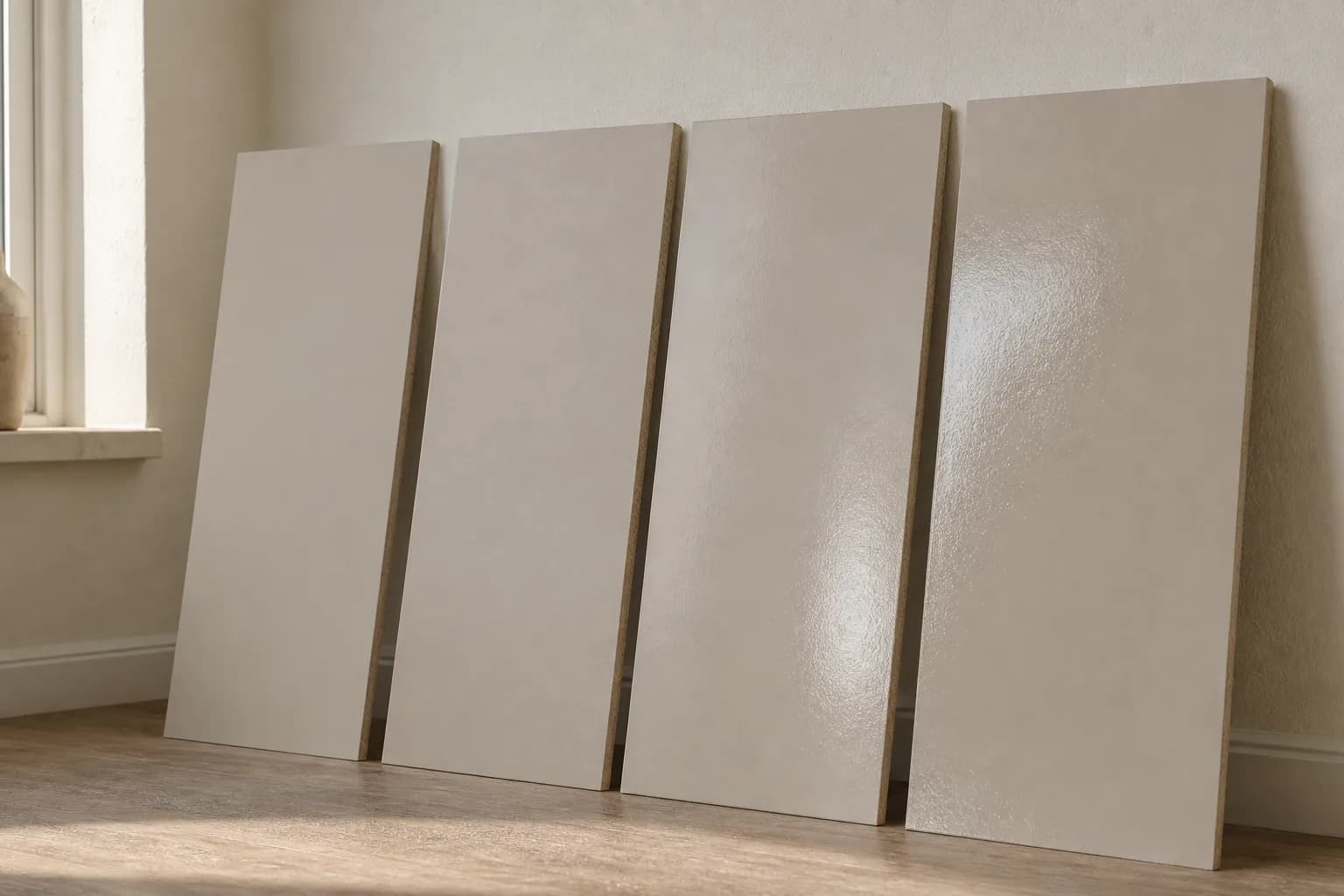
You stood in the paint aisle, picked your color, and then the can asked one more question you didn't expect: which sheen? Flat, eggshell, satin, semi-gloss. Pick wrong and the right color can still look dingy, or spotlight every dent in the hallway, or leave your trim looking soft instead of sharp. Sheen is the quiet half of a paint job, and most repaints we get called out for had the color right and the finish wrong.
This paint sheen guide walks through what flat, eggshell, satin, and semi-gloss actually are, how each one holds up, and how the Gulf Coast's humidity nudges the choice. Once you understand the trade-off behind the names, the right pick for any surface gets a lot more obvious.
What does "sheen" actually mean?
Sheen is simply how much light the dried paint reflects. Flat reflects almost none and looks matte; high-gloss reflects so much it's nearly a mirror. Everything else sits on that spectrum in between.
That one property drives two things that pull in opposite directions:
- The more sheen, the tougher and more washable the paint. Shinier finishes are harder and shed dirt, so they scrub clean instead of smearing.
- The more sheen, the more it shows flaws. Reflected light rakes across the surface and turns dents, patches, roller marks, and uneven texture into visible shadows.
So the whole decision really comes down to a balance: durability versus flaw-hiding. Once you can name that trade-off, you can reason your way to the right sheen for any wall, ceiling, or door in the house.
| Sheen | Look | Durability & cleanability | Best uses |
|---|---|---|---|
| Flat / Matte | No shine, velvety | Hides flaws best; hardest to clean | Ceilings, low-traffic adult bedrooms, formal rooms |
| Eggshell | Soft low glow | Good balance; takes a light wipe | Living rooms, bedrooms, dining rooms, most walls |
| Satin | Gentle sheen | Tougher, scrubbable | Hallways, kids' rooms, laundry, kitchens, baths |
| Semi-Gloss | Clearly shiny | Very durable, easy to scrub | Trim, doors, baseboards, cabinets, wet rooms |
| High-Gloss | Hard, reflective | Toughest; shows every flaw | Statement doors, furniture, accent trim |
Flat and eggshell: the low-sheen end
Flat has no shine at all. Because it reflects so little light, it's the best at hiding imperfections, which is exactly why it belongs on ceilings and on big, older walls that have seen a few patches. The catch is washability: flat paint is porous, so scrubbing a scuff can leave a burnished mark. Keep it where hands and grease don't reach.
Eggshell is the soft step up — a low glow, like the surface of an eggshell. It hides most minor wall flaws but takes a light wipe without burnishing, which makes it the all-around default for the rooms you actually live in. If you're unsure what to put on a living-room or bedroom wall, eggshell is the answer nine times out of ten.
Satin and semi-gloss: the workhorse end
Satin has a gentle, pearl-like sheen and a tougher surface than eggshell. This is the finish for places life is harder on the wall — hallways, stairwells, kids' rooms, laundry rooms, and kitchens — because it scrubs clean without smearing. It still shows a bit more wall texture than eggshell, so it rewards a smooth surface.
Semi-gloss is clearly shiny and very hard. It's the classic choice for trim, doors, and baseboards: the surfaces people actually touch, that need to shrug off scuffs and wipe down. The slight contrast between semi-gloss trim and eggshell walls is a big part of what makes a room look crisp and intentional. Semi-gloss also earns its keep in wet rooms, where moisture resistance matters.
High-gloss exists above all of these, but it's a specialty look — a statement front door, a piece of furniture, a dramatic accent. It's the toughest finish on the rack and the least forgiving of a rough surface, so it's almost never used on broad walls.
If you want a deeper, room-by-room breakdown of which sheen goes where inside the house, we lay it all out in our guide to the best interior paint sheen for every room.
How humidity on the coast shifts the choice
Here's where Gulf Coast homes play by slightly different rules. Our humidity keeps bathrooms, laundry rooms, and kitchens damp longer than they'd stay in a drier climate, and damp surfaces are where mildew and water marks get a foothold. A tougher, more moisture-resistant satin or semi-gloss in those rooms wipes cleaner and stands up to constant wipe-downs far better than flat. When in doubt in a wet or steamy room here, step the sheen up, not down.
The same logic carries outside. On exteriors, most siding and body paint goes on in satin or a low-luster finish rather than flat, because that bit of sheen sheds rain and dirt and resists the algae and mildew our climate loves to grow. Trim, doors, and shutters often go a notch higher still, to satin or semi-gloss, for durability and crisp definition against the body color. When you're planning the outside of your home, sheen is part of the spec, not an afterthought — our exterior painting crews choose it for the coastal climate, not just the look.
How sheen changes the way a color reads
One last thing that surprises people: sheen changes the color itself. The exact same paint looks lighter and more vivid in a higher sheen, because it bounces back more light, and softer and deeper in flat or eggshell. That's why a swatch on a brochure can mislead you — you're often seeing it at a different sheen than you'll hang on your wall.
The fix is to judge color and sheen together, in your own room's light. Before you commit, try our free AI Color Visualizer — upload a photo of your room and preview real paint colors on your own walls, so you're choosing the finished look rather than guessing from a chip. And if you'd rather have a pro narrow it down with you in person, our color consultation keeps you from repainting a color, or a finish, you regret.
The short version
Sheen is a single trade-off you make over and over: more shine means more durability but less flaw-hiding. Ceilings and forgiving walls go flat or eggshell; busy walls go satin; trim, doors, and wet rooms go semi-gloss; and on the coast you lean a notch shinier anywhere humidity lingers. Get the sheen right and a good paint job looks finished and lasts — which is the whole point.
When you're ready to plan a project and want the sheen chosen surface by surface for your home and our climate, the next step is simple: a free in-home estimate with a written quote within 24 hours. We'll handle the finish so you only have to fall in love with the color.