
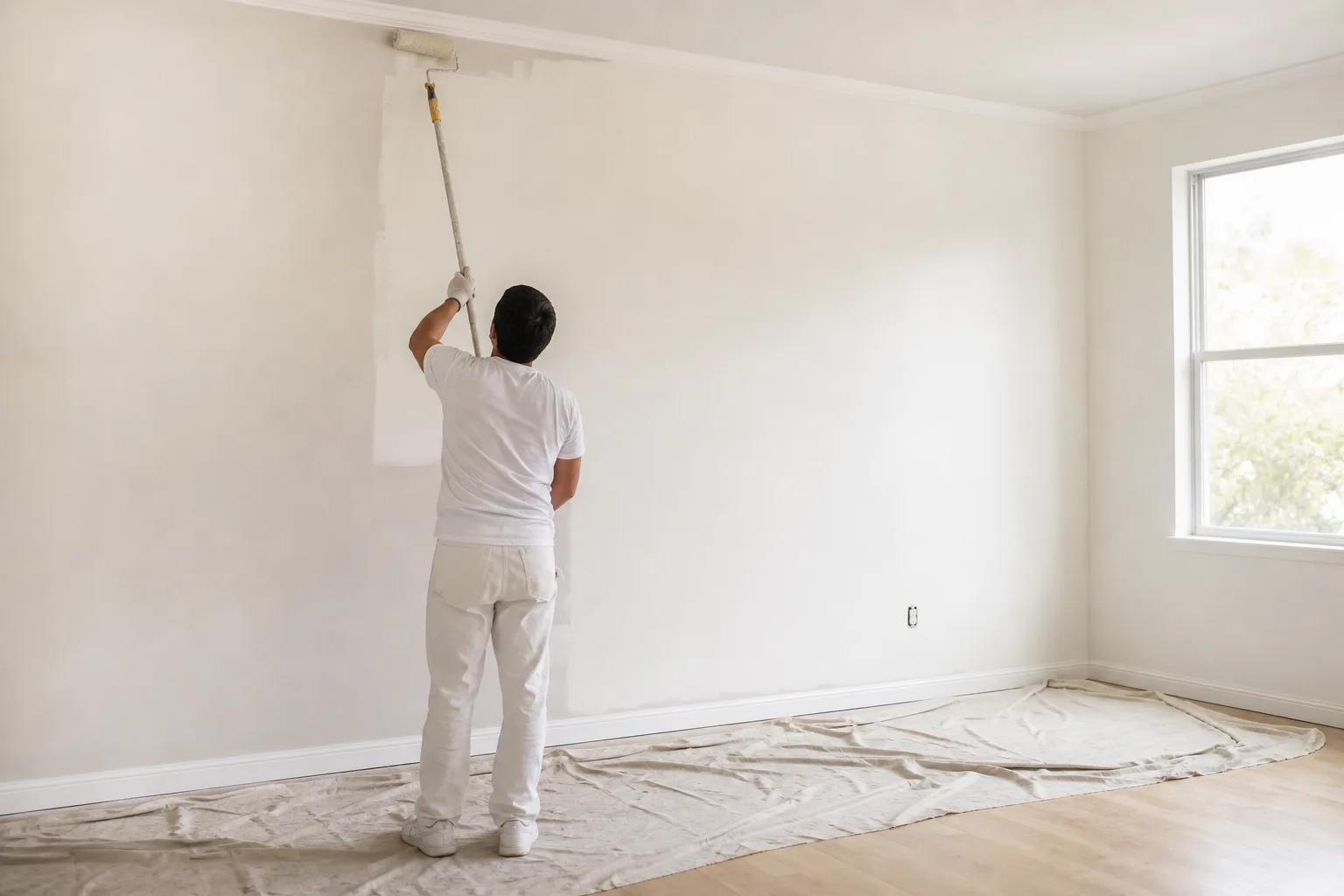
A unit goes vacant on the first, and a new lease starts on the fifteenth. In between, that apartment has to be patched, painted, dried, and showing like new — and every day it sits empty is rent you're not collecting. That's the squeeze every property manager knows, and it's exactly what apartment turnover painting is built to solve: get the unit move-in ready, fast, with a finish that survives the next tenant.
We run unit turns for apartment and multifamily properties across Mobile and Baldwin County. Here's how a turnover paint actually works, what makes it fast without cutting corners, and why the finish you choose decides how easy your next turn will be.
What "fast" really means in apartment turnover painting
Fast turnover painting isn't about rushing the brush. It's about removing the things that slow a job down: unclear scope, waiting on decisions, mismatched colors, and crews that have to re-learn the property every month. A standard vacant one- or two-bedroom is usually a one-day paint once it's empty and clean. What protects that timeline is everything around the painting — knowing the colors, knowing the schedule, and having one crew that already knows the units.
The honest version: we'd rather give you a realistic date and hit it than promise a number we can't keep. A unit with heavy patching, ceilings, or smoke damage takes longer than a light refresh, and we'll tell you which one you've got before we start.
The turnover painting process, step by step
Here's the sequence we run on a vacated unit, from the first inspection to a move-in-ready handoff.
Walk and assess the vacated unit
We inspect the empty unit room by room — scuffs, nail holes, water stains, smoke, pet damage — and decide touch-up versus full repaint for each surface, confirming colors and sheens up front.Protect and prep
We mask floors, fixtures, and hardware, fill nail holes and dings, patch drywall damage, sand smooth, and spot-prime stains and bare patches so nothing bleeds through the finish.Cut and roll the walls
We cut in edges and roll the walls with a durable, washable rental-grade finish, applying the coats needed for full, even coverage that hides the last tenant's wear.Paint trim, doors, and high-touch spots
Trim, doors, and frames get a tougher semi-gloss that wipes clean and stands up to the next tenant's everyday handling.Final inspection and move-in-ready handoff
We walk the unit, touch up any misses, pull masking, clean up, and confirm it's dry and move-in ready for the date you need it back.
That order matters. Prep is where a turnover paint is won or lost — skip the patching and spot-priming and the wall looks fine for a week, then every nail hole and stain ghosts back through. We treat prep as the job, not a step to trim when the clock is tight.
Durable finishes that make the next turn cheaper
The paint you put on at turnover decides how much work the next turnover takes. A cheap flat that marks the first week means full walls again next time. A durable, scrubbable finish that wipes clean means the next turn might only need touch-ups — which is faster and cheaper for you.
| Surface | Finish we use | Why |
|---|---|---|
| Walls | Washable eggshell or satin | Wipes clean, resists scuffs, hides wear between turns |
| Trim, doors, frames | Tougher semi-gloss | Stands up to handling and cleans easily at high-touch spots |
| Ceilings (as needed) | Flat ceiling white | Hides imperfections; refreshed when stained or dated |
| Color strategy | 1–2 standard wall colors, 1 trim | Exact touch-ups, faster turns, consistent showings |
The point of spending a little more on a durable finish is simple: it stretches the time between full repaints, so over a year of turns you do less painting, not more.
The damage that slows a turn down — and how we handle it
Most units turn quick. The ones that don't usually share the same few problems, and they're worth flagging early because they change both the timeline and the prep. Here's what we watch for when we walk a vacated unit:
- Smoke and nicotine staining. It bleeds straight through ordinary paint and carries odor, so it needs a stain-blocking primer before any color goes on — skip that and the yellowing ghosts back within weeks. This is the single most common reason a "one-day" unit becomes a two-day unit.
- Water stains. A ceiling or wall stain means moisture got in. We spot-prime the stain so it doesn't bleed through, but if it's active we'll tell you to get the leak fixed first — painting over a live leak just hides it until it comes back bigger.
- Pet damage and heavy scuffing. Scratched doors and frames, marked-up corners, and worn high-traffic walls usually mean full walls and trim rather than touch-ups. The durable semi-gloss on trim is what keeps the next tenant's pet from leaving the same marks.
- Nail holes and anchor damage. Routine on a turn — we fill, sand, and spot-prime so the patches don't flash through the finish under leasing-office lighting.
The reason we walk every unit before quoting is exactly this: a light refresh and a smoke-damaged unit are not the same job, and pretending they are is how a turnover schedule slips. We'd rather call it straight up front and hit the date.
Why does a turnover program beat one-off paints?
One-off unit paints work, but the real savings show up when turns run as a program. When we know your property, your colors, and your schedule, every turn gets faster because nothing has to be re-explained. You get one point of contact, consistent finishes across every unit, and a crew that already knows the floor plans.
Apartment turns are one slice of what we do for income properties — the bigger picture is in our commercial painting guide for Mobile and Baldwin County, and if you manage multiple buildings, our apartment and multifamily painting overview covers the whole-property approach. Setting up a standing arrangement is exactly what our property-manager painting program is for. For the finish itself, commercial painting done right is what keeps a unit looking leased-ready turn after turn.
When you're ready to get a unit — or a whole rotation of them — turning faster, reach out for a free estimate and a written quote within 24 hours. One accountable crew runs each unit from start to a final inspection, all backed by our 1-year workmanship warranty.