
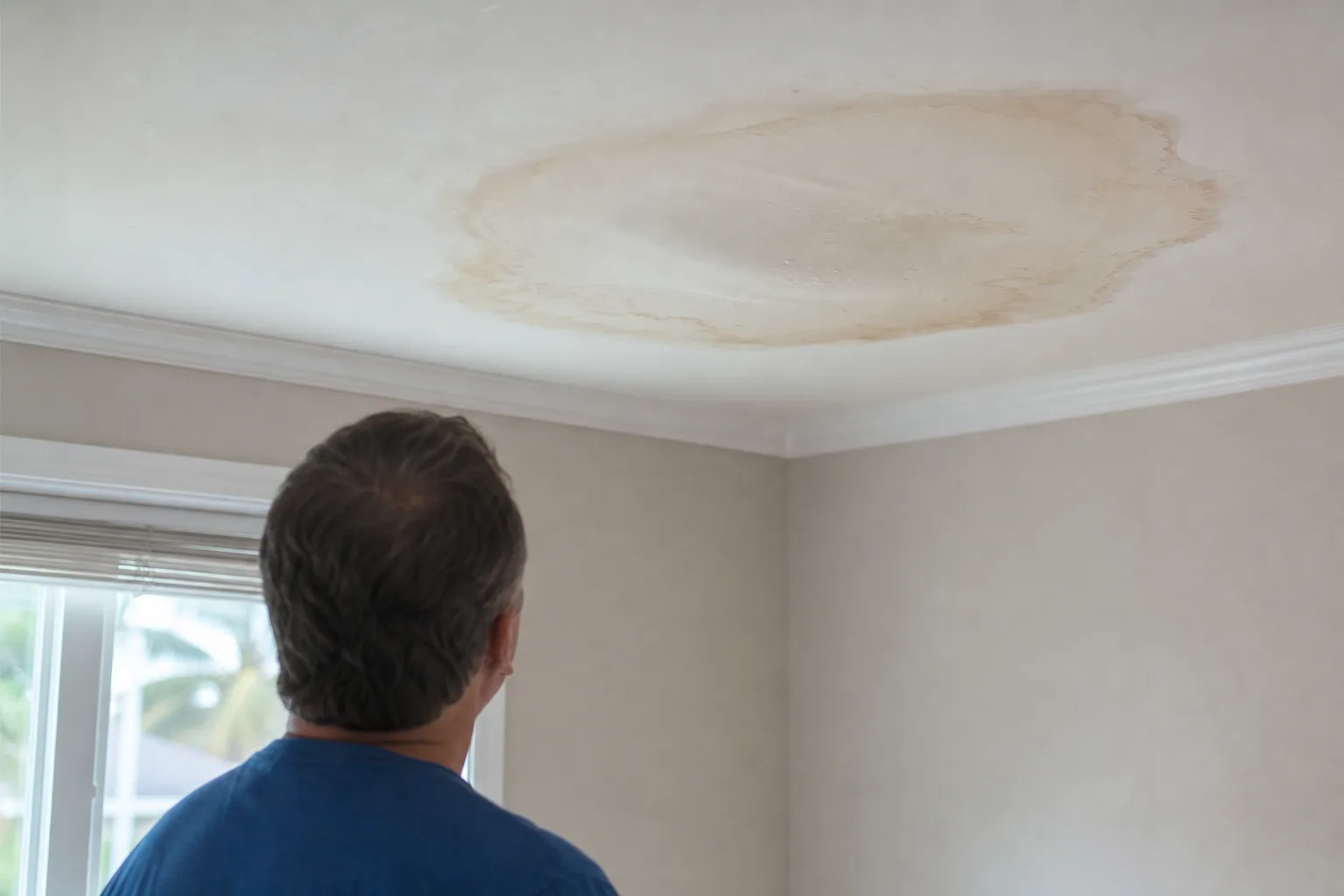
You notice it on the way to bed — a faint brown ring on the ceiling that wasn't that big last week. On the Gulf Coast, with our rain, our storm season, and the kind of August humidity that makes an AC unit sweat in the attic, ceiling water stains are one of the most common calls we get. The mark itself is ugly, but it's also a message: water is getting somewhere it shouldn't.
The good news is that most ceiling water stains are fixable, and a lot of them don't even require new drywall. The trick is reading the stain correctly — figuring out where the water came from, stopping it, and then sealing the mark so it never bleeds back through your paint. Here's how we walk a homeowner through it.
What causes ceiling water stains in Gulf Coast homes?
Answer-first: ceiling water stains almost always come from one of three sources — a roof leak, AC condensation, or a plumbing leak — and on the Gulf Coast, humidity-driven condensation is a bigger culprit than people expect.
The brown color throws people off. It's not dirt; it's dissolved minerals and the natural tannins in the drywall and framing, carried along by water and left behind as a ring when the moisture dries. The shape and location of that ring tell you a lot about where it started.
| Source | Tell-tale signs | When it usually shows up |
|---|---|---|
| Roof leak | Stain below a vent, valley, chimney, or flashing; grows after rain | During or right after heavy storms |
| AC condensation | Stain near the attic air handler or along the drain line; no rain involved | Hot, humid weather — peak Gulf Coast summer |
| Plumbing leak | Stain under a bathroom, kitchen, or laundry above; steady regardless of weather | Anytime — often slow and worsening |
| Roof or wall flashing | Stain near where the ceiling meets an exterior wall | Wind-driven rain from the coast |
On the coast, the AC condensation stain catches the most people off guard. When it's 94 degrees and humid out, the air handler in your attic and its condensate drain line are moving a lot of water. A clogged drain, a cracked pan, or a poorly insulated line that sweats can drip onto the drywall below for weeks before you ever see a ring — no storm required.
Find the source before you touch the paint
Answer-first: never paint over a ceiling water stain until you've found and fixed what's causing it — painting an active leak just hides the problem while moisture keeps damaging the drywall behind your fresh coat.
This is the single most important step, and the one most people want to skip. Start by matching the stain's location to the list above. If it sits under a roof penetration and grew after the last storm, you're looking at the roof. If it's near the attic air handler and showed up in dead-summer heat with no rain, suspect the AC. If it's under an upstairs bath, think plumbing. Get the right trade out to stop the water, then let the ceiling dry out completely — which, in our humidity, can take several days.
Stain or structural? Knowing when a primer is enough
Once the leak is dead and the ceiling is dry, press the stained area gently. A firm, dry, lightly discolored spot is good news — the drywall held up, and a stain-blocking primer plus a repaint will make it disappear. A soft, spongy, sagging, or crumbling spot means the gypsum core lost its strength, and that section has to come out rather than be sealed over. Visible mold or a musty smell is the same answer: replace, don't cover.
This post is about diagnosing the stain and blocking it on sound drywall. If your ceiling is sagging or soft and you're trying to decide whether it has to be cut out and rebuilt, we cover that exact call in how to fix a water-damaged ceiling and when to cut it out. And if there's any sign of growth up there, read how we handle mold and mildew before painting so it isn't sealed in.
How to fix a ceiling water stain so it disappears
Answer-first: to make a ceiling stain vanish for good, fix the source, let it dry, seal the mark with an oil- or shellac-based stain blocker, then repaint the whole ceiling — never just the spot.
Find and fix the source
Trace the stain to a roof leak, AC condensation, or plumbing, and stop the water. This is non-negotiable — everything after assumes the leak is genuinely dead.Let it dry completely
Give the drywall days to dry out in our humidity. A stain blocker over damp drywall fails, and trapped moisture grows mold.Confirm the drywall is sound
Press the area. Firm and dry means seal and paint. Soft, sagging, crumbling, or moldy means cut that section out and replace it.Seal with a stain blocker
Hit the stain with an oil- or shellac-based stain-blocking primer. Water-based paint alone lets the brown ring bleed right back through.Repaint corner to corner
Match any texture on a repair, then repaint the entire ceiling — not just the patch — so it blends invisibly under raking light.
Two details decide whether the repair truly disappears. First, use a real stain blocker — oil- or shellac-based. Ordinary water-based ceiling paint won't hold back a water stain; the tannins bleed straight through within days. Second, paint the whole ceiling, not just the patch. Ceilings show every difference in sheen and shade under raking light, so a spot-painted fix almost always flashes. If the ceiling is textured, the patch has to be re-textured to match knockdown, orange peel, or popcorn before painting — that's its own skill, and getting it wrong is as obvious as the stain was. Our drywall texture matching guide covers how we blend a repair into the surrounding texture so it disappears.
Get your ceiling stain handled right
A ceiling water stain comes down to two honest questions: where's the water coming from, and is the drywall still sound? Answer those and the rest is straightforward — stop the leak, let it dry, seal a sound stain with the right primer, replace drywall that's failed, and repaint the whole ceiling so nothing gives the repair away.
Family-owned since 2013, we handle the full job — finding what the stain is telling us, drywall repair where it's needed, texture matching, stain-blocking, and a clean repaint — with one accountable crew from the free estimate through the final inspection, a manager sign-off before final payment, and a 3-year workmanship warranty behind our 4.8-star reputation. If there's a brown ring spreading on your ceiling, book a free in-home estimate for drywall repair and painting and we'll send a written quote within 24 hours. Pay by Cash, Check, or Credit Card.