
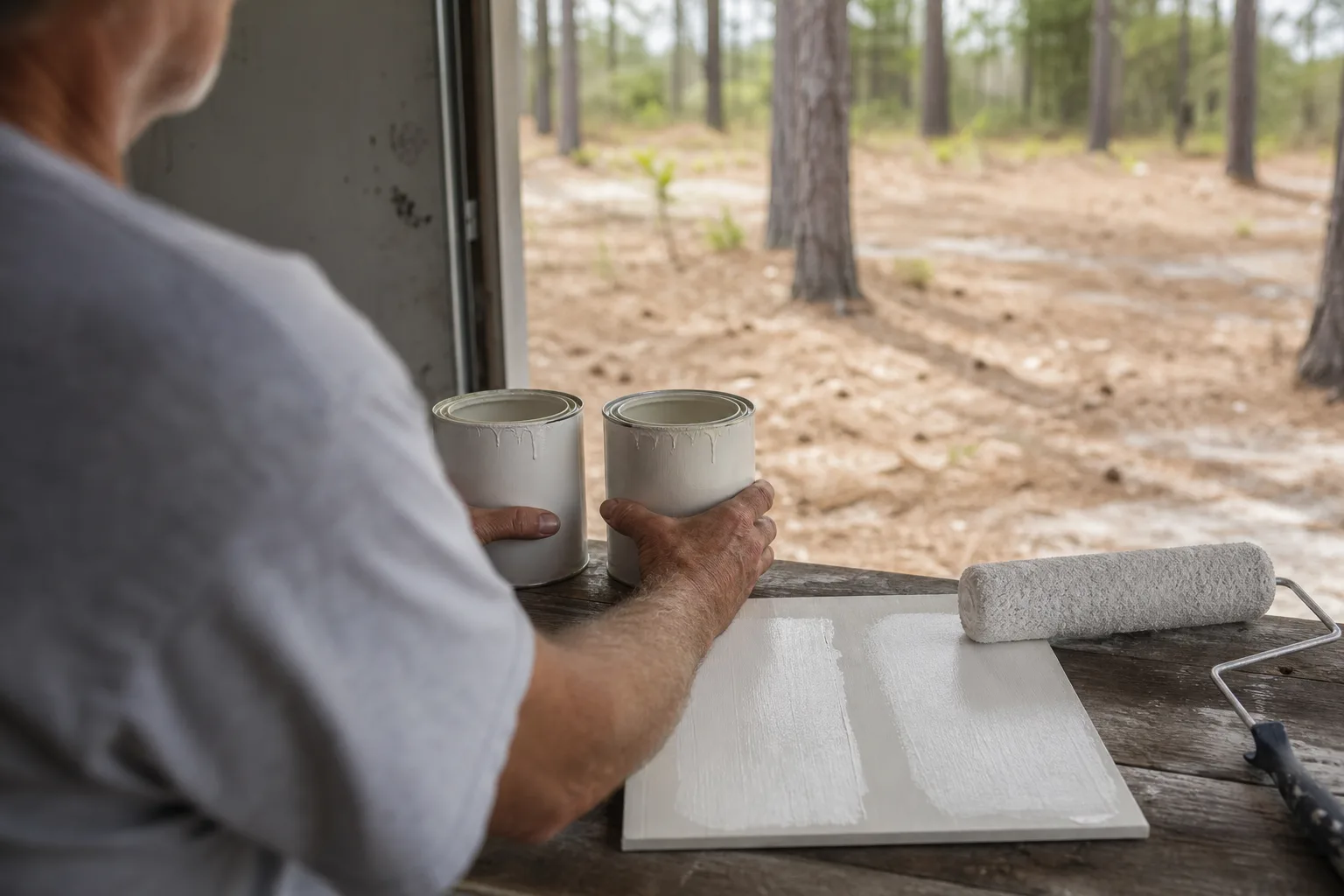
Stand in the paint aisle and the price spread is hard to ignore — the same color can run twenty-something dollars a gallon on one shelf and north of seventy on another. So the question every homeowner eventually asks is the honest one: does expensive paint actually last longer, or are you just paying for the label? The real answer is more useful than a flat yes or no. Premium paint usually does last longer — but only up to a point, and only when the surface underneath earns it.
Here's what your money is actually buying inside that can, where the price genuinely pays off, and where you're past the point of getting your dollar back. We'll do it straight, because we buy paint every week and we'd rather you spend smart than spend big.
Does expensive paint last longer? Yes — but only to a point
Answer-first: stepping up in price buys real durability, right up until it doesn't. The difference between a cheap builder-grade paint and a quality mid or premium line is significant — better adhesion, richer color, more years on the wall. The difference between a premium line and the most expensive ultra-premium can is much smaller, and on most homes you won't see it. So "expensive lasts longer" is true at the bottom of the range and barely true at the top.
Think of it as a curve, not a straight line. The first chunk of money you spend moving off the bargain shelf buys a lot of quality. The last chunk, chasing the priciest can on the wall, buys a little. The smart spend lands in the middle — and then puts the leftover toward prep, which is what actually decides how long any paint lasts.
What you're actually paying for inside the can
To know whether a pricier paint is worth it, you have to know what the price represents. It's not the color — color is cheap. It's three ingredients, and better versions of each cost more and last longer.
| What's in the can | What it does | Why pricier = better |
|---|---|---|
| Resin (binder) | The glue that holds the paint film together and bonds it to the wall | Higher-grade 100% acrylic resins flex through heat and humidity and resist cracking, fading, and chalking far longer |
| Pigment | Gives the paint its color and its hiding power | More and finer pigment means richer color and better coverage — often one less coat |
| Solids content | The share of the can that stays on the wall after it dries | A higher solids percentage leaves a thicker, more durable film instead of a thin, watery one |
| Additives | Mildewcides, UV blockers, leveling agents | Premium lines carry more of these — which matters a lot on a humid, sunny coast |
This is why two gallons of the same color can perform so differently. The bargain can stretches a little pigment and a lot of water; it covers thin, fades sooner, and often needs a third coat that quietly erases the savings. The quality can carries more pigment and solids, so it covers in fewer coats and holds up for years longer. That's the durability you're paying for — not the marketing.
Where premium pays off on the Gulf Coast — and where it doesn't
This is where local reality changes the math. On the Gulf Coast, the case for premium paint is strongest outside. Our exteriors fight salt air, heavy humidity, mildew, and punishing UV all at once, and the better resins and additives in a premium exterior line are built to answer exactly those threats. Here, a top-tier exterior paint genuinely buys you years of extra life before the next repaint — and fewer repaints is real money. We make the full case for that in our guide to the best exterior paint for Gulf Coast homes.
Inside is a softer call. Interior paint lives an easier life — no sun, no salt, no weather — so the durability gap between tiers matters less. That said, premium interior paint still earns its keep in a different way: it scrubs cleaner, touches up more invisibly, and covers in fewer coats, which is worth a lot in a busy hallway, a kid's room, or a kitchen. For a guest-room ceiling or a closet nobody touches, a solid mid-grade line is plenty. Match the tier to how hard the surface actually gets used.
The factor that beats any price tag: prep
Here's the part that reframes the whole question. The single biggest driver of how long a paint job lasts isn't the can — it's the surface under it. The most expensive paint on the wall, brushed over a dirty, glossy, or unsound surface, will fail fast. A mid-premium paint over a properly cleaned, sanded, and primed surface will outlast it every time.
We tell homeowners the same thing on every job: prep is about 80% of a paint job that lasts. So if you're deciding where to put your budget, the order is clear — buy real prep first, a quality paint second, and don't lose sleep over skipping the ultra-premium can. A careful crew with a good gallon beats a rushed one with a great gallon. That's also why two quotes for "the same job" can differ so much; our guide to hiring a painter in Mobile and Baldwin County shows how to tell a bid that includes real prep from one that just leans on expensive paint.
So is premium paint worth it?
For most homes, the answer is yes — get off builder-grade paint and onto a quality line — but no, you usually don't need the most expensive can on the shelf. The sweet spot is a good-to-premium product matched to the surface, applied over honest prep. Spend there, and put the money you'd have wasted chasing the priciest tier into the preparation that actually makes paint last.
If you're still weighing specific options, our advice is simple: reach for a premium Sherwin-Williams line — Emerald or Duration for walls and exteriors, Emerald Urethane Trim Enamel for trim and cabinets — and put the rest of your budget into prep, because at the premium tier the surface underneath matters more than the label. And whether the job is interior painting or exterior painting, that's exactly how we approach it: the right paint for each surface, obsessive prep underneath, one accountable crew from your free estimate through the final inspection, all backed by our 3-year workmanship warranty. Family-owned and serving the Gulf Coast since 2013. When you're ready, we'll come out for a free in-home estimate with a written quote within 24 hours.