
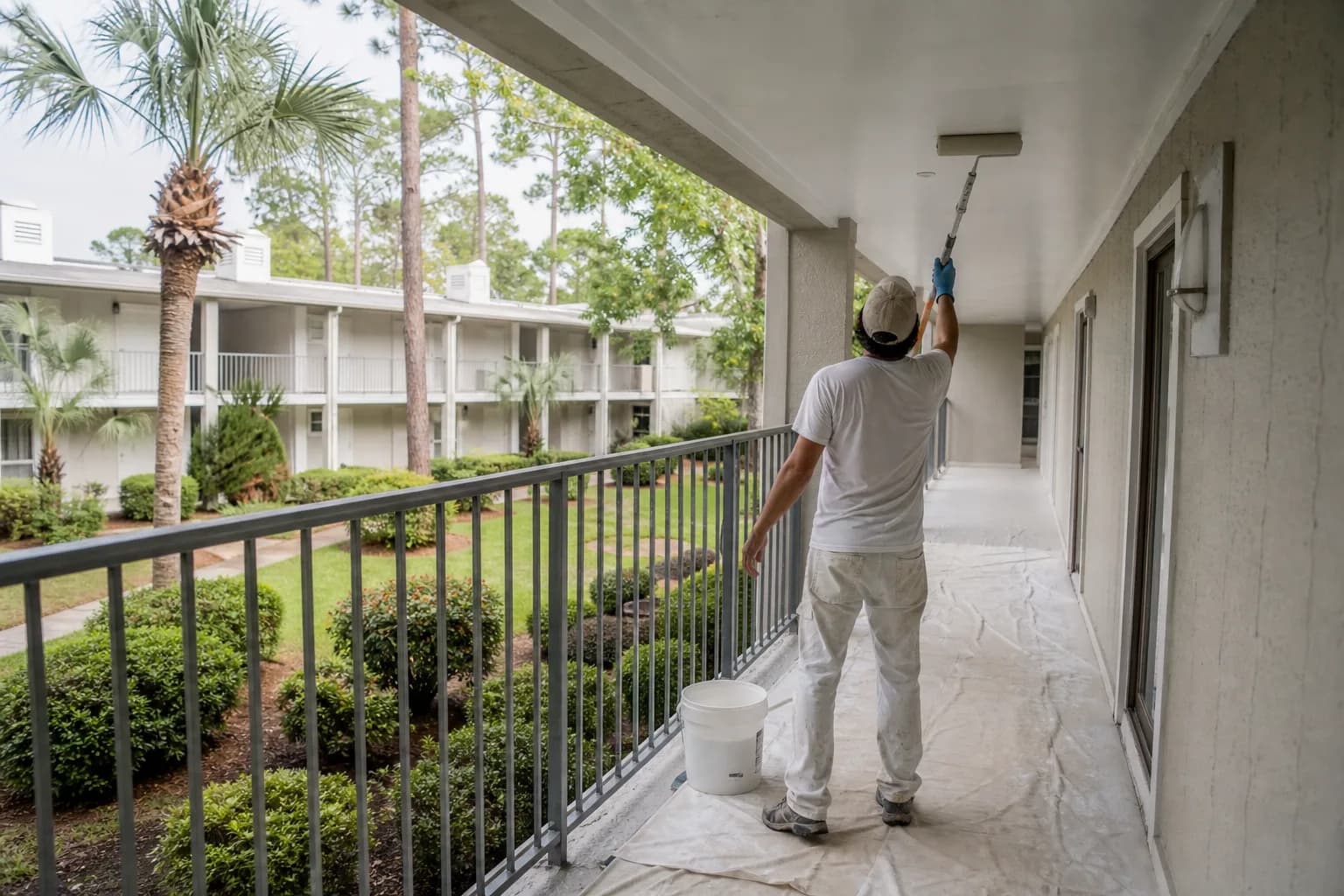
A condo board's reputation is hanging in the breezeway. Peeling railings, a scuffed lobby, a clubhouse that hasn't been touched in a decade — owners notice, buyers notice, and the next board meeting hears about it. HOA and condo common-area painting on the Gulf Coast is one of the most visible things an association can fund, and it's work we handle across Mobile and Baldwin County for boards and property managers who need it done without drama.
Common-area work is its own animal. You're not painting one owner's unit — you're painting the parts everyone shares, on a property where a board has to approve the spend and residents have to keep getting to their front doors the whole time. That changes how the job has to be planned, and it's where we focus.
What counts as a common area, versus a unit?
Answer first: when we talk HOA and condo work, we mean the shared spaces the association is responsible for — not the inside of anyone's unit. Those are different jobs with different rules. For interior unit turnovers and rental-grade work, our guide to apartment and multifamily painting is the better fit. This is about the spaces the board owns.
| Common area | What we paint |
|---|---|
| Breezeways & walkways | Ceilings, walls, railings, support columns, exposed trim |
| Lobbies & entries | Walls, ceilings, doors, accent walls, mailroom areas |
| Stairwells & corridors | Walls, handrails, risers, doors, high traffic-zone touch-ups |
| Clubhouses & amenities | Interiors, fitness and gathering rooms, restrooms, pool buildings |
| Shared exteriors | Building facades, soffits, fences, gates, signage structures |
Working with the board, not around it
The hardest part of an HOA or condo job usually isn't the painting — it's the approval. Boards have to vote, budgets have to be presented, and a vague verbal "it'll be a few thousand" doesn't survive a meeting.
So we work the way boards actually decide. We walk the common areas with the board or your property manager, then put the full scope and a written quote in writing within 24 hours — itemized clearly enough to drop straight into a meeting packet. You see exactly what's included: which surfaces, what prep, the access required, the schedule, and the colors. Through the job, you get one accountable point of contact, so updates and questions don't bounce around. That's what makes a common-area project something a board can approve, budget, and stand behind.
Keeping residents moving while we work
Breezeways and stairwells aren't optional — they're how people get home. So we never shut a community down to paint it. We phase the work building by building or wing by wing, keep paths and entries open, post the day's work areas so residents know where to walk, and clean up every evening so the property stays presentable.
Walk it with the board
Tour the breezeways, lobbies, stairwells, clubhouse, and shared exteriors with the board or property manager, then send a written quote within 24 hours.Put the scope in writing
An itemized quote the board can present and vote on — surfaces, prep, access, schedule, and color all spelled out.Notify residents and phase the work
Coordinate timing, post the day's areas, and work building by building so residents keep access throughout.Prep and paint for the coast
Clean, scrape, treat rust and soft wood, prime bare spots, then apply durable, moisture-tolerant finishes matched to each surface.Inspect and hand off to the board
A manager inspects the finished common areas against the scope before final payment, so the board signs off on completed work.
Salt air is the budget killer if you ignore it
Here's the thing boards underestimate: on the Gulf Coast, the climate decides how long a common-area paint job lasts. Salt-tinged air, high humidity, and relentless sun are brutal on exposed surfaces — breezeway railings, exterior facades, soffits, and stair components take the worst of it. A job that skips prep to save money up front peels in a couple of seasons and lands right back on the agenda, costing the association twice.
We don't cut that corner. On exterior and exposed common areas we pressure-wash, scrape to a sound edge, treat rust and soft wood, and prime bare material before any finish goes on. Then we use durable, moisture-tolerant products built for coastal exposure, and we time exterior work around the weather so a fresh coat actually cures and holds. For a beachfront high-rise specifically, the exposure is even more extreme — our guide to beach condo tower painting in Gulf Shores and Orange Beach covers what salt does to a tower and how we plan for it.
Inside the common areas, durability is still the goal. Lobbies, corridors, stairwells, and clubhouses see constant traffic, so they get scrubbable wall finishes and tough enamel on doors, handrails, and trim that hold up to daily use and cleaning.
A predictable partner for your association
Boards change, but the property's upkeep can't lapse every time. That's why a lot of associations move to a scheduled refresh cycle instead of letting everything wear out at once — and why one consistent, accountable painter matters. Every common-area job we run comes with a free walk of the property, a written quote within 24 hours, one accountable crew and point of contact from that first visit through the final inspection, a manager sign-off before final payment, and a 1-year workmanship warranty. We're family-owned, we've worked across Mobile and Baldwin County since 2013, and we hold a 4.8-star rating on Google.
For the full scope of what we cover, see our commercial painting service page, or step back to our commercial painting in Mobile and Baldwin County guide for the bigger picture. When your board is ready, reach out for a free estimate and we'll deliver an itemized written quote within 24 hours — something you can take straight to the next meeting. Pay by Cash, Check, or Credit Card.