
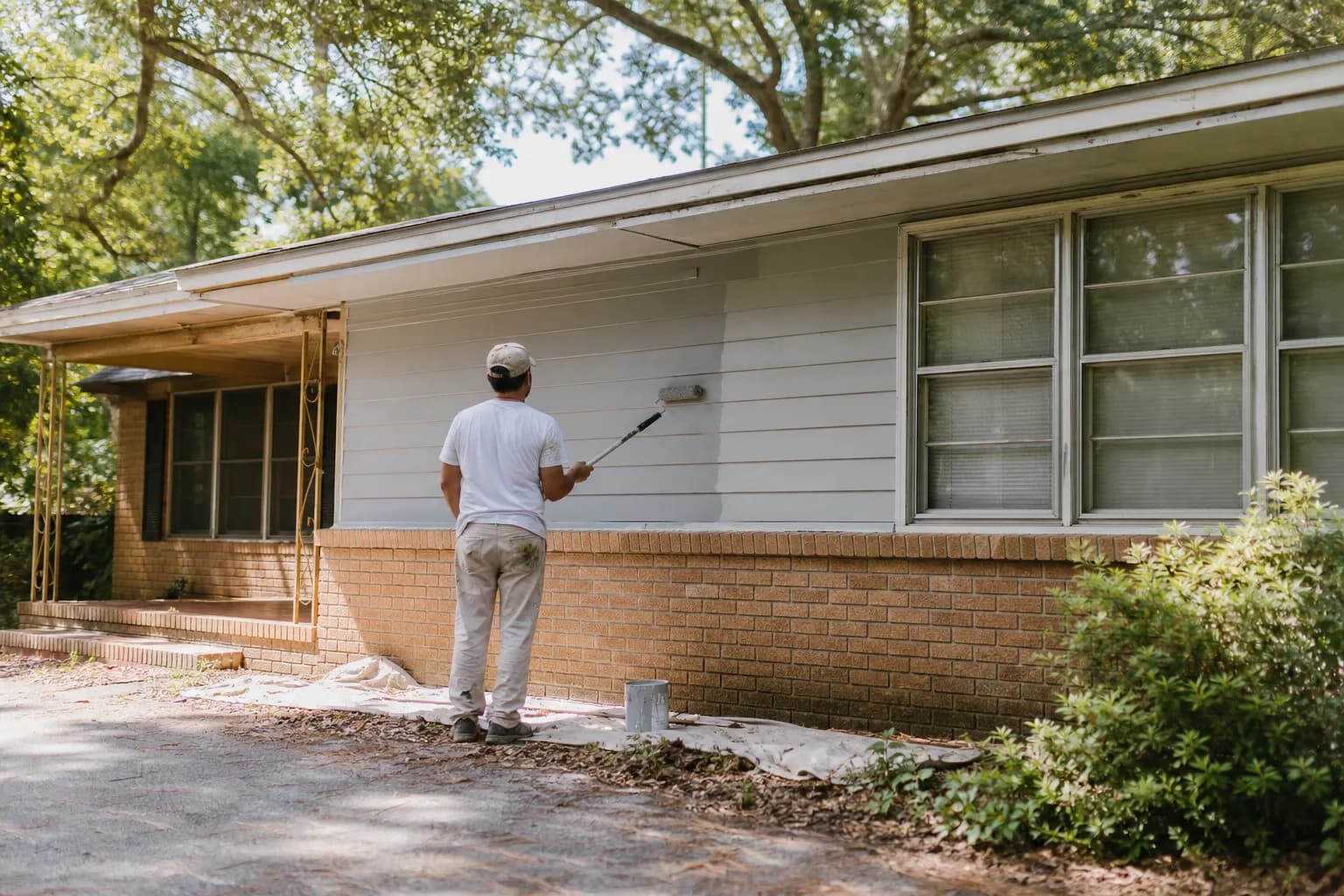
Drive the streets off Stanton Road and Cody Road and you can read Toulminville's history in its houses. This is one of Mobile's older African-American neighborhoods, and most of what lines its blocks went up in the decades after World War II — modest frame cottages, small brick ranches, and the low, horizontal mid-century homes that defined the era. Many sit under live oaks and pines that have had sixty or seventy years to grow, throwing the kind of deep shade that keeps a north wall damp long after the rest of the house has dried.
Painting a house here means working with all of that: older wood, post-war detailing, and a tree canopy that the Gulf climate turns into a moisture problem.
We're a family-owned crew based right here in Mobile, minutes from Toulminville, and these are exactly the homes we repaint week in and week out. Here's how we approach house painting in Toulminville — the housing stock, what the shade and the bay climate do to it, and the prep that makes a coat last on a home this age.
What are we really painting in Toulminville?
Toulminville house painting starts with the home's age. Across Mobile the median home is roughly 49 years old — built around 1973 — and much of Toulminville skews older still, into the post-war years. Sitting in North Mobile near Africatown (Plateau), it holds onto its original housing the way the older blocks of Midtown and Oakleigh Garden do, while the newer subdivisions out toward West Mobile lean younger. That tells you what you're standing in front of before you ever get out of the truck: original or near-original wood trim, eaves and fascia that have weathered decades of humidity, and brick ranches whose mortar and painted surfaces have their own history.
That mix changes the job block to block. A frame cottage is mostly about the wood — the siding, the window casings, the porch posts — while a brick ranch is a different conversation about cleaning, masonry, and whether you're refreshing the trim or painting the brick itself.
| Toulminville home type | What it usually is | Where the work goes |
|---|---|---|
| Post-war frame cottage | 1940s–50s wood siding, small footprint | Wood prep — scrape, spot-prime, caulk, repair soft trim |
| Brick ranch | 1950s–60s low brick home | Clean masonry, paint trim and eaves, or paint the brick with a breathable system |
| Mid-century ranch | Longer, low-slung home with wide eaves | Wide fascia and soffits, big trim runs, often deep shade |
| Updated/flipped home | Newer siding or additions | Match the newer surfaces to the original, even color across both |
The point isn't the labels. It's that a quote built for a flat-walled new build doesn't fit these homes — the value is in the trim, the eaves, and the prep, which is where an older Toulminville house either gets a finish that lasts or one that peels by the next storm season.
Why shade and the bay climate decide the prep
Here's the part that catches people off guard. Toulminville's mature tree canopy is one of its best features and one of the hardest things on exterior paint. Sitting just inland of Mobile Bay, the neighborhood gets the full load of Gulf Coast humidity; Mobile averages about 52 inches of rain a year — wetter than Seattle — and a wall that stays shaded never gets the sun that would dry it out between rains. Constant damp on shaded wood and north-facing eaves is where mildew takes hold and where paint loses its grip first.
So on a shaded Toulminville home we spend our time where the moisture lives: washing off the mildew and chalk, scraping failing paint to a sound edge, treating and priming any soft wood at the fascia and trim, and sealing the joints where wind-driven rain works into the wall. That prep is most of the job. As we tell every homeowner, prep is 80% of a paint job that lasts — the brand on the can is a distant second.
Painting a brick ranch the right way
A lot of Toulminville's ranches are brick, and painting brick a fresh color is one of the biggest-impact updates you can make to a mid-century home. But brick isn't siding. Historic and older masonry was built to let water vapor move through and escape, so the wall has to be cleaned properly, any failing mortar addressed, and a breathable masonry system used. Seal an old brick wall under the wrong tight coating and you can trap moisture inside, where it pushes the new paint right back off. Done correctly, painted brick reads clean and holds for years; done wrong, it bubbles by the next humid summer.
Lead-safe prep on Toulminville's older homes
Two homes can look alike on a Toulminville block and need very different prep, and age is the tell. Any home built before 1978 can carry lead-based paint, and a lot of Toulminville's post-war cottages predate that ban. On those homes we assume lead is present until testing proves otherwise — because dry-scraping or power-sanding old paint without containment throws lead dust across your yard and into the house. The careful way is to test, contain the work area, capture the debris, and clean up to a verifiable standard.
Where original wood has gone soft at the fascia, a corner board, or a porch post, paint won't bring it back — it gets repaired or replaced first. Our carpentry crew handles that wood repair so the painting and the rebuild happen together, instead of you coordinating two trades on one old house.
House painting in Toulminville, done for the long haul
A post-war cottage or a brick ranch in Toulminville is worth doing right. Read the home's age, give the shaded and north walls the prep they need, treat brick as the breathing masonry it is, handle older paint lead-safe, and you get a finish that stands up to Mobile's rain and humidity for years instead of seasons.
Pro 1 Painters has been a family-owned Mobile crew since 2013. One accountable crew runs your project from the free estimate to the final inspection, a manager signs off before final payment, and it's all backed by our 3-year workmanship warranty. If you're in Toulminville — or anywhere in Mobile — start with our house painters page, see our exterior painting work, or read the wider Mobile neighborhood painting guide. Then schedule a free in-home estimate and we'll have a written quote to you within 24 hours.