
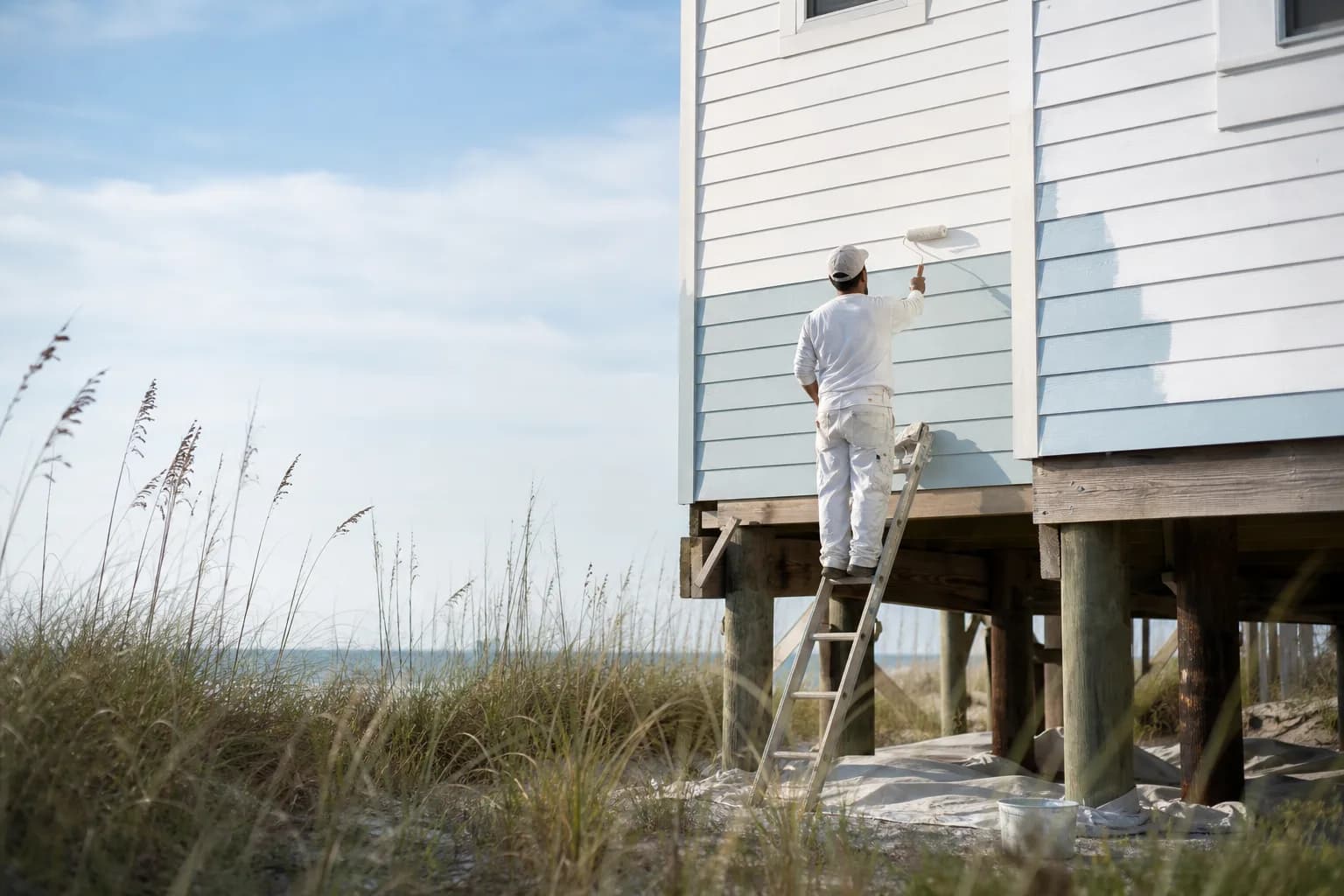
Salt air doesn't care what the paint can promises. Stand on a Gulf-front deck in Gulf Shores and you can feel the mist coming off the water — and that same mist is settling on your siding every single day, working at the finish long before the color looks tired. That's why "how often should you repaint a coastal home in Baldwin County" doesn't have one answer. It has three, and which one is yours comes down to a single thing: how close you live to salt water.
A house right on the Gulf, a house on Mobile Bay, and a house three miles inland from either are living in three different climates as far as paint is concerned. Here's how the repaint cycle actually breaks down across Baldwin County, and how to read the signs before the finish fails.
How often to repaint by exposure tier
Forget a flat number. The honest way to think about a coastal repaint schedule is by exposure — how much salt and sun your specific home takes. We see three tiers across the county.
| Where your home sits | Typical repaint cycle | What's driving it |
|---|---|---|
| Gulf-front / immediate beach (Gulf Shores, Orange Beach, Fort Morgan, Perdido) | 3–5 years | Direct salt spray off the water every day, plus the hardest UV in the county |
| Bayfront / bluff (Fairhope, Daphne, Montrose, Point Clear) | 5–7 years | Salt-laden bay air and humidity, but a step back from open-Gulf spray |
| Inland Eastern Shore (Spanish Fort, Loxley, Robertsdale, a few miles back) | 7–9 years | Heat and humidity, far less airborne salt — closer to a normal coastal cycle |
The pattern is simple once you see it: the closer the salt, the shorter the clock. A finish that would comfortably run eight years on an inland lot can be chalking and letting go in three to five right on a Gulf-front street. That's not a paint-quality problem — it's the environment doing exactly what salt and sun do.
Tier 1: Gulf-front and beach homes — every 3 to 5 years
Right on the water is the harshest place to keep paint in the whole county. Two things stack up here. First, salt: onshore wind carries a fine salt mist inland off the Gulf, and it lands on your siding, your trim, and every exposed nail and railing. Salt holds moisture against the surface and accelerates both paint breakdown and rust. Second, sun: there's no shade out on the dunes, and the UV is relentless — Gulf Shores averages July highs near 89°F and runs hot for a long stretch of the year, baking the resins that hold the finish together.
There's a structural wrinkle here too. A lot of the beach is in FEMA flood zone AE, with a base flood elevation around 9 feet, so homes are built up on pilings and raised foundations. That's smart for storm surge, but it exposes a lot more wood — the underside, the posts, the stairs, the decking — to salt and wind-driven rain coming from every direction. Those surfaces almost always need attention before the main walls do. This is the reality from West Beach out to the Fort Morgan peninsula, and in the elevated homes around Craft Farms and Kiva Dunes that sit a little back but still breathe the same Gulf Coast salt air.
If your home is right on the beach, the deep dive lives in our Gulf-front coastal painting and salt-air durability guide, and the specifics of beachfront work are in our Gulf Shores beach home and condo painting guide.
Tier 2: Bayfront and bluff homes — every 5 to 7 years
Homes along Mobile Bay — Fairhope, Daphne, Montrose, Point Clear — sit on the bay and the bluff, not the open Gulf. That's a real difference for paint. There's still salt in the air and plenty of humidity, but a bayfront home isn't taking the same direct, wind-driven Gulf spray a beach house gets. The result is a middle cycle: most bayfront and near-bay homes here land around five to seven years.
The water-facing elevation is still the one to watch. It catches the most moisture and salt off the bay, and on a west-facing bay lot it's also taking the hard afternoon sun — so that wall tends to be first to fade and chalk. We see plenty of bay homes where the water side is ready a full cycle before the street side.
Tier 3: Inland Eastern Shore homes — every 7 to 9 years
Move a few miles back from the water — Spanish Fort, Loxley, Robertsdale, the inland subdivisions — and the salt load drops off sharply. These homes still live with Gulf-Coast heat and humidity, but without the daily salt mist, the finish behaves much closer to a normal coastal cycle: roughly seven to nine years for a well-prepped exterior. Here, sun exposure and siding type usually matter more than proximity to water, since the salt simply isn't reaching this far inland in any real quantity. For how the whole region's cycle compares coast-to-inland, see our exterior paint lifespan guide for Mobile vs. inland.
The signs you're due — read them once a year
Whatever tier you're in, you don't have to wait for peeling paint to know you're close. On the coast these signals just show up faster, so a quick once-a-year look keeps you ahead of real damage:
- Chalking. Wipe a hand down a sunny wall. Dusty residue means the finish is breaking down.
- Fading on the water side. Compare the water-facing wall to a sheltered one. A clear color gap means the exposed side is near the end of its life.
- Rust bleed. Streaks at nail heads, railings, or fixtures are salt working on metal — a coastal tell that the protective film is wearing thin.
- Caulk pulling away. Gaps opening at trim and corners let salt and moisture into the seams long before the field coat looks bad.
- Bare or peeling spots. Any exposed wood is an open door for moisture — address it before it spreads.
Catch the job at this stage and it's a straightforward repaint. Wait until the wood is exposed and weathered, and you're usually paying for repairs on top of paint.
Why prep is what actually buys you the long end
Here's the part that decides everything: two homes on the same Gulf-front street, same age, same builder — one looks sharp at year five, one's failing at year three. The difference is almost never the paint. It's prep. Salt and chalk left on the surface keep a new finish from bonding, and it'll let go fast no matter how good the product is. A surface that's washed clean of salt, scraped to a sound edge, with soft wood treated and bare spots primed, holds the finish for years.
Does a shorter repaint cycle mean the paint was bad?
Usually not. On a Gulf-front home, a three-to-five-year cycle isn't a sign the last job used cheap paint — it's the salt and UV doing exactly what they do to any finish out on the water. The product still matters: a coating built for salt air and humidity will hold toward the long end of your tier's range, while a bargain can gives out early no matter where the house sits. We dig into which finishes actually last out here in our guide to the best exterior paint for salt air and humidity. But on the immediate coast, even the best system is on a clock — the goal is to reach the top of your range, not to beat physics.
The bottom line on repainting a coastal Baldwin County home
Your repaint clock is set by salt. Plan on every three to five years if you're Gulf-front, five to seven if you're on the bay, and seven to nine if you're a few miles inland — with the water-facing and sun-beaten walls often ready a cycle sooner than the rest. The surest way to know where your home stands is to have someone who works this coast every week look at your actual siding. We'll come out for a free in-home estimate across Gulf Shores and Baldwin County, tell you straight whether you're due, and put a written quote in your hands within 24 hours — backed by our 3-year workmanship warranty. Explore our exterior painting service to see how we make a coastal finish last.