
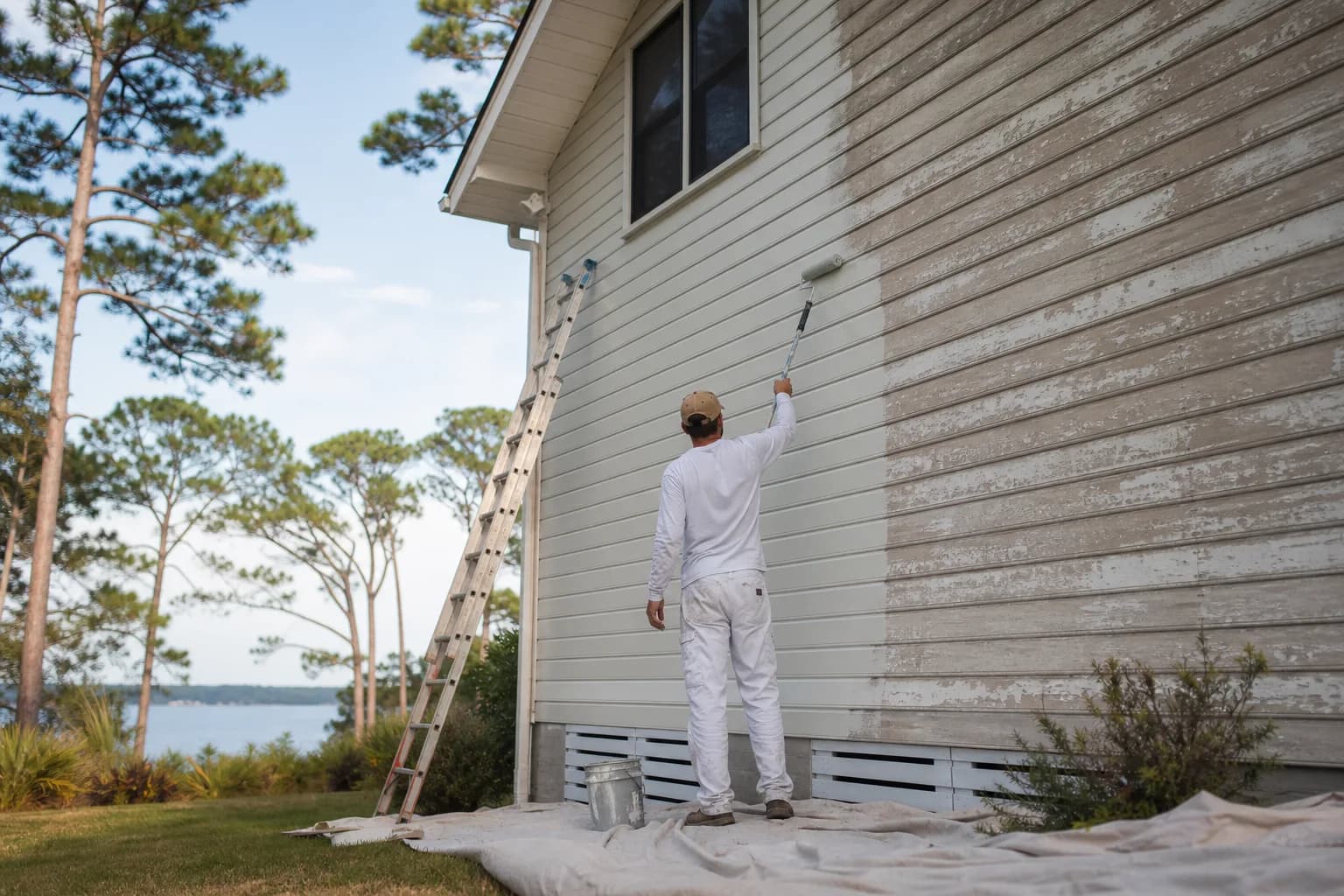
Here's the honest answer most painters dodge: on the Gulf Coast, you'll repaint your house exterior more often than the back of the paint can promises. Those "lasts up to 25 years" numbers are written for mild, dry climates — not for a place where salt air drifts in off the water, the humidity barely lets up, and the summer sun bakes a south-facing wall day after day. So how often should you repaint a house exterior here? For most homes in Mobile and Baldwin County, every five to eight years — though siding, sun exposure, and the last job's prep can swing it by years.
How often should you repaint by climate on the coast?
Exterior paint has a working life, and the Gulf Coast spends it fast. The three forces that age a finish — UV, moisture, and temperature swings — all run hot here. Sun breaks down the resins that hold the color and the film together. Humidity and wind-driven rain push moisture into every seam. And our wide daily temperature swings make siding expand and contract until the caulk and the paint film give up at the edges.
That's why the same paint that might go 10 to 12 years in a dry inland town often needs attention here at the 5-to-8-year mark. Right on Mobile Bay and the truly coastal towns, salt-laden air shortens it further; inland Baldwin and northern Mobile County stretch a little longer but still live under the same heat and rain. We break that coastal-versus-inland gap down in our guide to exterior paint lifespan in Mobile vs. inland.
How often to repaint by siding type
The biggest variable in your repaint schedule isn't the brand on the can — it's what your house is wearing. Different surfaces hold paint for very different stretches, even side by side on the same street.
| Exterior surface | Typical coastal repaint cycle | What drives it |
|---|---|---|
| Wood siding & trim | 4–7 years | Moves the most with humidity; caulk and edges fail first |
| Fiber-cement (Hardie) siding | 8–12 years | Stable and paint-friendly; seams and butt joints need watching |
| Stucco | 7–10 years | Field coat lasts; hairline cracks and caulk need earlier touch-ups |
| Painted brick | 8–12 years | Durable once done right; mortar lines are the weak point |
| Aluminum / vinyl (painted) | 5–8 years | Sun fades it; chalking shows up early on the sunny walls |
Wood is the hardest-working surface on any house here. It swells and shrinks with our humidity more than any other material, so fascia, soffits, and trim are usually the first things that need repainting — often a full cycle before the body of the house. If you've got a fiber-cement or stucco home, you'll likely stretch the field coat further, but the caulk lines and any wood accents still set your real timeline. Either way, the work that makes it last is the same disciplined sequence we walk through in our exterior painting service.
Why two identical homes repaint years apart
Drive any Gulf-Coast neighborhood and you'll see two houses the same age, same builder, same siding — one looking sharp, one chalking and peeling. The difference almost always comes down to two things: sun exposure and prep.
Sun exposure. The south and west sides take the brunt of the Gulf-Coast sun and fade years ahead of the shaded north side. It's common — and smart — to repaint the sun-beaten walls a cycle sooner than the rest of the house. That's a fraction of the cost of waiting for the whole exterior to fail together.
Prep. This is the big one. Paint laid over chalk, dirt, or a failing edge can't bond, and it'll let go in a couple of seasons no matter how good it is. Paint laid over a washed, scraped, sound, primed surface holds for years.
How to tell it's time — before the paint fails
You don't have to wait for peeling to know you're due. The early signals are easy to read once you know them, and catching the job at this stage means a clean repaint instead of a repair-heavy one:
- Chalking. Wipe a hand down the siding. If it comes away with a dusty residue, the finish is breaking down.
- Fading. Compare a sun-facing wall to a shaded one. A clear color gap means the sunny side is near the end of its life.
- Caulk cracks. Hairline gaps opening at trim, corners, and around windows let water in long before the field coat looks bad.
- Bare or peeling spots. Any exposed wood or lifting paint is an open door for moisture — address it before it spreads.
If you're seeing several of these, you're in repaint range. We cover the full list in our 10 signs it's time to repaint your house exterior, and the whole coastal approach lives in our exterior house painting guide for Mobile and Baldwin County.
The bottom line on how often to repaint
For most Gulf-Coast homes, plan on a fresh exterior every five to eight years, with wood trim often needing attention sooner and brick or fiber-cement stretching longer. The single biggest lever on that timeline is prep — a properly prepped surface holds the long end of every range, while skipped prep can cut it in half. If you're wondering where your home falls, the easiest next step is to have someone who knows this climate look at your actual siding. We'll come out for a free in-home estimate, tell you honestly whether you're due, and put a written quote in your hands within 24 hours.