
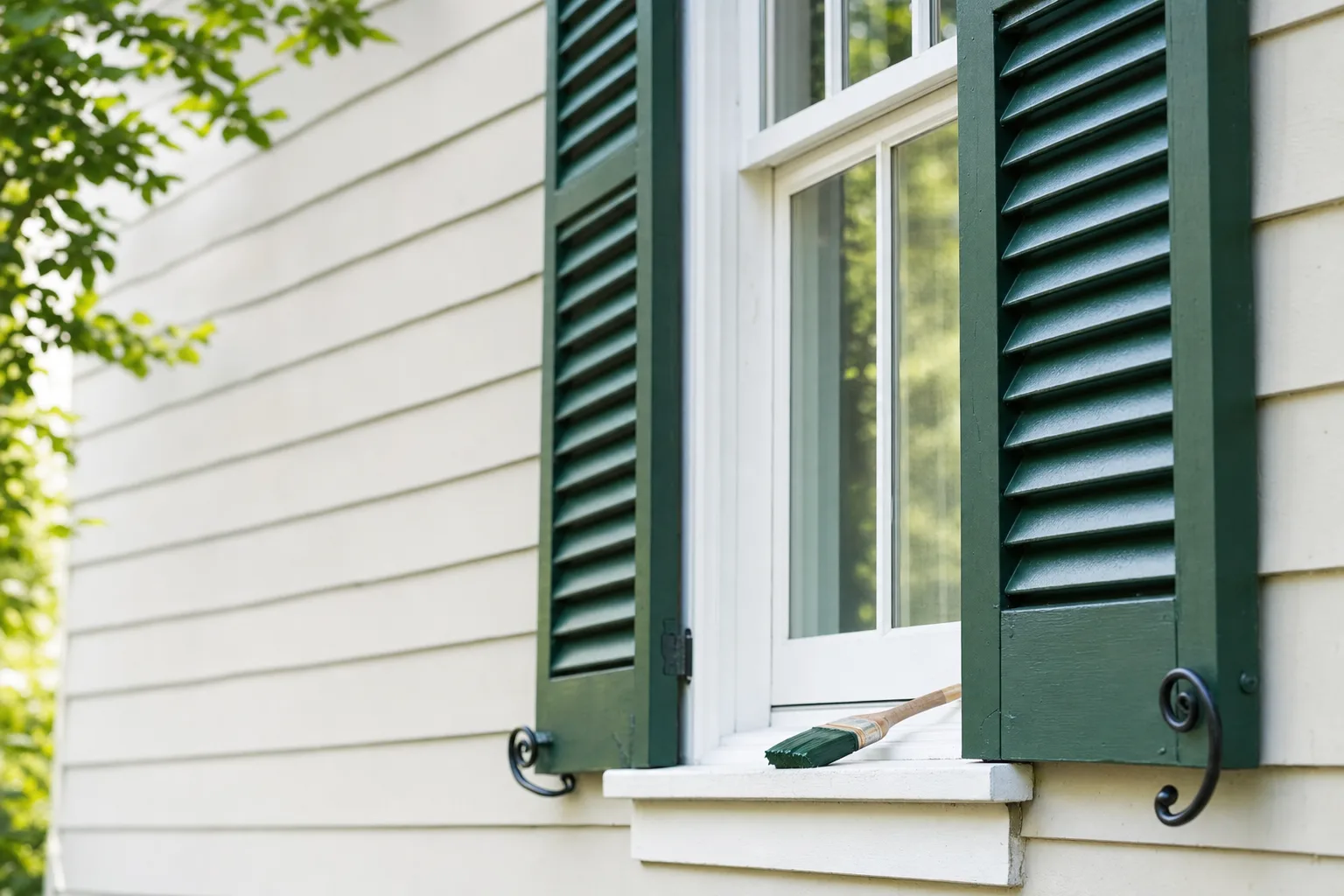
Learning how to paint your house shutters is a simple, budget-friendly weekend project that makes a big visual impact. Faded, chipped, or weather-beaten shutters can drag down your home’s curb appeal and leave it looking neglected. Over time, sun exposure, humidity, and salty coastal air can take a serious toll on your exterior finishes.
If left unaddressed, this wear doesn’t just hurt your home’s appearance—it can also lead to premature deterioration of the shutters themselves.
With the right tools and paint, you can restore color, improve protection, and boost the overall look of your home in just a few easy steps.
In this blog post, we’ll provide our best tips as professional house painters to help you paint your house shutters with confidence. You’ll learn how to choose the right paint and tools, decide whether to remove the shutters or paint them in place, and follow each step for a smooth, long-lasting finish.
Should You Paint Your Shutters?
You might not notice your shutters every day—but visitors, neighbors, and potential buyers definitely do. Over time, sun exposure, humidity, and coastal storms wear down exterior finishes, especially here along the Gulf Coast.
Most shutters need repainting every 5 to 7 years, but that timeline can shorten depending on weather conditions.
If you’re unsure when to repaint house exterior elements like shutters, start by watching for these common signs:
-
Faded or dull color
-
Cracking or peeling paint
-
Chipped or worn areas
-
A recent change in your home’s paint color scheme
Painting your shutters doesn’t just improve your home’s appearance. A fresh coat helps protect against damage from intense sun, heavy rain, and wind—and it can increase your home’s value if you’re planning to sell .
Not sure if it’s time to repaint or need help choosing the right materials? Professional exterior painters can assess the condition of your shutters and recommend the best approach for long-lasting results.
Spray Paint vs. Brush: What’s the Best Way to Paint Shutters?
Most homeowners think of paint brushes as a main tool when it comes to house painting, but paint sprayers can be rented at many home stores for about $100 per day.
Spray painting provides a professional finish while saving you time during a project. Should you spray paint or brush paint shutters?
Spraying
-
Fast, smooth coverage
-
Best if you’re doing many shutters at once
-
Needs more prep and masking
Brushing
-
Slower, but more control
-
Good for small jobs or tight spaces
-
May leave brush marks if not careful
What to choose: Use a sprayer if you’re confident with masking and want fast results. Go with a brush if you’re just doing a few shutters or want more control.
Can You Paint House Shutters Without Removing Them?
Yes, you can paint your shutters without removing them. The best approach depends on the type of shutter and its condition.
For some types, like those with metal mounting clips, removal is easy and might be preferred. For others, like those with plastic mounting nails, painting in place can be simpler.
If the shutters are firmly attached and there’s no damage behind them (rotten wood needs to be repaired prior to painting), you can paint them while they’re mounted. Follow these simple steps for the best finish:
-
Clean the surface well
-
Use painter’s tape around windows and siding
-
Cover the ground and nearby trim with drop cloths
Tools and Materials You’ll Need to Paint Your House Shutters
Before you start, gather all the tools you need for a professional finish:
-
Primer (if needed for bare wood or switching paint types)
-
Exterior-grade, high quality paint
-
Painter’s tape
-
Drop cloths
-
Screwdriver (if taking shutters down)
-
Brush and/or spray gun
What Kind of Paint Is Needed for Shutters?
Homes that are being painted require exterior paints (select one that helps prevent mold/mildew growth) to achieve the look and get the durability.
But, what type of paint is needed for shutters? It depends on the material.
-
Vinyl: Use urethane-acrylic exterior paint
-
Wood: Use latex exterior paint or oil-based paint with primer (Oil-based primer works well with most paint types.)
Stick to satin or semi-gloss finishes—they hold up well and clean easily. As far as color selections, here are some guidelines:
-
White houses — black, navy, red or hunter green shutters.
-
Beige or Tan houses — charcoal, dark blue sage shutters.
-
Gray houses — plum, slate or cobalt shutters.
-
Brick red houses— black, dark green or olive shutters.
-
Light blue/gray houses — white, blue or soft gray shutters.
Still torn on a shade? Our free AI Color Visualizer lets you preview real colors on a photo of your own home before you commit, and if you'd rather have a second opinion in person, a professional color consultation pairs your shutters to the siding, trim, and roof so the whole exterior reads as one deliberate palette.
How to Paint Shutters on a House – Step-by-Step
Painting your house shutters is an easy way to enhance the appearance of your home, but preparation is key! Here’s how to paint your house shutters, whether you take them down or not.
How to Paint Your House Shutters: Detached Method
-
Remove and label shutters so you can put them back in the same location.
-
Clean them. Use soap and water, rinse and let dry.
-
Lightly sand – especially if the surface is rough or old paint is peeling.
-
Apply primer if needed.
-
Paint: Open your paint and stir it well (or have it professionally mixed at paint store). Use a brush suited for small areas and indentions. Apply the first coat evenly. Let paint dry, then add a second coat.
-
Rehang shutters: Once dry, screw the shutters back into place. Bonus: Add window boxes for extra curb appeal.
How to Paint Your House Shutters Without Removing Them
-
Clean the shutters in place with soap and water.
-
Tape off surrounding areas and use drop cloths.
-
Paint using a sprayer or brush — two thin, evenly applied coats work best.
-
Let the second coat dry completely, then remove tape.
-
Touch up any edges as needed.
Pro Tips for a Smooth, Long-Lasting Finish
Painting your home’s exterior freshens the appearance and protects it from Gulf Coast weather. From high temps to coastal storms and abundant rainfall, it is a smart idea to protect your investment.
For the best application, the best time to paint your home’s exterior in Baldwin and Mobile County is late spring , early summer or late fall (May, September and October).
Aside from the weather, consider these additional tips:
-
Repair or replace damaged shutters prior to painting.
-
Paint on a mild, dry day—avoid direct sunlight and wind.
-
Apply thin, even coats (two coats are ideal).
-
Don’t rush the drying time (the more moisture in the air, the longer the drying time).
-
Replace cracked or broken shutters before you paint.
-
Wear gloves and old clothes—it gets messy fast.
Common Mistakes to Avoid
-
Painting dirty or wet shutters
-
Skipping primer when needed
-
Not repairing imperfections
-
Using indoor paint (it won’t hold up)
-
Putting on thick coats to save time
-
Not masking nearby trim or siding
-
Not allowing enough drying time
Final Tips Before You Start
Having the right tools, preparing properly, and watching the weather forecast are essential for a successful paint job. Be sure to plan for at least 2–4 days of dry weather so you can complete your project without delays.
Not ready to tackle it yourself? Shutters are usually a small piece of a larger exterior painting refresh, and we'll fold them into the same scope so the color and sheen match the rest of the house. Schedule a free in-home estimate and one accountable crew handles it start to finish, backed by our 3-year workmanship warranty — lasting results with none of the hassle.