
Every summer on the Gulf Coast, the same thing happens after the first big storm. Homeowners call us not because the wind tore their paint off, but because water found the one spot that was already open — a cracked caulk line, a soft fascia corner, a seam that had quietly let go — and drove behind the finish. The paint didn't fail in the storm. It failed before the storm, and the storm just exposed it.
That's the whole idea behind hurricane season prep for your home's exterior. You're not trying to storm-proof a coat of paint. You're closing the gaps and firming up the wood so wind-driven rain can't get behind the finish in the first place. Done before the season, it's a few hours of targeted work. Skipped, it turns one storm into months of rot, peeling, and a bigger repaint than you needed. Here's how we approach it.
Why is hurricane prep really about water, not paint?
A sound, well-bonded coat of exterior paint is tougher than people think — straight wind rarely strips it. What gets homes in trouble is water finding a way in. Hurricane rain doesn't fall straight down; the wind drives it sideways and forces it into every gap it can reach. Open caulk joints around windows. Hairline cracks where trim meets siding. The end grain of a fascia board. A butt seam in the lap siding. Each of those is a door, and a storm goes looking for them.
Once water is behind the paint, the damage compounds. The wood can't dry, so it swells. Swollen wood pushes the paint film off from the back, and now you've got peeling that spreads every wet season after. And if there was already soft or rotted wood at that spot, the storm drives moisture deeper and accelerates the rot. So the goal of prep isn't a prettier wall — it's a sealed envelope that keeps the wood underneath dry.
A pre-season prep checklist that actually protects
The most valuable prep you can do before storm season is targeted, not cosmetic. Walk the house with these five steps in mind — the goal is to close every spot where water could get behind the finish.
Walk the exterior and find the weak spots
Circle the house and look for peeling paint, cracked or missing caulk, open siding seams, and soft wood at fascia ends, sills, and trim. Every broken spot is a place storm water can get in. Mark what you find.Repair soft and rotted wood first
Address any spongy or rotted fascia, soffit, sill, or trim before you seal anything. Wind and wind-driven rain pry at compromised wood, so sound wood always comes first — sealing over rot just hides it.Re-caulk the failed joints
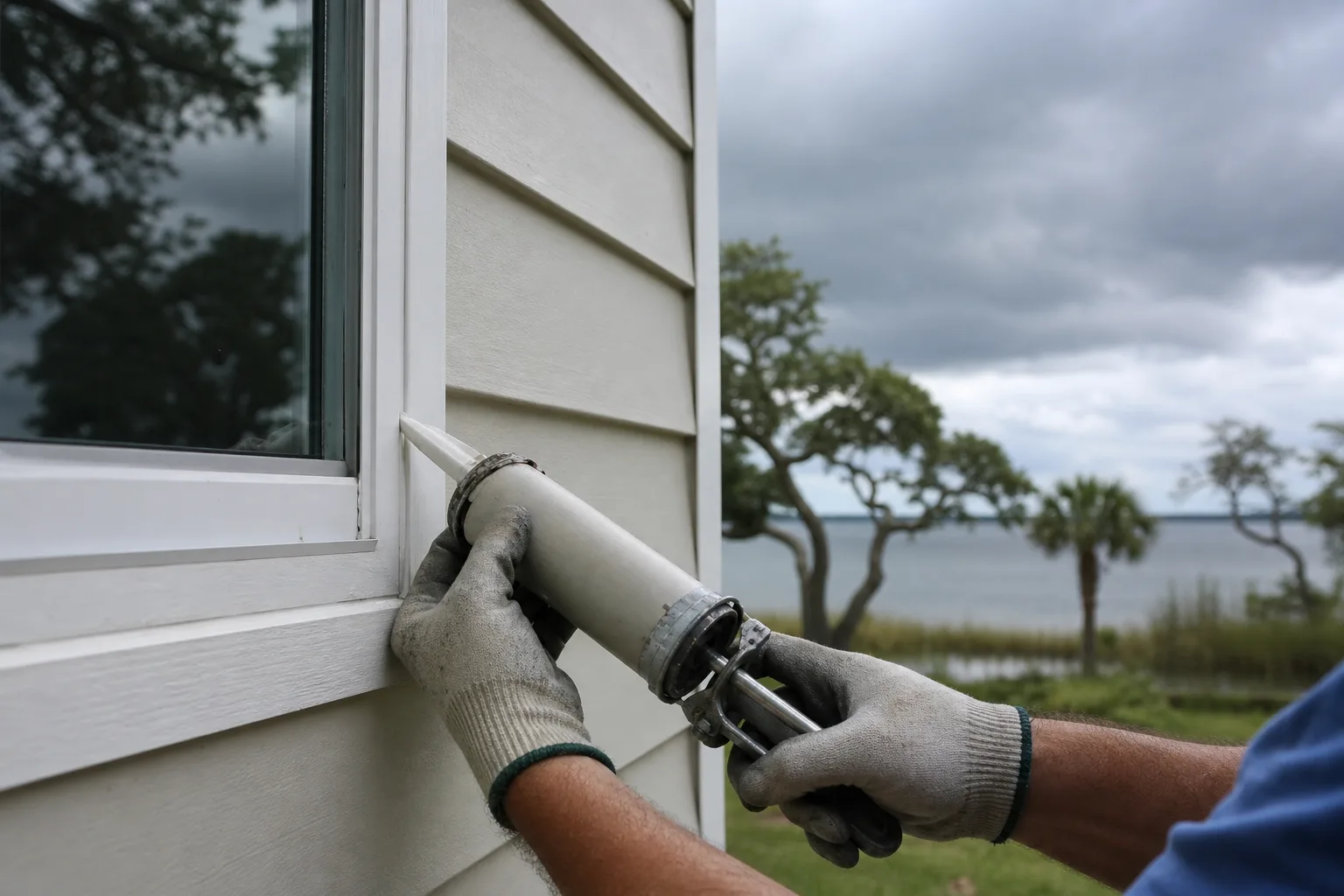
Cut out cracked or missing caulk around windows, doors, and trim and replace it with a quality flexible exterior sealant, so the seams can flex with the house and shed water instead of letting it in.Touch up bare and peeling spots
Prime and spot-paint any exposed wood and peeling areas while there's dry weather, so no raw wood or open finish faces the storm. Even small touch-ups close real entry points.Clear the gutters and drainage
Clean gutters and downspouts so storm water drains away from the walls instead of overflowing down the siding and pooling at the foundation, where it wicks into the bottom course.
You can handle a fair amount of this yourself — the walk-around, clearing gutters, and small caulk touch-ups all help if there's dry time. The pieces worth handing off are the soft wood, anything two stories up, and any real repainting, because paint needs settled dry weather to cure and a storm window rarely gives you that.
Don't try to repaint your whole house before a storm
When homeowners realize their exterior is failing, the instinct is to rush a full repaint before the next system spins up. That usually backfires. A full exterior coat needs the right temperature, low humidity, and several dry days to cure — exactly the conditions a looming storm takes away. Paint a wall into humid, unsettled, pre-storm air and the coat stays soft, and soft paint is more vulnerable to a storm, not less.
The right move when a storm is on the way and your finish is rough is protection, not a full repaint. Seal the open joints, firm up the worst of the soft wood, prime the bare spots — close the envelope. Then schedule the full exterior painting job for a calmer, drier window when the coat can actually cure and last. If you're timing a larger project around the season, our guide on the best time to paint a house exterior walks through the windows worth aiming for.
When the wood is the problem, fix the wood
A lot of pre-storm trouble traces back to one thing: soft wood that was already there. Rotted fascia, punky sills, and trim that's gone spongy are weak points a storm exploits — wind tears at them and rain drives straight in. Sealing caulk over a rotted board doesn't protect anything; the rot keeps going and the storm makes it worse.
That's why we treat carpentry as part of protecting an exterior, not a separate scope for later. One accountable scope covers finding soft wood, repairing or replacing it, priming it, and sealing it so a storm cannot pry it open further. If your last paint job is peeling or blistering in the same spots every year, that's not really a paint problem — it's water getting into wood, and it's worth addressing before the season rather than after.
Protect it now, finish it right later
Hurricane season prep comes down to a simple sequence: find the weak spots, fix the wood, seal the joints, close the bare patches, and clear the drainage. Do that before the season and you've protected the thing that actually matters — the wood under the paint — without gambling a fresh coat against the next storm.
If you'd rather have a crew read your home's exterior before the season, that's exactly what a free in-home estimate is for. We'll walk the perimeter, point out where water can get in, and tell you honestly what needs sealing now versus what can wait for a proper repaint. We've protected Gulf Coast homes through a lot of storm seasons since 2013 — one accountable crew from your free estimate through the final inspection, backed by our 3-year workmanship warranty. Get ahead of the weather, and you spend the season watching the radar instead of patching the damage.