
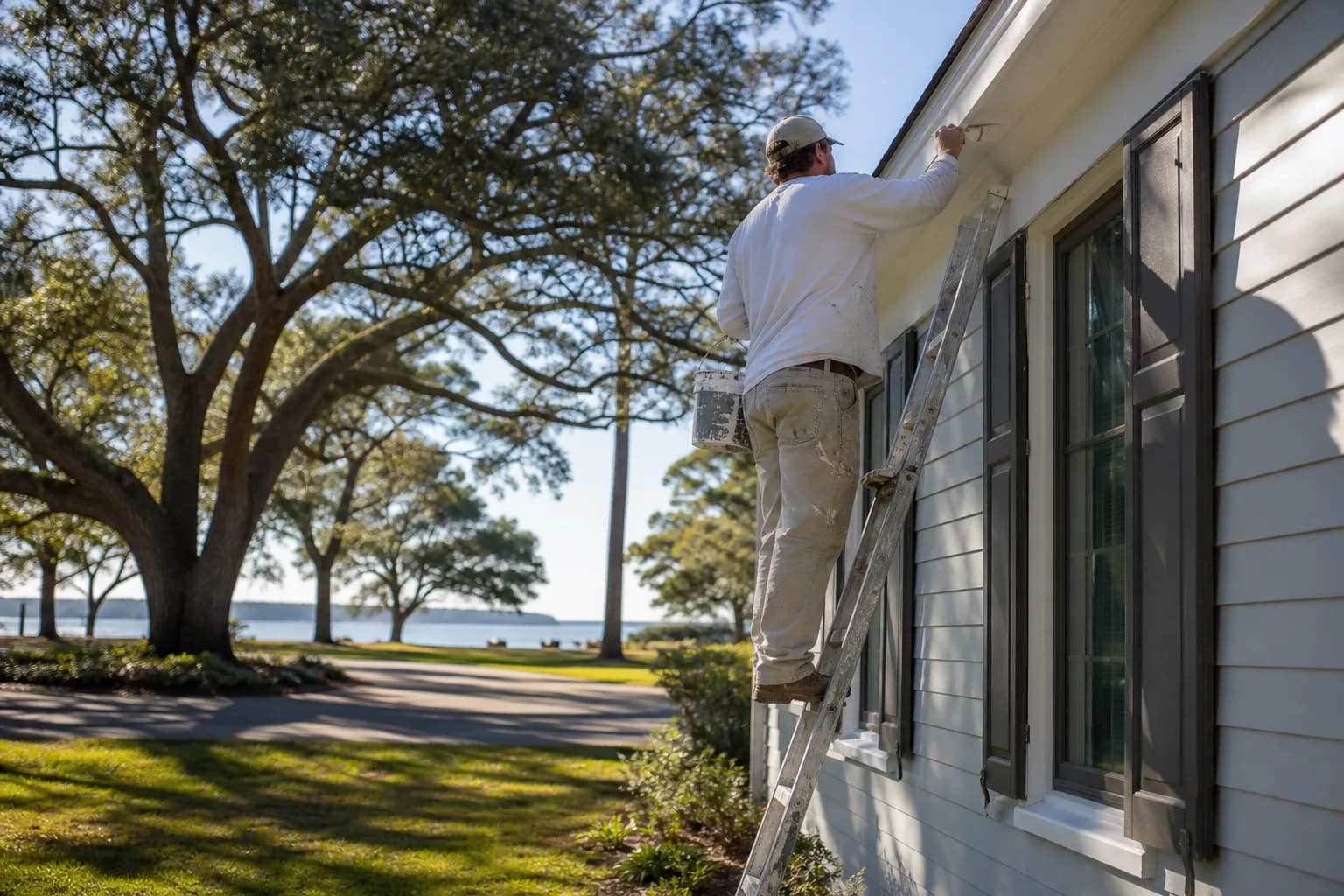
The paint on the can will tell you it works from 35 to 100 degrees. The wall behind your house tells a different story. We've watched a beautiful coat go on during an August afternoon, look perfect at quitting time, and blush milky-white by morning because the humidity never let it cure. On the Gulf Coast, the best time to paint a house exterior isn't about squeezing it onto the calendar — it's about catching the short windows when the air, the temperature, and the forecast all cooperate.
Get the timing right and an exterior paint job here can hold its color and seal for years against salt air, sun, and wind-driven rain. Get it wrong and you're repainting sooner than you should. This guide walks through the ideal window for coastal Alabama, the seasons worth avoiding, and what actually drives a finish that lasts — so you can plan your repaint around the weather instead of fighting it.
The best time to paint an exterior on the Gulf Coast: fall, then spring
The short answer: late September through November is the best season to paint a house exterior in coastal Alabama, with early-to-mid spring a close second. Both seasons give you the same three things a good exterior cure needs — moderate temperatures, lower humidity, and stretches of dry, settled weather. Fall edges out spring because the summer humidity has finally broken, the light is gentler on a curing film, and the hardest stretch of hurricane season is behind you.
Here's the reasoning behind it, season by season:
| Season | What it gives you | The catch |
|---|---|---|
| Fall (late Sep–Nov) | Dropping humidity, mild 70s–low 80s, dry settled days, storm season easing | Days get short fast — less working light by late November |
| Spring (Mar–May) | Mild temps, lower humidity before summer, lengthening days | Pollen season, and humidity climbs quickly by late May |
| Summer (Jun–Aug) | Long daylight, warm surfaces | Heat, daily humidity, and afternoon storms make a clean cure hard |
| Winter (Dec–Feb) | Many mild, dry days on the coast | Cold overnight lows can stop a coat from curing properly |
Notice that no season is impossible here — our winters are mild and our summers are workable with planning. But fall and spring are the seasons where the weather does the work for you instead of against you.
Why temperature and humidity matter more than the calendar
A date on the calendar doesn't cure paint. Surface temperature and the moisture in the air do. Two numbers decide whether a coat sets up into a tough, bonded film or stays soft and fails early.
Temperature has to be right at the surface and stay right overnight. Most exterior paints want it above 50°F while they cure, and the cure runs for hours after you stop painting. A warm afternoon means nothing if the overnight low drops into the 40s and the half-set film chills before it's hard. That's the trap that catches people on a "nice" winter day on the coast — they check the high, not the low.
Humidity is the one most homeowners underestimate, and on the Gulf Coast it's the bigger villain. Paint dries by releasing water and solvent into the air. When the air is already heavy with moisture, that release slows to a crawl — the coat stays tacky longer, and the longer it stays soft, the more chances it has to run, blush, or fail to bond to the surface underneath. The real metric isn't the humidity percentage on your phone; it's the gap between the dew point and the surface temperature. We want the surface comfortably warmer than the dew point so moisture is leaving the film, not condensing on it.
When should you not paint a house exterior on the Gulf Coast?
Knowing when not to paint saves more failed jobs than any other rule. A few conditions are reliable trouble on the coast.
The dead of summer, in direct sun. Paint on a sun-baked wall can skin over on top before the layer underneath has released its moisture, trapping it and setting up blistering or poor adhesion later. The fix is to chase the shade around the house and start early — but mid-afternoon on a south-facing wall in July is a fight you don't need to pick if your schedule has any flexibility.
Right before, during, or just after rain. A fresh coat needs several hours of dry weather to set before it can take a shower. Paint over a damp surface and it can't bond; let a pop-up storm hit soft paint and you get streaking and surfactant runs. Our afternoon thunderstorms are exactly why we time exterior work to the radar.
Heavy-dew mornings and humid, still evenings. When the dew point is close to the surface temperature, moisture condenses on the wall — sometimes invisibly. Painting into that is painting onto a wet surface even when it looks dry.
Cold snaps. Less common here, but a wall that won't stay above the paint's minimum temperature through the overnight cure shouldn't be painted that day, mild afternoon or not.
Timing around storm season — and what shouldn't wait
There's one more layer to timing on the Gulf Coast that inland painters never think about: hurricane season. The official season runs June through November, and its busiest stretch lands in late summer and early fall. That overlaps with otherwise-good painting weather, which is why timing here is a balancing act, not a simple "paint in fall" rule.
If your timeline is flexible, painting after the peak — into the calmer back half of fall — lowers the odds that a named storm soaks a finish that's only days old and still soft. We get into the full scheduling logic in our guide on painting around hurricane season, because the right move depends on your home and your timeline.
But here's the part that shouldn't wait for a season: protection. If your exterior is already peeling, your caulk lines have opened, or there's soft wood at the fascia, water is getting behind the finish right now — and waiting for the "perfect" painting month only gives it more time to do damage. In that case the smart sequence is to seal and protect now and save the full repaint for a calmer window. That's the kind of call we make case by case, and it's one reason our exterior painting work always starts with prep, not paint. (Salt air and humidity make that prep non-negotiable here — more on that in our coastal exterior painting guide.)
Plan it once, paint it right
You don't have to track dew points and overnight lows yourself. The reason timing matters is simple — an exterior coat that cures in the right conditions bonds harder and holds longer in our climate, and one that doesn't will let you down early no matter how good the paint or the painter. Picking the season is step one; reading the daily window is step two, and it's the part a good crew handles for you.
If you're weighing a repaint this year, the best first move is a free in-home estimate. We'll look at your home's exterior, tell you honestly whether it needs paint now or protection now, and time the work to a window that gives your finish the best shot at lasting. Want to test a new color before you commit? Try our free AI Color Visualizer and see it on your own walls first. And if you'd like to see how a project like yours typically maps out, our project timeline calculator lays out the phases.
We've been painting Gulf Coast homes since 2013, and every job is one accountable crew from your free estimate through the final inspection, backed by our 3-year workmanship warranty. Time it right, prep it right, and your exterior earns its keep through a lot of coastal summers.