
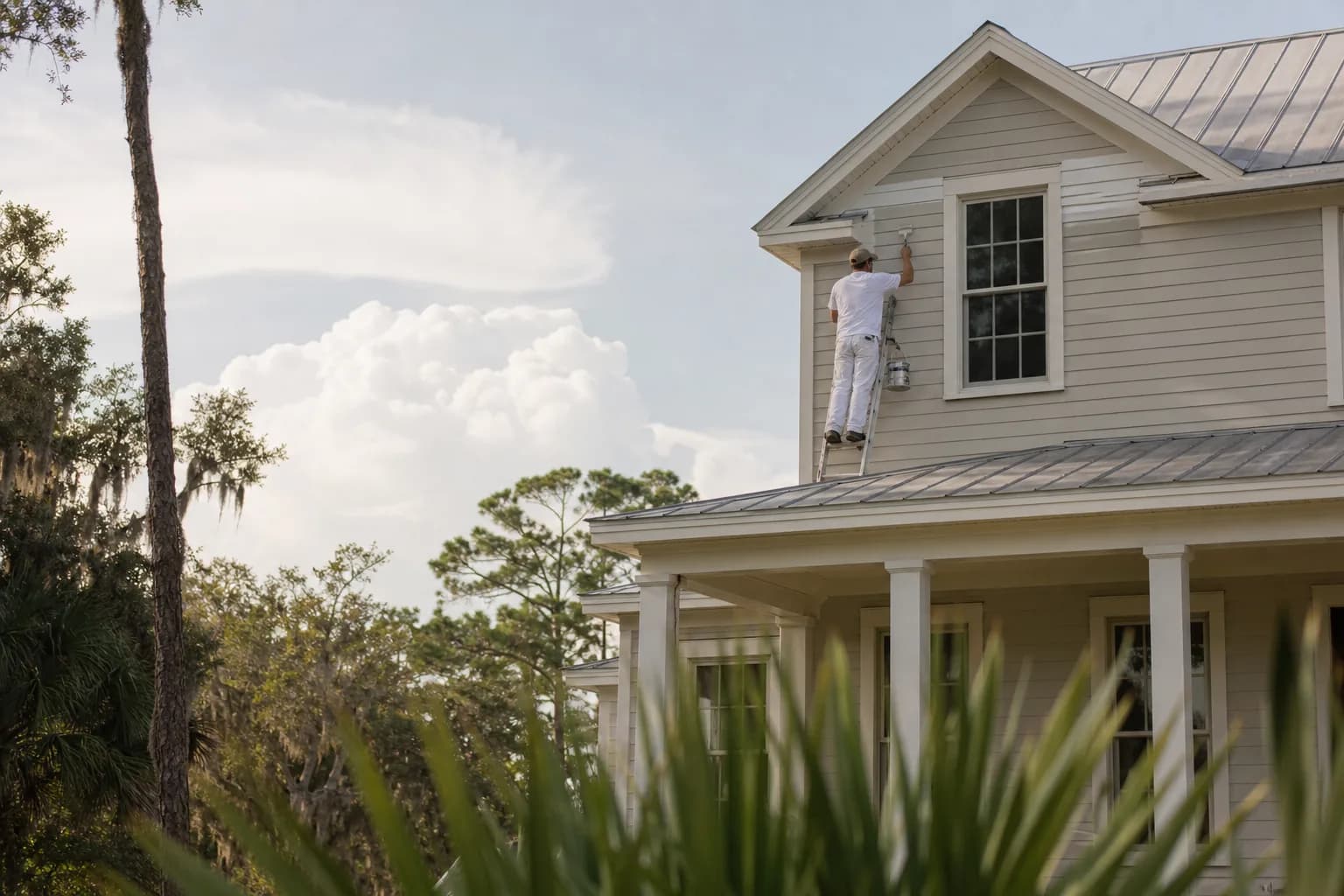
On the Gulf Coast, the best painting weather and the worst storm weather overlap. The mild, sunny stretches that cure a coat beautifully fall inside the same June-through-November window that the tropics get busy. That's the puzzle every coastal homeowner faces when they plan an exterior repaint: paint when the weather's nice, and you might be painting when a storm is brewing. Painting around hurricane season isn't about avoiding the season entirely — it's about timing the work so a fresh, still-soft coat never has to take a storm head-on.
We've scheduled exterior jobs through every hurricane season since 2013, and the homes that come through clean aren't the ones whose owners got lucky. They're the ones whose project was timed and sequenced with the tropics in mind. This guide walks through when to schedule, how to read the season, and how a good crew protects fresh paint from the weather you can't control.
When to schedule painting around hurricane season
The short version: if your timeline is flexible, aim for spring or the back half of fall, and be most careful through the late-summer peak. Hurricane season officially runs June 1 to November 30, but the risk isn't flat across those six months — it builds to a peak in late summer and early fall, which unfortunately overlaps with our most humid stretch. The two best windows for an exterior project bracket that peak.
Here's how the windows compare for timing a project:
| Window | Storm risk | Why it works (or doesn't) |
|---|---|---|
| Spring (Mar–May) | Low | Ahead of the season; drier air and settled weather give a fresh coat room to cure |
| Early summer (Jun–Jul) | Building | Workable with forecast watching, but humidity is climbing and the season is active |
| Late-summer peak (Aug–early Oct) | Highest | Peak storm odds plus heavy humidity — the window to schedule most carefully |
| Late fall (late Oct–Nov) | Easing | Peak has passed and humidity drops; a strong window for a calmer cure |
None of this means you can't paint during the season — we do, all the time. It means that if you can choose, you choose the windows where the weather is least likely to land a storm on wet paint. For the broader temperature-and-humidity side of timing, our guide on the best time to paint a house exterior covers the cure window in detail; this one is about the storm side specifically.
Why watch the tropics instead of just the calendar?
Here's the nuance that matters: a clear, settled day inside hurricane season is often a better painting day than a humid, unsettled day outside it. The calendar is a starting point, not a rule. What actually protects your project is watching the forecast and the tropics as the work nears and painting into the windows the weather hands you.
That's why timing around the season is really two decisions, not one. First, the season-level call — which months to target. Second, the day-level call — reading the forecast as the job approaches and sequencing the work so the most exposed surfaces get painted when the outlook is most settled. A crew that only thinks about the first and ignores the second will still get caught by a storm landing on a fresh wall.
How we sequence a project so storms can't catch fresh paint
Timing isn't only about picking the right month — it's about how the job itself is run once it starts. Here's the approach we use to keep a fresh finish out of a storm's way.
Decide how flexible your timeline is
First we figure out whether the project can wait for an ideal window or needs to happen now. A flexible timeline lets us target the lowest-risk seasons; urgent protection work may need to happen mid-season, and that changes the plan.Aim for spring or late fall if you can
When the timeline allows, we target the windows before the season ramps up or after its peak passes — drier, settled weather and lower storm odds give a fresh coat the best chance to cure undisturbed.Watch the tropics, not just the calendar
As the project nears, we track the forecast and the tropics, because a clear settled stretch inside the season can be a better painting window than a humid, unsettled day outside it.Sequence the work around cure windows
We plan the job so each freshly painted surface gets several dry days to set before any storm risk, painting the most exposed areas when the forecast is most settled.Stay flexible enough to pause and protect
We keep the schedule loose enough to hold exterior work and shift to prep or interior tasks if a system develops — so no soft, fresh coat gets left exposed to a storm we saw coming.
That flexibility is the part homeowners don't always expect. Good exterior scheduling on the coast isn't a fixed start-to-finish date you lock in blind — it's a plan that flexes with the tropics so your finish gets the cure it needs.
When the project can't wait
Sometimes the smartest timing call is "don't paint yet." If your exterior is already failing — peeling finish, open caulk lines, soft wood letting water behind the siding — waiting for the perfect post-season window just gives the damage more time to spread. In that case we'd separate the two jobs: protect now, paint later. Seal the open spots and address the soft wood right away to close the envelope, then schedule the full repaint for the next calm, dry stretch when a coat can actually cure and last. Our guide on protecting your home's paint before a storm covers that protective work in detail.
This is exactly the kind of judgment call we make at a free in-home estimate — looking at the shape your exterior is in and telling you honestly whether the move is a full exterior painting project on the next good window, or targeted protection now with the repaint to follow.
Time it right and let the season pass you by
Painting around hurricane season comes down to two layers of timing: choose the lowest-risk window your schedule allows, then run the job so fresh paint always gets a safe stretch to cure before any storm can reach it. Do both, and the season becomes something you plan around instead of something that forces an early repaint.
If you'd like a project timed and sequenced with the tropics in mind, that's what we do. Start with a free in-home estimate and we'll lay out the best window for your home, build in the cure time your finish needs, and stay flexible if the weather changes. Curious how the phases of a project like yours map out? Our project timeline calculator gives you a quick picture. We've painted Gulf Coast homes through every kind of season since 2013 — one accountable crew from your free estimate through the final inspection, backed by our 3-year workmanship warranty.