
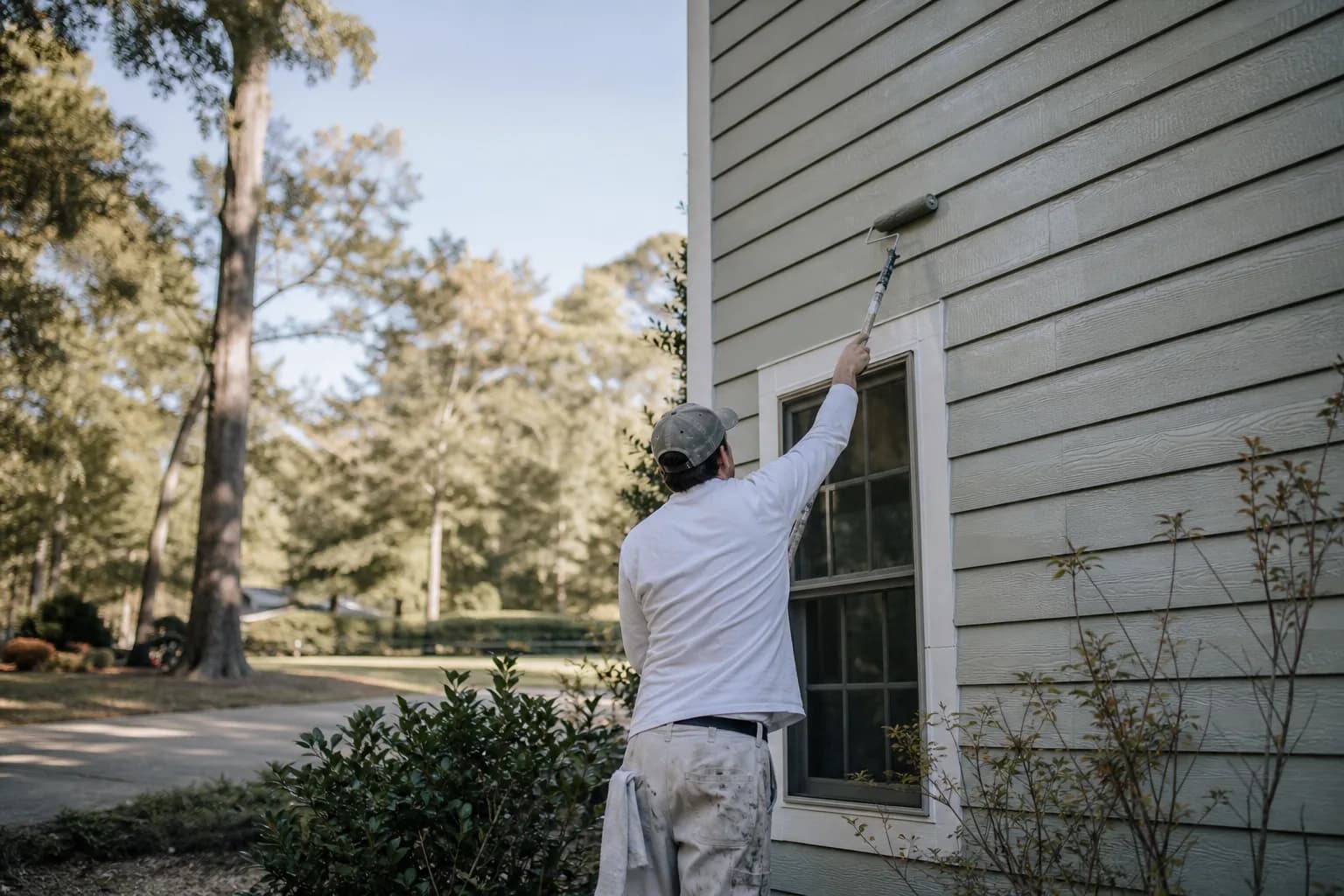
Ask any painter on the Eastern Shore when to repaint the outside of a house, and the honest answer starts with the weather. Spanish Fort sits on the bluff above Mobile Bay, and the climate here runs hot, humid, and wet for a good chunk of the year. Paint doesn't care what your calendar says — it cares about temperature, moisture, and how fast it can cure. Get the timing right and a coat lasts for years. Get it wrong and you're looking at peeling before you've paid it off.
So what's the best time to paint a house exterior in Spanish Fort? In a word: fall. Here's why the season matters so much in this climate, and how we work around it the rest of the year. For the bigger picture, our coastal exterior painting guide covers the whole approach to painting homes in this region.
Why Is Fall the Best Time to Paint Exteriors in Spanish Fort?
Fall is the sweet spot on the Eastern Shore because it lines up everything paint needs: moderate temperatures, lower humidity, and a steadier run of dry days. From about October into early December, the brutal summer heat eases off, the daily thunderstorms taper, and the air dries out enough for paint to cure evenly and bond hard.
That window also tends to follow the worst of storm season. Painting in the fall means your home heads into winter with fresh, fully sealed exterior surfaces — siding, trim, and fascia protected before the next round of weather.
How Spanish Fort's Climate Shapes the Painting Window
Spanish Fort's weather is the whole reason timing matters here. A few real numbers tell the story:
| Season | What the weather does | Paint verdict |
|---|---|---|
| Summer | July highs near 92°F, humid, daily pop-up storms | Toughest — paint dries too fast or gets rained on |
| Fall | Cooling, drier air, fewer storms (Oct–early Dec) | Best — steady, paint-friendly days |
| Winter | Mild, January lows around 49°F | Often good — watch overnight lows and dew point |
| Spring | Warming up, rising humidity, some storms | Good early, then trends toward summer's challenges |
A couple of those figures deserve a closer look. The area averages roughly 50 inches of rain a year with high humidity, so moisture, not cold, is the constant we plan around — a surface that looks dry can still hold enough water to ruin adhesion. And summer afternoons here regularly climb into the low 90s, which bakes walls hot enough to flash-dry paint before it can level and bond. Fall simply hands us more days where neither problem is in play.
One bit of good news: most of Spanish Fort sits in FEMA flood zone X, an area of minimal flood hazard, so for the majority of homes here the bigger paint threat is everyday humidity and sun rather than standing water.
Painting Outside the Fall Window
Fall is ideal, but it isn't the only time we paint exteriors in Spanish Fort — the key is matching the work to the conditions. In summer, we chase shade around the house, start early before the heat peaks, and time coats to dodge the afternoon storms; it's workable, just less forgiving than fall. In winter, the mild bay-side weather gives plenty of paintable days, and we watch overnight lows and the dew point so paint stays above its minimum cure temperature well after the last coat goes on. Spring is great early on, before humidity and storms ramp back toward summer, so we plan around the wetter stretches.
How We Prep a Spanish Fort Exterior Before Painting
Whatever the season, the thing that actually determines how long your paint lasts is prep — and Spanish Fort homes need it. The area's housing stock has a median build year around 1997, so many homes here carry decades of Gulf Coast sun and salt-tinged air on their siding and trim. We see it across the established subdivisions — the brick-and-Hardie homes in Spanish Fort Estates, Stonebridge, TimberCreek, and Churchill all weather the same humid bay-side air, and the fall window is when we get the cleanest run of days to prep and repaint them. Here's the order we work in before a drop of finish goes on.
Pressure-wash and dry
Wash off the chalk, mildew, salt film, and dirt that block adhesion — then let everything dry fully. In this humidity, that drying time is not optional.Scrape and sand to a sound edge
Remove failing paint and feather the edges so the new coat has a stable surface to grip instead of bonding to paint that's already letting go.Treat and repair wood
Address any soft, rotted, or weathered wood and re-caulk open joints — common on older Eastern Shore siding, fascia, and trim.Prime bare spots
Spot-prime bare wood and repairs so the finish bonds evenly and seals out moisture before the topcoats.
That sequence is what makes color last in this climate — not the label on the can. A premium paint over skipped prep peels in a season or two here; an honest prep job under a quality coating holds for years.
Plan Your Spanish Fort Exterior Painting
The best time to paint your house exterior in Spanish Fort is fall, with mild winters and early spring close behind and summer the one season we work around carefully. Lock in the right window and pair it with thorough prep, and your repaint will stand up to the Eastern Shore's heat, humidity, and storms for years.
Family-owned since 2013, we're based right here on the Eastern Shore, just a short drive from Spanish Fort, and we run one accountable crew on your home from the free estimate through the final inspection — backed by a 3-year workmanship warranty and a 4.8-star reputation. Explore our exterior painting service, see what we do across Spanish Fort, or read the temperature and humidity rules we follow on the Gulf Coast. When you're ready, book your free estimate and we'll help you time it right. Pay by Cash, Check, or Credit Card.