
You can't always repaint the whole house in one go — and you don't have to. The trick is knowing which rooms to paint first, because a handful of spaces carry almost all of how fresh your home looks and feels. Repaint those, and the place reads new. Repaint a back bedroom first, and you've spent the same money where almost no one will notice. Here's where to start, in order of impact, when you're picking your highest-value rooms to repaint first.
This is the order we'd give a homeowner who's staying and wants the biggest change for the budget. If you're painting to list the house, the priorities shift — see which rooms to paint before selling. And if you're mapping out a phased whole-house repaint, how to budget for a whole-house repaint walks through doing it in stages without it looking half-finished.
1. The entry and main hallway
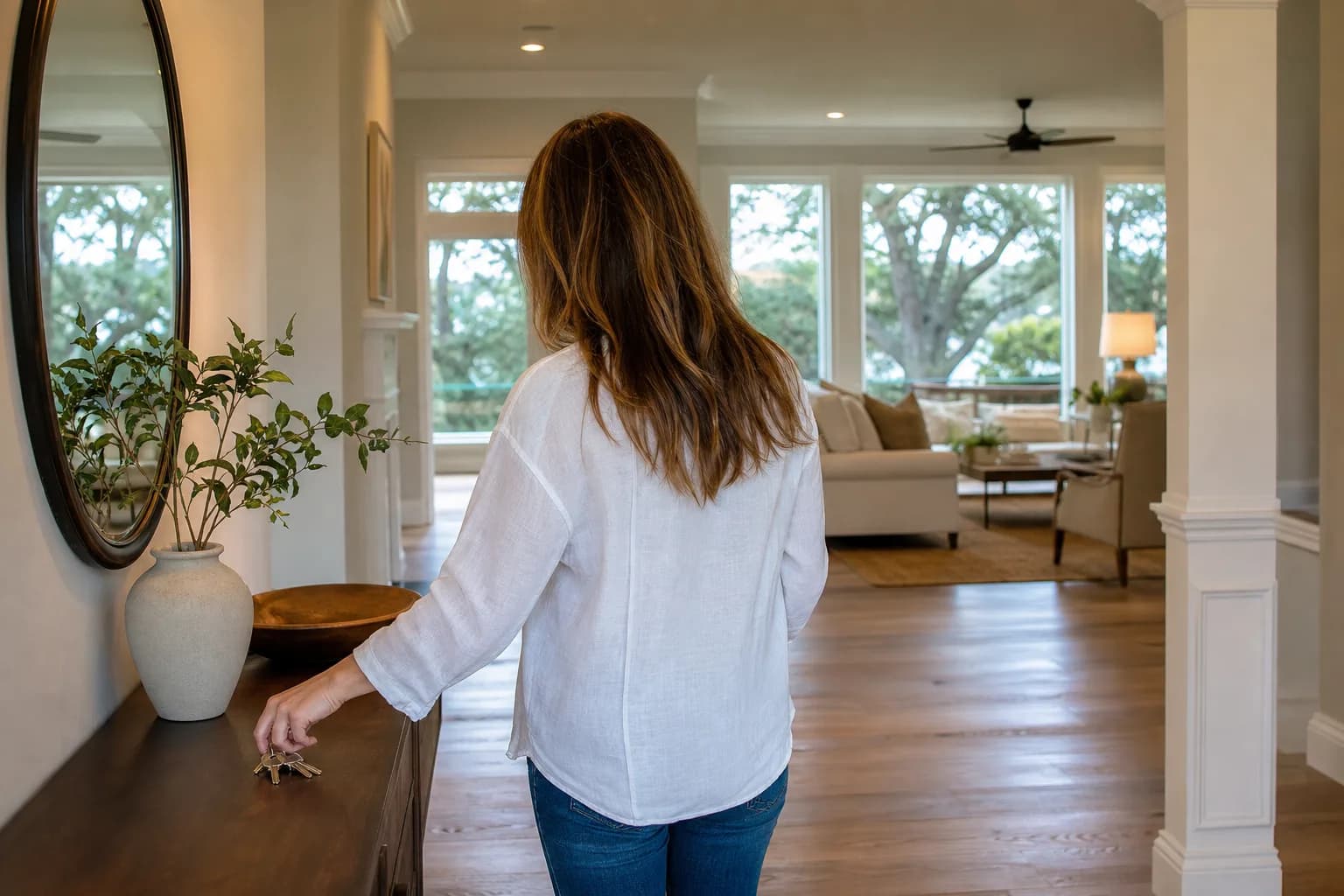
Start where everyone starts: the front door's inside, the entry, and the hallway that feeds the rest of the house. It's the first thing you and every guest see, and it's also the surface that takes the most abuse — bags, shoulders, dog tails, sun from the sidelights. Scuffs and hand marks pile up here faster than anywhere else.
The payoff is outsized because the square footage is usually small. You're painting a narrow, tall space, so the material and labor cost less than a big room, but the visual return is the highest in the house. A clean entry color makes the rooms it opens onto feel fresher before you even repaint them.
2. The living room or great room
Next is wherever the household actually lives — the living room, family room, or the great room in an open floor plan. This is the most-seen, most-used space in the house, so a fresh, well-chosen color here changes the feel of daily life more than anywhere else.
In Gulf-Coast homes, a lot of these are open to the kitchen and entry, which matters for how you paint them. A color that stops dead at the living-room wall and changes in the kitchen creates a hard seam that makes both rooms look smaller. Carrying one flexible neutral across the connected space is what makes an open plan feel large and intentional. If you're tempted by a bolder color, spend it on one accent wall where it actually works rather than wrapping the whole room.
3. The kitchen
The kitchen earns the third spot because it's high-traffic, high-visibility, and it's where grease, steam, and hands are hardest on a finish. Repainting the kitchen walls in a durable, scrubbable finish does two things at once: it freshens the busiest room in the house and it stands up to the cleaning that room demands.
One honest note on impact: in a lot of kitchens, it isn't the wall color that's tired — it's the cabinets. If your walls are fine but the cabinets are dated or worn, your highest-impact dollar is cabinet painting, not another coat on the walls. It's the single change that most transforms a kitchen short of a remodel. Walls and cabinets together is the full reset.
4. Open-plan transitions and sightlines
This one isn't a room — it's the rule that ties the first three together. In an open floor plan, the highest-impact move is treating the connected spaces you can see all at once as one project: entry, living, kitchen, and the hallway between them. Paint them in the same phase and the same palette, and the whole core of the house jumps at once. Paint them piecemeal and you get color lines where rooms meet, which reads as unfinished.
If you can only afford part of it now, do the spaces along your main sightline first — what you see standing in the entry looking in — and save the rooms tucked off to the side for later.
5. The primary bedroom (the one exception worth making)
Most bedrooms are low on the impact list because they're private and low-traffic. The primary bedroom is the exception worth bumping up. It's not a room guests see, but it's the first and last thing you see every day, and a calm, fresh color there has a real effect on how rested the space feels. If your budget covers the public rooms with a little left over, this is where the next dollar goes.
What rooms should you skip first?
To keep the priorities clear, the rooms that usually wait: guest bedrooms, secondary bathrooms, laundry rooms, closets, and the garage. They're real projects, but they're seen and used least, so they deliver the least change per dollar. Save them for a later phase. The point of going in impact order is that even if the budget stops halfway, the half you finished is the half everyone actually sees.
The bottom line on which rooms to paint first
If you can only repaint a few rooms, paint the ones with the most eyes and the most traffic on them: the entry and hallway, the living room, and the kitchen — then the primary bedroom, then everything else. In an open plan, treat the connected core as one job in one palette so it lands as a single transformation. That order gets you the biggest visible change for the money, every time.
Want a second opinion on where your home would gain the most? That's exactly what we size up on a free interior painting estimate — and you can preview real colors on your own room before you decide. Book a free in-home estimate and you'll have a written quote within 24 hours, with a manager final inspection before we call it done.