
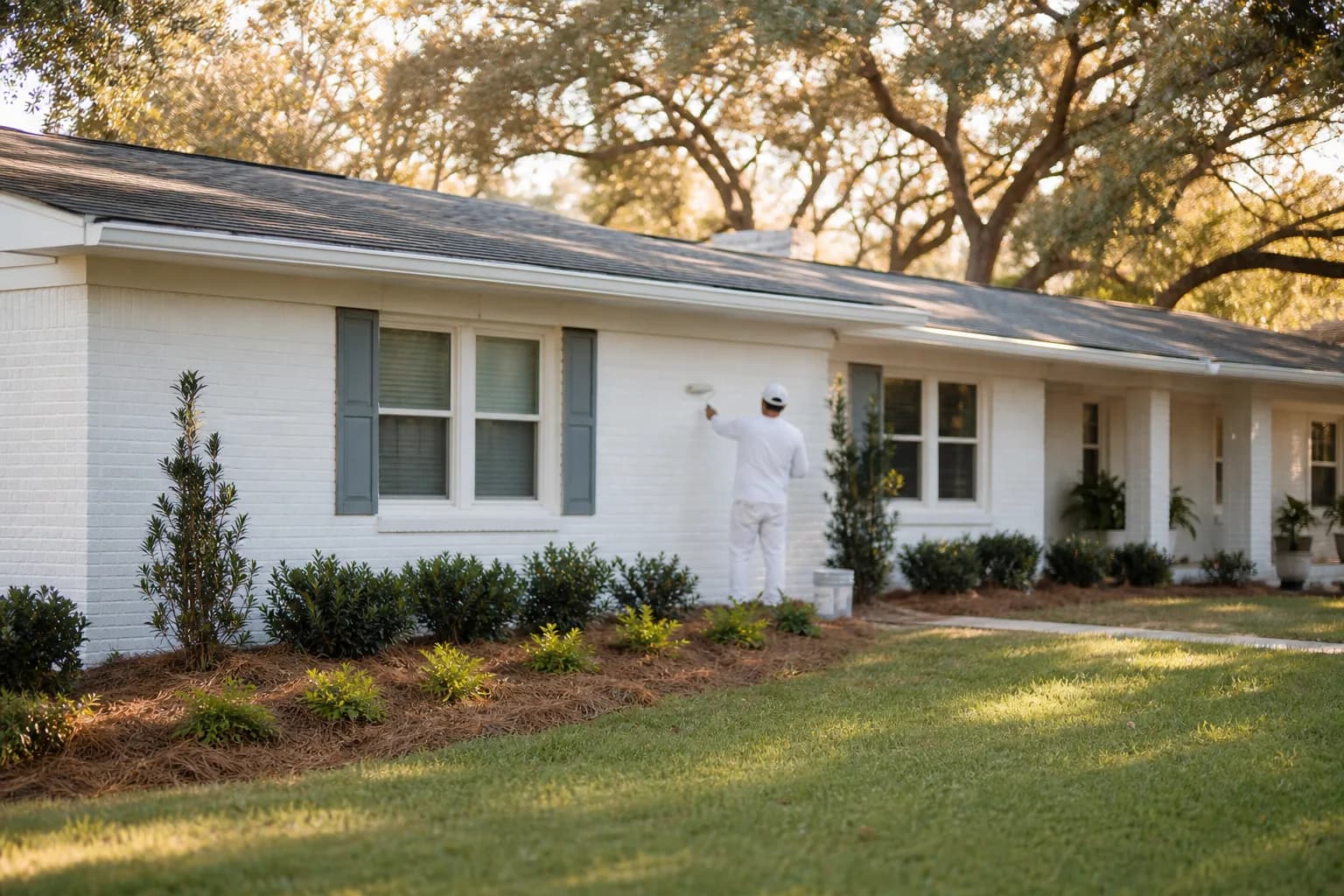
That orange-red or muddy-brown brick was the height of style when the house was built. Today it's the one thing holding back the whole exterior — it clashes with the roof, it dates the place, and no amount of new landscaping fixes it. Painting it is tempting, and the after photos are genuinely dramatic. But brick isn't siding, and painting it is a decision you mostly can't take back.
So before you commit, here are the honest pros and cons of painting a brick house — and what painting brick specifically means on the Gulf Coast, where humidity, salt air, and our climate raise the stakes on getting it right.
The pros and cons of painting a brick house
Answer first: painting brick is a fantastic curb-appeal upgrade and a near-permanent commitment that adds upkeep — so it comes down to how much you dislike the current look versus how much you value low-maintenance, original brick. Here's the trade-off at a glance.
| Pros of painting brick | Cons of painting brick |
|---|---|
| Transforms dated or clashing brick instantly | Effectively permanent — very hard and costly to undo |
| Any color you want, fully even coverage | Adds ongoing upkeep; needs repainting over the years |
| Hides mismatched repairs and patchwork | Done wrong, can trap moisture in the wall |
| Modern, clean, high-end curb appeal | Loses the original, natural brick character |
| Can lift resale appeal when the brick looked dated | Some buyers prefer authentic unpainted brick |
| Brightens dark, heavy-looking facades | Requires the right breathable product + real prep |
Neither column wins automatically. Painting brick is the right call for plenty of homes and the wrong one for others — the rest of this comes down to which house is yours.
The case for painting your brick
The biggest pro is simple: nothing changes a home's whole look faster than painting the brick. A tired, dated, or color-clashing facade becomes clean, current, and cohesive in a weekend's worth of work. If your brick fights your roof color, or it's a muddy shade no landscaping can rescue, paint gives you a fresh start in any color you choose — soft white, warm greige, moody charcoal, you name it.
It's also a fix for brick that's already a patchwork. If past repairs or an addition left you with mismatched brick, paint unifies all of it under one even color. And on a dark, heavy-looking home, a lighter color can brighten the whole exterior and make it feel bigger and more welcoming. When the existing brick genuinely looked dated, that updated curb appeal can help at resale, too.
If you're leaning yes, the smartest first move is to see the color on your actual house before you commit — paint reads completely differently on a big brick facade in full Gulf sun than on a sample card. Snap a photo and preview real colors on your own home with our free AI Color Visualizer, and our guide on choosing an exterior color around your roof and brick helps you land on a shade that works with everything you're keeping.
The case against — and the coastal catch
Now the honest cons, because this is where people get burned. The big one: painting brick is essentially permanent. Once it's painted, getting back to raw brick is a messy, expensive job that can damage the surface — for practical purposes, it's a one-way door. Be sure before you walk through it.
Painted brick also trades no-maintenance for some-maintenance. Raw brick can sit for decades untouched; painted brick will need repainting down the line, roughly every 8 to 12 years with a quality job. And you do lose that authentic, natural brick character some buyers specifically want — a real consideration on older and historic homes.
Then there's the part that matters most on the Gulf Coast: moisture. Brick is porous, and it needs to release the humidity, rain, and salt-laden air it pulls in near Mobile Bay and the Gulf. The failure case is sealing damp or deteriorating brick under the wrong, non-breathable coating — that traps moisture and leads to bubbling, peeling, and spalling, where the brick face actually flakes off. This is why the decision to paint isn't the risk; cutting corners on prep and product is.
What painting brick costs and how long it lasts
Cost is one of the most common questions, and the honest answer is that it depends on your home. Brick takes more paint than smooth siding because it's porous and textured, so it soaks up product — that, plus the size of the home and how much prep and masonry repair the brick needs, drives the price more than anything. We don't quote brick off a square-foot formula; we look at your actual wall. Our exterior painting service starts by assessing the masonry, and our cost to paint a house exterior in Mobile and Baldwin County guide lays out the real ranges and what moves them.
As for longevity: a quality, breathable masonry paint over properly prepped, sound brick can hold for roughly 8 to 12 years or more before it needs redoing. Sun, humidity, salt air, and the brick's condition all shape that timeline — which loops right back to why prep and the right product matter so much here.
So, should you paint your brick?
Here's the bottom line. Paint your brick if you dislike its current color, the look is dated or clashing, and you want a clean, modern facade — just go in knowing it's permanent and commit to a breathable product and real prep. Think twice if your brick is in beautiful original condition, you love the character, or you might want raw brick again someday.
Either way, don't guess. If you'd rather change the brick's tone while keeping it breathable and reversible, weigh the alternative in our guide on limewash vs paint for brick on the Gulf Coast. And whichever direction you lean, the safest first step is having someone who works in this humidity look at your actual brick. Call Pro 1 Painters for a free in-home estimate and a written quote within 24 hours — we'll tell you straight whether painting your brick is a smart move for your home. Family-owned since 2013, backed by a 3-year workmanship warranty and a 4.8-star Google rating.