
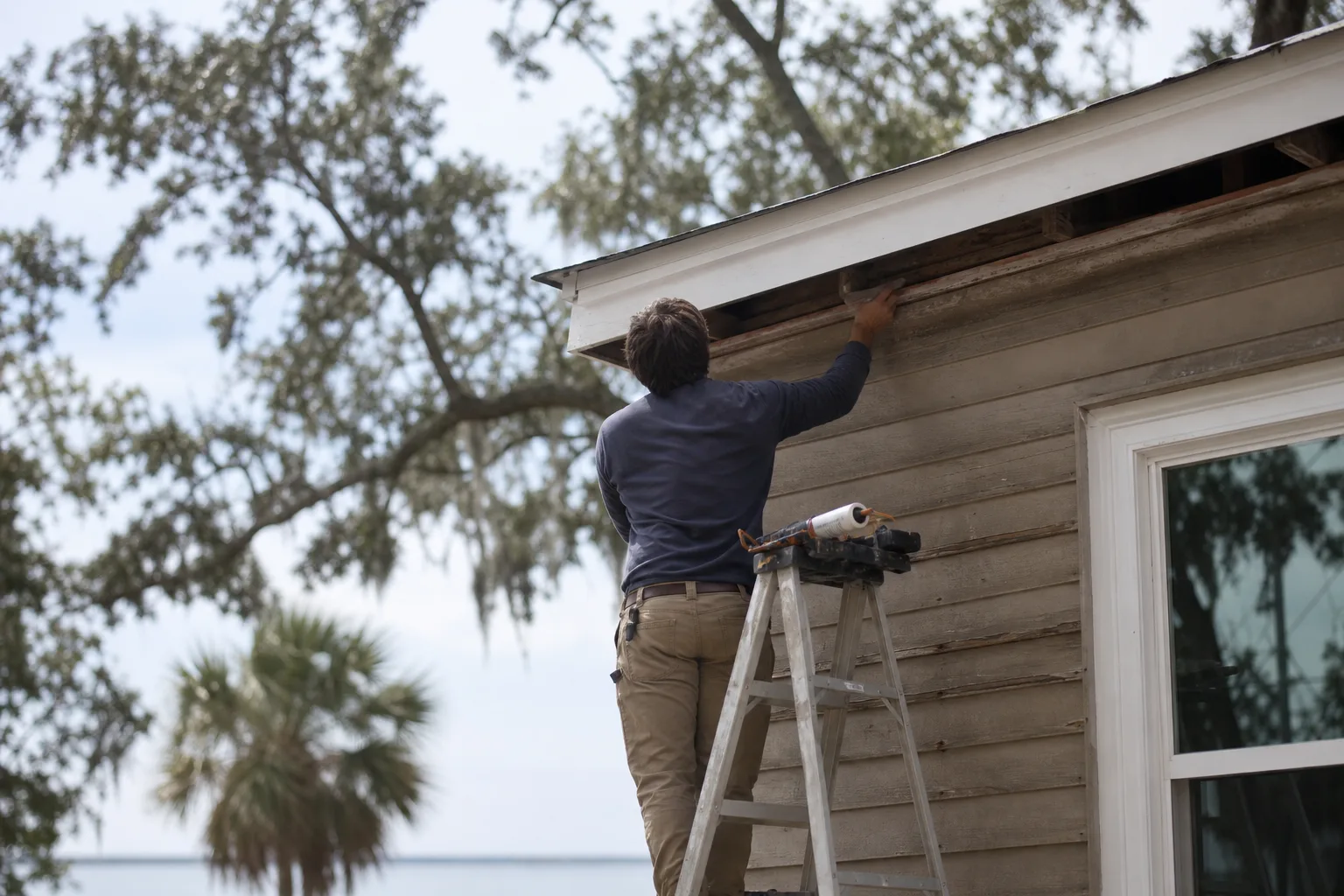
The rot in your fascia isn't a paint problem. It's a carpentry problem hiding under a paint problem — and how you decide to fix it usually sets the tone for the whole project. Hire a carpenter, wait, then hire a painter, and you've created two jobs with a seam in the middle. Hire one company that does carpentry and paint together, and that seam disappears. On a rot-and-repaint job, that single decision is what separates a finish that lasts from one that peels right back off the spot you "fixed."
This is the case for one accountable crew over two separate trades — what actually goes wrong when carpentry and painting are split, and why having both handled together protects the result.
What happens when carpentry and paint are two separate jobs?
Picture the usual sequence. You spot soft wood on the trim, call a carpenter, and they cut it out and rebuild it. Weeks later, a painter shows up to a project they didn't scope, prices off what they can see, and coats it. On paper it works. In practice, the gap between those two visits is where jobs go sideways.
The carpenter's job is to make the wood sound. The painter's job is to make it look good and seal it. Neither one fully owns the handoff — and the handoff is where a Gulf Coast paint job lives or dies. Bare wood that sits exposed for weeks soaks up humidity. A repair that wasn't primed correctly bleeds tannin through the topcoat. A board replaced a hair proud of the surrounding trim telegraphs through the finish. Each tradesperson did their part; the result still fails.
Why rot repair and paint belong to one crew
Answer first: because the repair and the finish are one continuous job, not two services that happen to touch. Wood goes through several stages before it's truly done — and every stage affects the next.
Good exterior work on the coast runs in an unbroken chain: find the moisture source, cut back to sound wood, rebuild with the right material, prime the bare repair the same day, then caulk, seal, and finish-coat. Split that chain between two contractors and the breaks happen at the boundaries — the bare repair left unprimed overnight, the caulk line nobody agreed to own, the spot one trade assumed the other would handle.
When one accountable crew coordinates the work from repair through finish, the sequence is protected by the written scope. Bare wood can be primed as part of the repair sequence so the topcoat has the surface it needs. Our carpentry and wood-repair work is scoped from the start as the foundation of the paint, not a separate ticket — which is the whole point of doing the rot repair before the paint. If you want the full sequence we follow on rotted fascia, soffit, and trim, our wood rot repair before painting guide walks through it board by board.
One crew vs. two trades, side by side
The difference shows up in the things you don't think about until they bite — scheduling, accountability, and who answers the phone when something's off.
| What you're juggling | Carpenter, then painter | One accountable scope |
|---|---|---|
| Scheduling | Two separate visits to line up, with dead time between | One coordinated timeline |
| The bare-wood window | Repair can sit exposed before paint | Priming and finish are scheduled with the repair |
| Who scoped the paint | Painter prices a repair they did not scope | Repair and coating needs are documented together |
| Accountability | Separate scopes and contacts | One accountable crew and final inspection |
| Mobilizing | Separate site visits | One coordinated project |
The pattern is consistent: every row where the two-trade route adds a seam, the one-crew route closes it. That's not a knock on good carpenters or good painters working alone. It's that a rot-and-repaint job is one problem, and one problem is best owned by one team.
How to hire one crew for carpentry and paint
If you'd rather not manage two contractors, the move is to vet a single company for both up front. Here's how to make sure the crew you hire can actually carry the whole job.
Ask if they do their own wood repair
Confirm the company handles carpentry — fascia, soffit, sills, siding, trim — in-house as part of the paint scope, not as a referral to someone else. You want one estimate that covers the repair and the finish over it.Get the repair scoped at the free estimate
During the free in-home estimate, have them inspect for soft wood and rot, not just measure square footage. The bad boards should be identified and priced before the project starts, so nothing's a surprise mid-job.Confirm the repair-to-paint sequence
Make sure they prime bare repairs promptly and don't leave fresh wood exposed before finishing. On the Gulf Coast, the gap between rebuilding wood and sealing it is exactly where humidity gets in.Get one written quote for the whole job
Ask for a single written quote within 24 hours covering carpentry and paint together. One number, one timeline, one crew accountable from your free estimate to the final inspection.
That last point is the heart of it. When one company quotes the repair and the paint as a single project, you're buying continuity — one team that's responsible from the first board they pull to the final inspection a manager signs off on before final payment. Backed by our 3-year workmanship warranty, that accountability is the real product, not just the labor.
The bottom line on carpentry and paint together
A carpenter and a painter from the same company beats hiring two trades because the work was never really two jobs — it's one job with a finish on top. Splitting it across two contractors saves nothing and adds a seam: a bare-wood window, a scheduling gap, and a warranty no-man's-land if the finish fails. Keeping it under one accountable crew closes all three.
If you've got rotted trim, soft fascia, or wood damage that needs fixing before the color goes on, get it scoped as one project. Reach out for a free in-home estimate on the carpentry and the paint together — one crew, one quote, one team that owns the result from start to finish.