
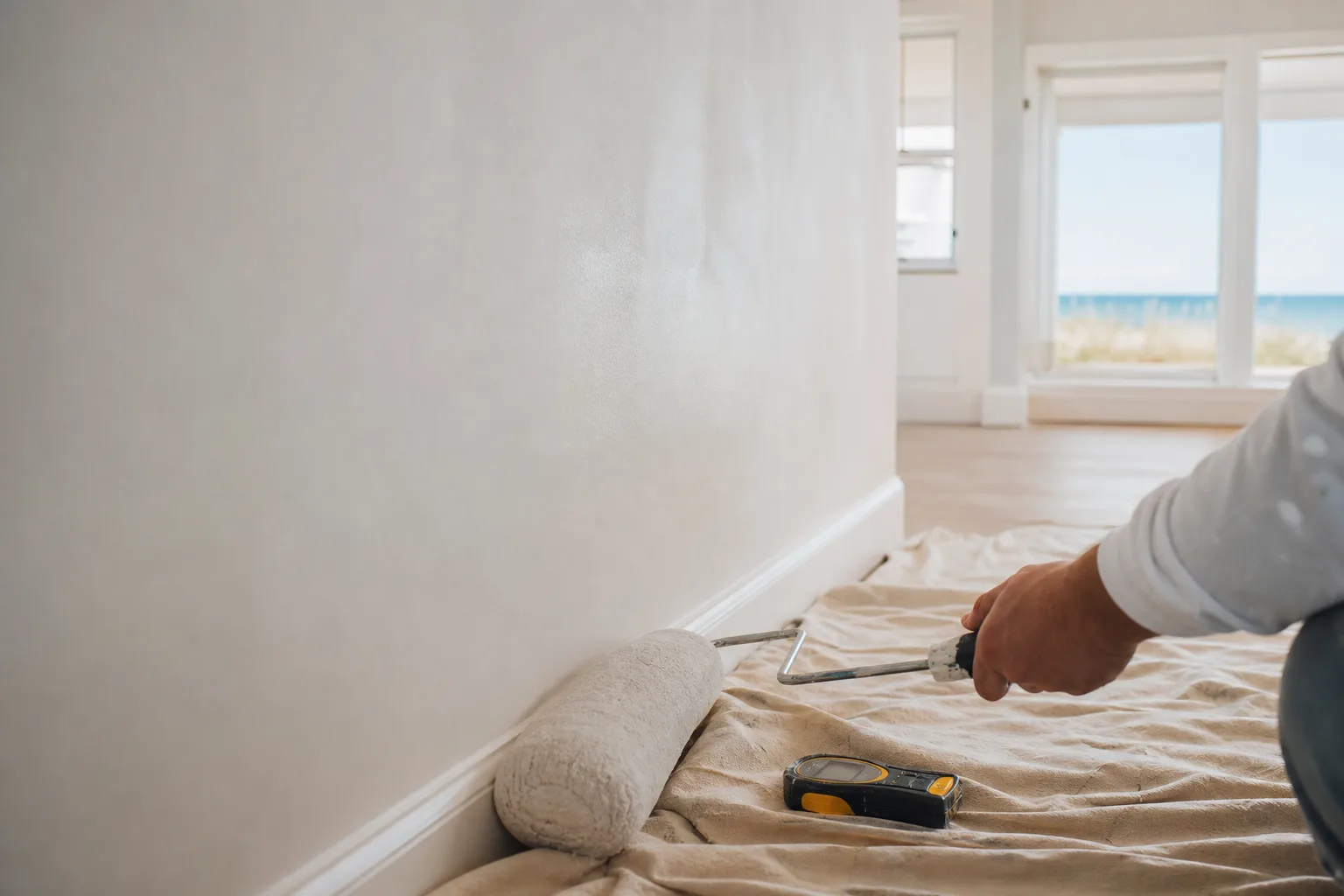
You roll on a beautiful coat in the morning, come back after lunch expecting it to be ready for round two, and the wall still feels cool and slightly clingy under your fingertips. Nothing is wrong with the paint. You're just painting in south Alabama, where the air carries a lot of water most of the year.
The short answer to does humidity affect interior paint drying is yes, and it matters more here than almost anywhere. Latex paint dries by giving up its moisture to the surrounding air. When that air is already thick and damp — the default state of a Gulf Coast afternoon — there's nowhere for the water to go, so everything takes longer. Understanding why turns a frustrating wait into something you can actually manage.
Why damp air slows the whole process down
Think of the air in a humid room as a sponge that's already mostly full. Wet paint needs to wring its water content out into that sponge, and a saturated sponge can't take much more. So the film sits there, releasing moisture slowly, staying soft far longer than the back of the can promises.
The numbers on the label assume a comfortable lab — moderate temperature, moderate humidity, a touch of airflow. A closed bedroom in Daphne in July is none of those things. We've watched the same Sherwin-Williams wall paint that flashes off in two hours up north take most of an afternoon to firm up along the coast. It isn't a defect. It's physics meeting our climate, which is exactly why the season you choose to paint makes such a difference for indoor projects here.
Dry-to-touch versus cured — they are not the same thing
This is where most rushed jobs go sideways. "Dry" and "cured" feel like the same word, but they describe two very different states, and the gap between them gets wider in humid weather.
| Stage | What it means | Typical timing |
|---|---|---|
| Dry-to-touch | Surface no longer transfers to a light finger touch | 1–4 hours, longer when humid |
| Recoat-ready | Firm enough to accept a second coat without dragging | Follow the can; add time in damp air |
| Cured (fully hardened) | Film has hardened all the way through and reached full durability | 2–4 weeks regardless of how dry it feels |
A wall can pass the touch test and still be soft enough underneath to scuff, dent from a chair back, or mark when you lean a picture frame against it. That's why we tell people to treat a freshly painted room gently for a while even after it looks finished. If you want the full timeline on living with a new coat, we walk through it in how long before you can use a freshly painted room.
How do you dry interior paint faster in humid conditions?
You don't beat Gulf Coast humidity by opening the windows — that usually invites more moisture in, not less. You beat it by controlling the room. The goal is drier air and gentle movement, so the paint's water has both somewhere to go and a little help getting there.
Run the AC
Air conditioning is a dehumidifier in disguise. It strips moisture out of the air as it cools, which gives the wet film a path to release its water.Add a dehumidifier
In a closed-off room, a portable unit pulls humidity down faster than the AC alone and holds it there steadily while you work and wait.Create soft airflow
A box fan aimed across the room — never blasting straight at the wall — keeps moist air moving away from the fresh paint without drying it so fast it cracks.Respect the recoat clock
Whatever the can says, add a cushion in damp weather. When in doubt, wait longer between coats rather than chasing a tacky finish.
A little patience with airflow and a dehumidifier does more for the finish than any expensive product. It also keeps your sheen even, which matters more than people expect — the wrong moisture level while drying can leave a blotchy shine. If you're still deciding on finish, the right sheen for each room and the best sheen for bathrooms and other humid rooms are worth a look before the brushes come out.
Why rushing a recoat backfires
When a wall is taking forever to dry, the temptation is to just go ahead and lay the second coat. Resist it. Painting over a film that's still soft underneath traps moisture between the layers, and that trapped water has to fight its way out later. The result is a finish that stays tacky, shows roller lap marks, peels at the edges, or dries to a cloudy, uneven sheen that won't correct itself over time.
Humidity is also why a job can legitimately need more time on the schedule than a dry-climate version of the same room. Coastal moisture stretches every drying window, and good painters build that into the plan instead of fighting it — part of why an interior job takes the time it does. For our trim and doors we lean on Sherwin-Williams Emerald Urethane Trim Enamel, which lays down smooth, but even the best product still needs the room conditions to cooperate.
Bottom line
Humidity doesn't ruin interior paint — it just slows it down, and on the Gulf Coast that's the rule, not the exception. Keep the room cool and dry with AC and a dehumidifier, give it gentle airflow, and never rush a recoat onto a film that's still soft. Respect the gap between dry-to-touch and fully cured, and your walls will reward you with a finish that lasts.
If you'd rather not babysit the dew point yourself, that's what we're here for. Pro 1 Painters has been family-owned since 2013, we read these coastal conditions every day across Mobile and Baldwin County, and every job carries our 3-year workmanship warranty. Book a free in-home estimate through our interior painting team and we'll get you a written quote within 24 hours — paid simply by cash, check, or credit card.