
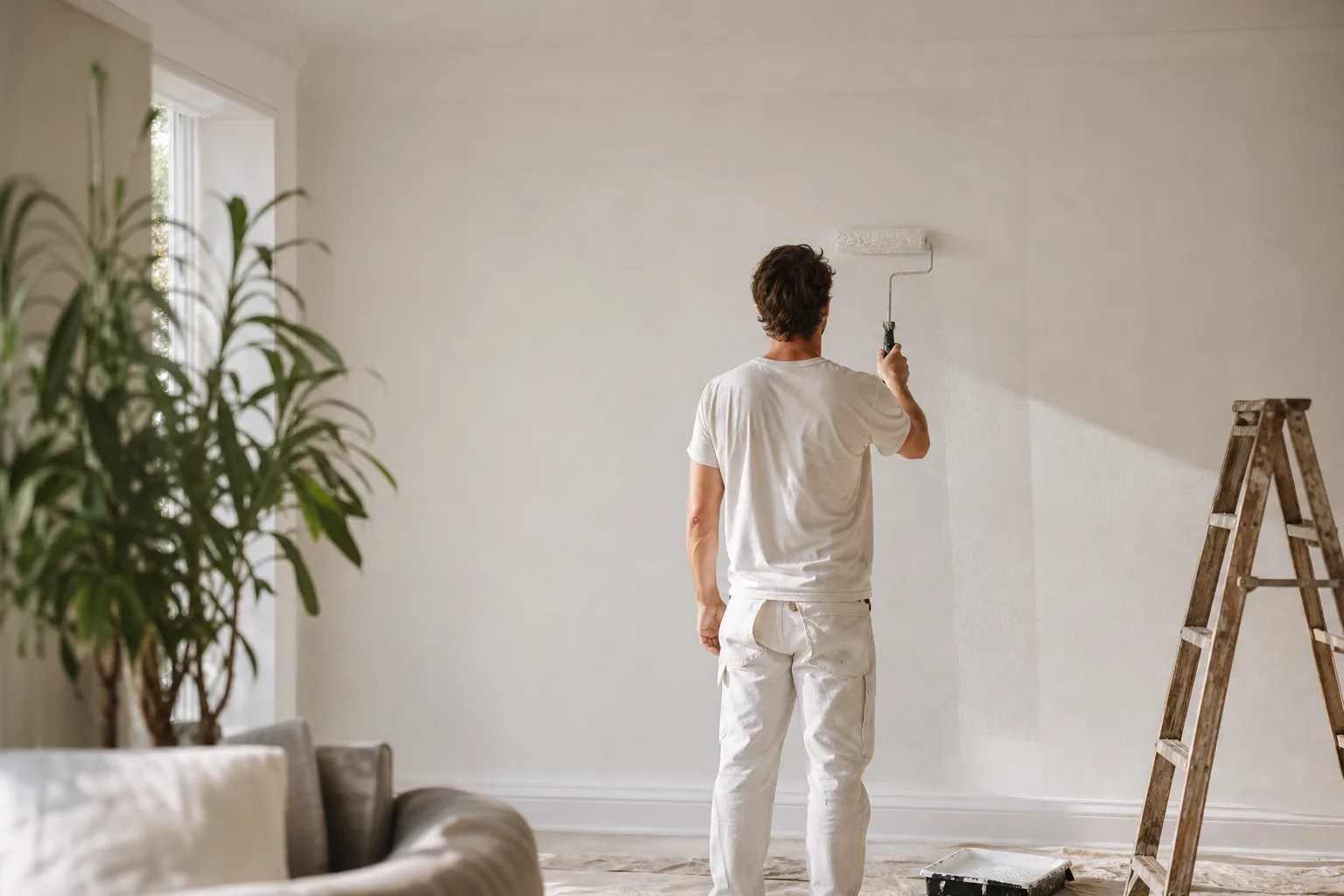
You've picked the color, the wall is ready, and now there's one practical question left: how many times do you actually have to roll this thing? It matters for your time, your paint budget, and how the finished wall looks under your lights. Put one coat on a wall that needed two and you'll see it — patchy color, the old shade ghosting through, a finish that wears unevenly within a year.
So here's the honest answer to how many coats of paint interior walls need, why two is almost always the number, and the specific situations where you'll want primer plus two coats — or, occasionally, a third.
How many coats of paint do interior walls need?
For nearly every interior wall, the answer is two coats. That's the standard a professional job is built on, and it's not about being fussy — it's what it takes to get even color, full hiding, and a finish that lasts. Two coats is the baseline; the questions are really about when you need more than two, or when you can lean on a primer coat instead.
Why not one? Because a single coat of wall paint, no matter what the can promises, almost always dries thin and uneven. The color looks blotchy, the previous color or sheen shows through in patches, and the coat wears differently across the wall as it ages. The second coat is what fills those gaps — literally building the film up to an even thickness so the color reads true and holds up to cleaning and daily life.
| Situation | Coats you'll need | Why |
|---|---|---|
| Repaint, same or similar color, sound wall | Two finish coats | Standard coverage — one dries thin and uneven |
| New or bare drywall | Primer + two finish coats | Porous surface needs sealing before finish, then two coats over it |
| Big color change (dark to light) | Tinted primer + two finish coats | Neutral base covers in fewer coats and reads true |
| Deep or hard-to-cover color (red, bright yellow) | Primer + two to three coats | Thin pigments need more layers to reach full, even color |
| Stains, smoke, or water marks | Stain-blocking primer + two coats | Ordinary paint can't stop these from bleeding back through |
Why two coats is the standard
A coat of paint isn't a single solid layer — it's a film that needs a certain thickness to do its job. The first coat does the heavy lifting of covering, but it lands unevenly: it's thicker where the roller started, thinner where it ran dry, and it soaks into the wall at different rates across the surface. That's why a one-coat wall looks streaky in raking light even when it looked fine going on.
The second coat evens all of that out. It fills the thin spots, blends the lap marks, deepens the color to its true tone, and builds the film to a thickness that stands up to scrubbing and time. Skip it and you haven't saved a coat — you've just signed up to repaint sooner. This is the same reason careful prep matters so much: the coats can only be as good as the surface under them, which is why wall prep makes or breaks an interior paint job.
When do walls need three coats — or primer first?
Three full finish coats are the exception, not the rule, and most of the time the smarter move is primer plus two coats rather than piling on a third. A few situations call for the extra work:
- Big color changes. Covering a deep navy or a bold red with a soft white can fight you for coat after coat. A tinted primer — shaded toward your new color — gives you a neutral base so two finish coats land true. That's far more reliable than three coats of expensive finish straight over the dark color.
- Deep or "weak" pigments. True reds, bright yellows, and some deep blues use pigments that simply don't hide well. These can genuinely need a primer plus two or three coats to reach full, even color. It's the pigment, not your technique.
- Stains and bare surfaces. Water rings, smoke, grease, new drywall, and fresh patches all need primer, not just more paint. Adding finish coats over a stain just buries it temporarily — it bleeds back through. The fix is a stain-blocking or sealing primer first, then your two coats.
The throughline: when you think you need a third coat, ask whether you actually need a primer coat instead. Knowing when interior walls need primer before painting is what keeps you from wasting finish coats trying to solve a problem primer is built for.
How a professional two-coat job goes on
When we paint an interior, the coat count is part of a sequence, not a guess. Here's how a proper job builds up to its finish.
Prep and prime where the surface calls for it
Clean the walls, patch and sand repairs, caulk gaps, and spot-prime bare drywall, fresh patches, stains, and glossy areas. Primer is about the surface, not the coat count.Apply the first finish coat
Cut in the edges and roll the field in sections so the paint stays wet at the edges. Expect this coat to look thin and uneven once dry — that's normal and exactly why a second coat exists.Let it dry fully before recoating
Give the first coat the recoat time on the can, usually a few hours and longer in humidity. Recoating too soon drags the layer below and leaves marks.Apply the second finish coat
Roll the second coat the same way. This is the coat that evens out the color, hides the surface beneath, and gives the wall its true depth and durability.Inspect in good light and touch up
Check the wall in daylight and under your lamps — raking light reveals what flat light hides. Touch up any thin spots before calling it done.
That sequence is why a finished wall from a real interior job looks deeper and more even than a quick weekend recoat: it's not just more paint, it's the right coats over the right prep, dried properly between layers.
The bottom line on coats
Two coats is the answer for almost every interior wall — it's the standard because one coat dries thin and uneven, and two is what gives you true, durable color. Step up to primer plus two coats when you're making a big color change, covering a deep or hard-to-cover color, or sealing stains and bare surfaces. You rarely need three finish coats; when it feels like you do, it's usually a sign the wall needed primer first.
If you're changing colors and want to see how a new shade will actually read on your walls before you commit to the cans, try our free AI color visualizer — upload a photo of your room and preview real colors on it. And when you'd rather not count coats yourself, our interior painting crew handles the prep, primer, and the full two-coat finish on every job. Book a free in-home estimate and you'll get a written quote within 24 hours.