
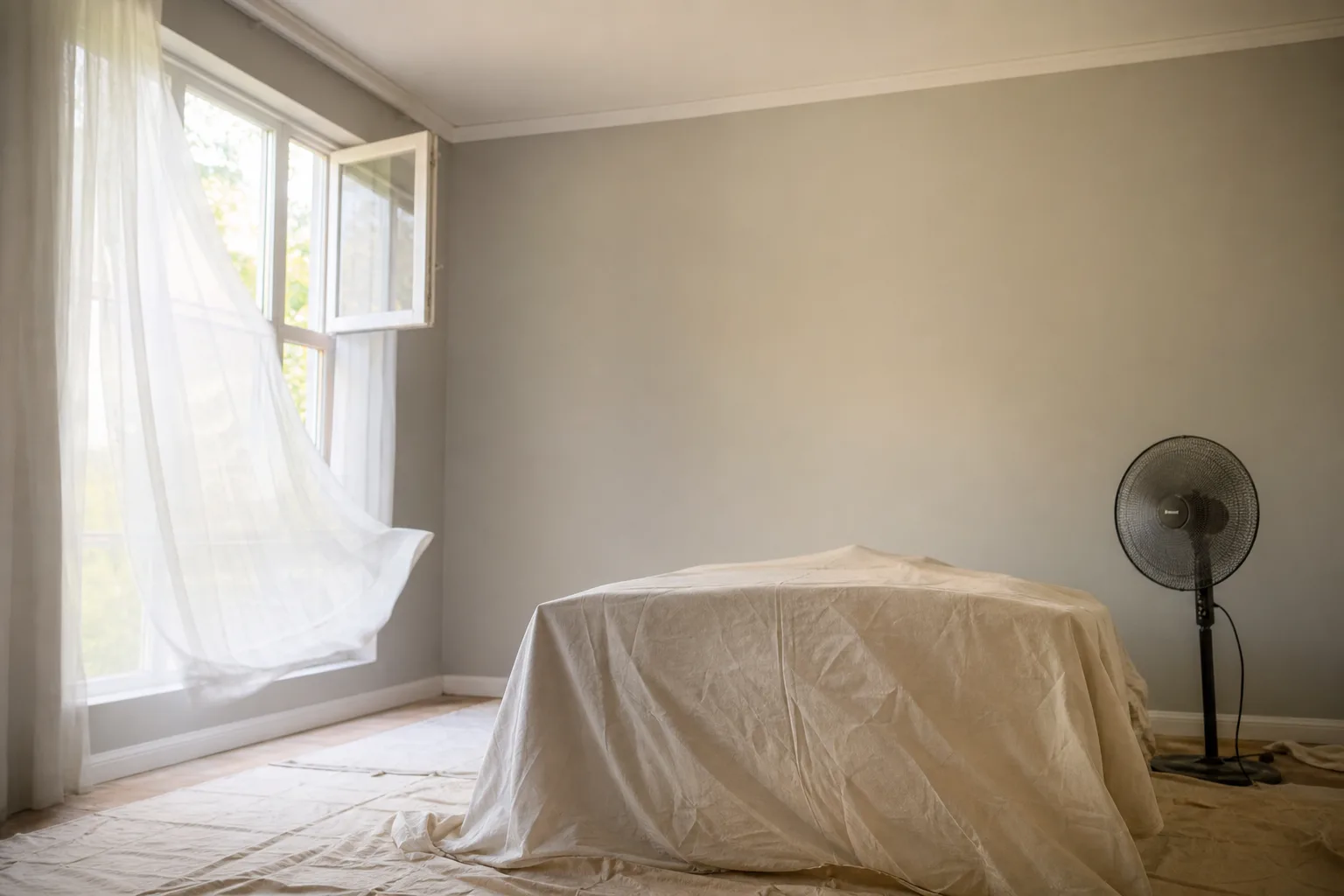
The paint looks done. The room smells faintly of fresh paint, the walls are dry to the touch, and you want your furniture back and your life back. So how long before you can actually use a freshly painted room? The short answer: you can walk in within a few hours, but the paint isn't truly finished hardening for weeks. Understanding the gap between paint dry time and cure time is what keeps you from denting a brand-new wall or peeling the finish when you rehang a picture three days too early.
Here's exactly when you can re-enter, move furniture back, rehang art, and sleep in the room — plus why our Gulf Coast humidity stretches every one of those windows.
Paint dry vs cure time: what's the difference?
These are two different things, and confusing them is what gets walls marked up. Drying is the surface losing its water and solvents so it feels dry to the touch — that happens within a few hours for most interior wall paint. Curing is the paint film fully hardening and bonding to the wall, and that takes two to four weeks. The room is perfectly usable long before it's cured. It just isn't durable yet, which is why a wall can feel dry on Monday and still get dented by a couch on Wednesday.
So while the painting itself may have only taken a day or two, the finish keeps maturing after the crew leaves. That's a separate question from how long the job takes start to finish — if that's what you're really after, see our realistic interior painting timeline, which covers prep through final inspection, or our interior house painting guide for the full process. This post is about the clock that starts after the last coat goes on.
When you can use the room: a realistic schedule
Here's a practical timeline for a standard low-VOC interior wall paint in normal conditions. Add time in humid weather.
| What you want to do | How long to wait | Why |
|---|---|---|
| Walk in and use the floor | A few hours | Walls are dry to the touch; just don't lean on them |
| Light, normal use of the room | About 24 hours | Surface has set enough for everyday activity |
| Push furniture back to the walls | 2–3 days | Paint is still soft; contact too soon dents or sticks |
| Rehang pictures and mounts | ~2 weeks | Cured film won't mar or peel around hardware |
| Scrub or wash the walls | 2–4 weeks | Wait for full cure before any hard cleaning |
Walk in (a few hours)
Once the walls are dry to the touch, you can enter and use the floor space — just don't touch or lean on the walls.Light use (about 24 hours)
Give it a full day before normal use of the room, and keep it ventilated so the surface keeps setting up.Furniture back (2–3 days)
Wait two to three days before pushing furniture against the walls, and leave a small gap so nothing sticks or dents the soft finish.Rehang art (~2 weeks)
Hold off about two weeks on pictures and anything that presses on the wall, so the cured paint won't mar around the hardware.Full cure (2–4 weeks)
Skip scrubbing and hard cleaning until the paint reaches full hardness; wipe gently in the meantime.
Trim and doors painted in enamel can stay tacky a bit longer than wall paint, so be slow to close doors fully or stack things against a freshly painted door for the first several days.
Off-gassing and when it's safe to sleep in the room
That fresh-paint smell is off-gassing — the paint releasing the last of its solvents as it cures. Even modern low-VOC paints do it, just much less than the old high-solvent products. With today's low-VOC interior paints, most healthy adults can sleep in a freshly painted room the same night once it's dry and the room has been aired out.
Ventilation is what clears it fastest. Open the windows, run a fan and the air conditioning, and the odor fades well before the paint is fully cured — our guide on how to air out a room after painting covers the fastest way to clear the air. Give it more caution — extra airing-out time, or sleeping elsewhere for a night or two — for the people and pets who are more sensitive to fumes: infants, pregnant women, anyone with asthma or respiratory issues, and cats and dogs, whose smaller size makes them feel it more.
Why Gulf Coast humidity slows everything down
Every timeline above assumes reasonable conditions. Our climate isn't always reasonable. Water-based paint dries by releasing its moisture into the surrounding air — and when the air is already heavy with humidity, as it so often is here, the paint has a harder time letting go of that water. That stretches the time between coats, lengthens the cure, and can leave a wall feeling tacky long after it "should" be dry.
That's why we don't just rely on the calendar. On a humid job we run the air conditioning, keep fans moving, ventilate the space, and build in extra dry time between coats so each one sets up properly before the next. Rushing a second coat onto a wall that hasn't released its moisture is how you get a soft, slow-curing finish — so we let the conditions, not the clock, tell us when the next coat goes on. It's the same reason prep and patience matter: a finish that's allowed to dry and cure right is the one that lasts.
The simplest way to know exactly how a repaint will go in your home — including how the season and your home's conditions affect the schedule — is a free in-home estimate. We'll look at your rooms, talk through the timeline and what to expect after the last coat, and hand you a written quote within 24 hours for your interior painting project. Every Pro 1 job runs with one accountable crew from that first estimate to the final inspection, a clean job-site each day, and a manager sign-off before final payment — backed by our 3-year workmanship warranty and a 4.8-star rating from homeowners across the Gulf Coast.