
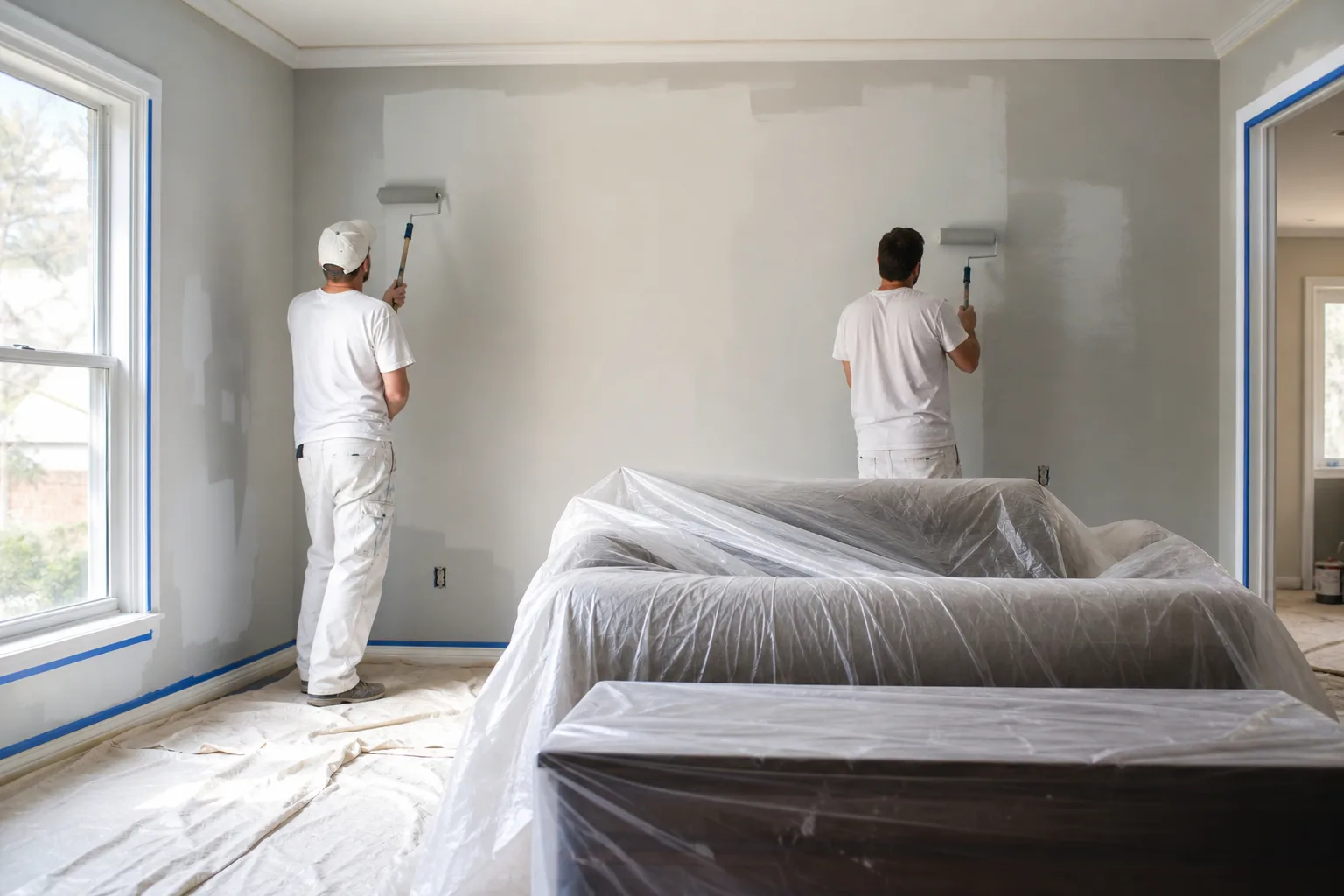
The painting itself is usually faster than people expect. The whole job — start to a clean final inspection — is what takes time, and most of that time isn't rolling paint. It's prep, dry time between coats, and working room by room so you can still live in your home while it happens. So when you ask how long to paint interior of house space you've got, the honest answer is a range, and the range is set by a handful of things you can actually see coming.
Here's a realistic interior painting timeline, the steps that fill those days, and what pushes the count up or down.
How long does interior painting take, room by room and whole-home?
For a quick read: a single room in good shape is often one to two days, and a whole-home interior runs several days to about two weeks. A two-painter crew moves faster than one, and a home that needs little prep finishes quicker than one with cracked plaster and water stains. The variables that matter most are size, surface condition, ceiling height, and how many colors and coats the job calls for.
| Project scope | Typical timeline | What stretches it |
|---|---|---|
| Single room | 1–2 days | Heavy patching, full trim and ceiling, multiple colors |
| A few connected rooms | 2–4 days | High ceilings, lots of doors and trim, color changes |
| Whole-home interior | Several days to ~2 weeks | Square footage, prep load, occupied home, detail work |
| Trim, doors, and ceilings only | Varies by count | Number of doors and linear feet of trim — slow brush work |
These are realistic working ranges, not promises — your home decides where it lands. The point is that scope and condition, far more than just floor size, set the day count. For the full picture of what a whole-home interior repaint involves, our interior house painting guide for Mobile and Baldwin County walks through the entire process. A little homeowner prep helps too — our interior paint prep checklist covers what to do before the crew arrives so the job moves faster.
What the days actually go to
Most of an interior job isn't the visible rolling — it's the prep before and the dry time between. Here's how a typical whole-home interior actually unfolds.
Free in-home estimate
We measure the surfaces, check condition, and give you a written quote plus a realistic day-by-day timeline within 24 hours.Protect and prep
We move and cover furniture, mask trim and floors, then patch, sand, and stain-block — the step that decides how long the finish lasts.Prime where needed
We prime patches, bare drywall, stains, and any big color change so the finish coats cover evenly.First coat
We cut in edges and roll the first full coat, working room by room so your home stays livable.Second coat and dry time
We apply the second coat for true, even color, letting each coat dry properly instead of rushing it.Cleanup and final inspection
We pull tape, reset rooms, clean up, and walk every space with you for the final inspection before final payment.
The two stages that quietly eat the most time are prep and dry time — and neither is optional. Prep is 80% of a paint job that lasts; skipping it just buys you an earlier repaint. And paint needs to dry between coats whether you're in a hurry or not. The right way to move faster is a bigger crew and smart room sequencing, not a rushed second coat over a wall that wasn't ready.
What it's like while the crew is there
Most interior repaints happen while you're still living in the home, and a good crew plans the days so that's livable. We work room by room rather than tearing the whole house apart at once, so you keep usable space throughout. The morning a job starts, the most disruptive stretch is the prep — moving and covering furniture, masking, and patching. Once color is going on, things move quickly and quietly.
A few rooms deserve scheduling thought. We try to keep at least one bathroom and a path through the home clear at all times. Kitchens and primary bedrooms get planned so you're not locked out of them overnight. If a particular day matters to you — working from home, a delivery, kids' nap schedule — tell us at the estimate and we'll sequence the rooms around it.
Dust and fumes are normal questions. Modern interior paints are low-odor, and we ventilate as we go, but sensitive folks and pets sometimes prefer to be out during the busiest day or two. It's a preference, not a requirement — the home stays livable throughout a typical repaint.
What makes it take more or fewer days
A few things reliably stretch an interior timeline. Prep load is the biggest — cracks, water stains, old peeling paint, and any skim-coating add hours before color even starts. High ceilings mean staging and slower reach time. Trim, doors, and detail are brush-heavy and slow. Dark-to-light color changes usually need an extra coat for clean coverage. And an occupied home runs a touch slower than an empty one, because the crew works around your furniture and life — which is the trade-off for not having to move out.
On the other side, you can genuinely shorten the job: paint several rooms in one visit so the crew mobilizes once, handle your own furniture moving and minor patching, and stay in a similar color family for faster coverage. None of that touches the prep that makes the work last.
When you want a real timeline for your home — not a phone guess — the move is a free in-home estimate. We'll walk the rooms, hand you a written quote within 24 hours, and lay out a day-by-day plan for your interior painting project. Every Pro 1 interior job runs with one accountable crew from that first estimate to the final inspection, a clean job-site each day, and a manager sign-off before final payment, backed by our 3-year workmanship warranty and a 4.8-star rating from homeowners across the Gulf Coast.