
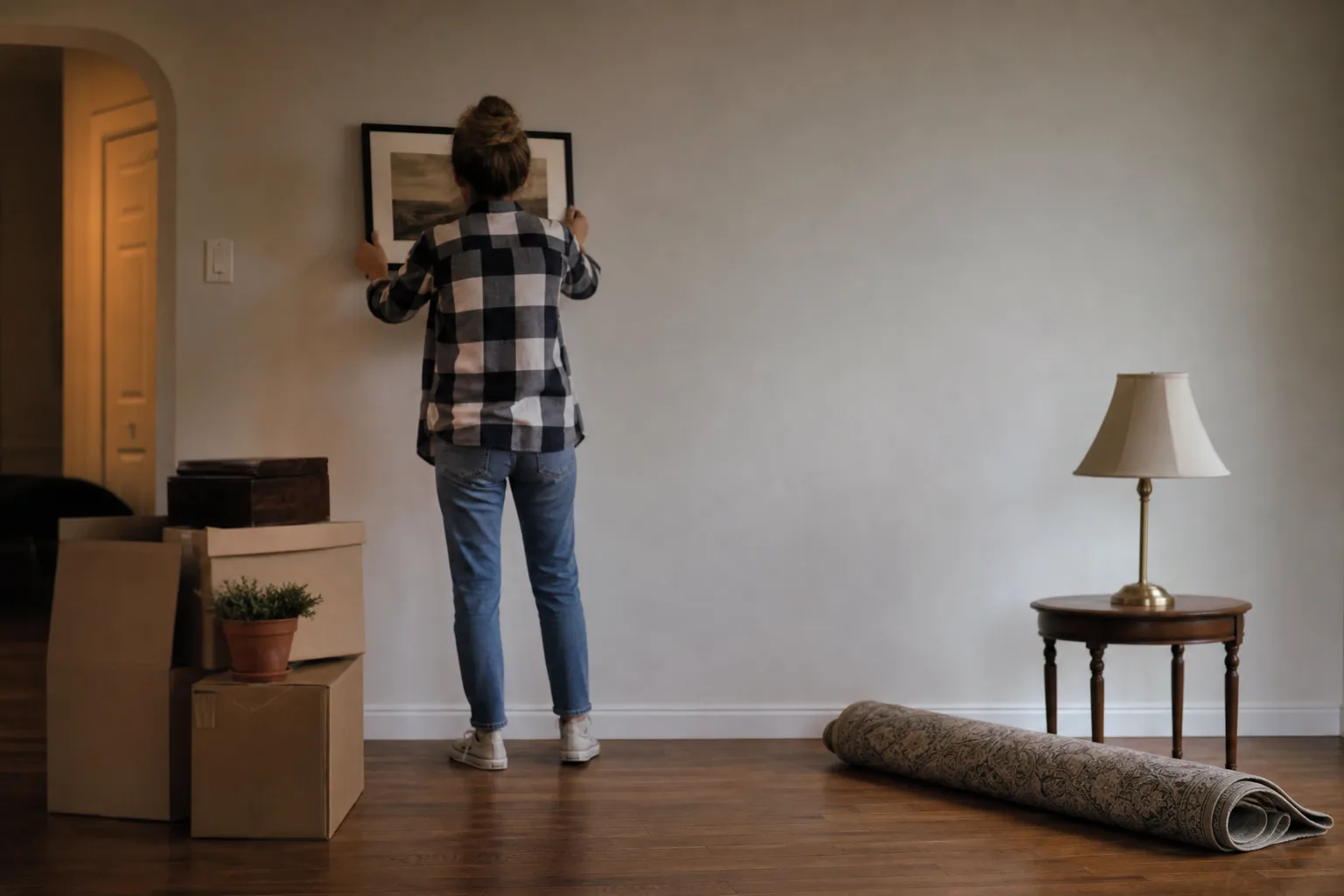
The crew shows up at 7:30, and the first ten minutes set the tone for the whole job. If the rooms are cleared and you've had a quick word about colors and trouble spots, the brushes are moving before 8. If we're waiting on you to unhook a TV and box up the mantel, that's an hour of painting daylight gone before anyone's cut in a single line.
None of it is hard. This interior painting prep checklist is the short list of things only you can do — the stuff in your hands that we can't (and shouldn't) touch. Run through it the evening before and painting day starts on time, your belongings stay safe, and we get straight to the work you're actually paying for. Here's exactly how to prepare for interior painting, room by room and start to finish.
The night-before interior painting prep checklist
Everything below is homeowner work — your side of getting ready for house painting. The heavy lifting, the drop cloths, the masking, and the furniture-moving are ours (more on that in a minute). Your job is to clear the decks and hand us a room that's ready to paint.
Lock in colors and sheens a few days out
Decide the exact color and sheen for each room before the job, not the morning of. That lets the paint get ordered and means there's no standing-around decision while the crew waits.Clear every surface
Empty shelves, mantels, windowsills, dressers, and counters in the rooms being painted. Loose items get in the way and put your things at risk near ladders and wet edges.Take everything off the walls
Art, mirrors, clocks, floating shelves, curtains, and curtain rods all come down. A bare wall paints faster and cleaner than one we have to cut around — and you get to rethink where things hang.Pack the breakables
Box up knickknacks, vases, electronics, and anything fragile or irreplaceable, and set them in a room that isn't on the paint list. These are exactly the items a homeowner should handle personally.Move the small furniture
Carry out lamps, side tables, plant stands, and chairs you can lift on your own. The fewer small pieces in the room, the more floor we have to work and the faster it goes.
What to leave for the crew (don't hurt your back)
Just as important as what to do is what to skip. A few jobs are ours by design, and trying to do them yourself the night before only risks a strained back or a scratched floor.
- Heavy furniture. Sofas, beds, dressers, dining tables, and big bookcases stay put. We slide them to the center of the room, pull them off the walls, and drape them in plastic. That's part of our prep, not your homework. For the full rundown on that split, see do painters move furniture and what to expect.
- Drop cloths and floor protection. We bring and lay the floor covering — drop cloths and film over hardwood, tile, or carpet across the whole work zone.
- Masking and taping. Outlets, switch plates, baseboards, door hardware, and light fixtures get masked by the crew so only the surfaces being painted are exposed.
- Filling old holes and patching. Nail holes, dents, and hairline cracks get filled, sanded, and spot-primed as part of the job. You don't need to spackle anything ahead of time.
So the short version: you clear and carry the small stuff; we handle the heavy lifting and all the protection. That clean division is most of what keeps a job on schedule.
Make the rooms reachable — and your home livable
A cleared room is half of it. The crew also needs to get to the house, move through it, and work without dodging hazards. Spend ten minutes on access and comfort and the day runs smoother for everyone.
Clear a path and a parking spot
Open a clean route from where we park to the front door, and set aside a space or two close by. Hauling ladders and five-gallon buckets across a packed driveway costs time.Handle wall-mounted electronics
Unmount TVs and wall speakers if you can do it safely, or tell us so we can mask carefully around them. Unplug and move computers and gaming gear to a room off the list.Pull furniture off the baseboards
If your back allows, edge heavy pieces a couple of feet from the walls. It's not required — we'll do it — but it gives us a running start on the first room.Plan for pets and kids
Set up a closed-off room or a day out for pets and small children. Doors stay open during a paint job, fumes are no good for them, and wet walls are too tempting to little hands and curious noses.
What should you tell the crew on the first morning?
The last item on the checklist is a five-minute conversation. Before the first coat, walk the rooms with the lead and hand off what only you know about your house.
- Point out stains and past leaks. Water rings on a ceiling, a spot under a window, an old roof or plumbing leak — flag every one. Those areas get sealed with the right primer so they don't bleed through fresh paint. Painting over an unsealed stain is the most common reason a ghost mark comes back.
- Confirm colors and sheens, room by room. Say which color goes where and what sheen you chose for walls, trim, and ceilings. A quick confirmation beats a wrong wall.
- Flag anything off-limits. An accent wall you're keeping, a built-in you don't want touched, a delicate light fixture — name it now.
- Share access details. Where to park, which entry to use, the alarm code or gate routine, and how to reach you during the day.
If you're still torn on a color when the morning comes, that's normal. Our color consultation can help you settle it, and you can preview shades at home first with our free AI color visualizer — upload a photo of your own room and see real paint colors on your walls before you commit. Getting the color decided ahead of time is the single biggest thing that keeps painting day from stalling.
Why a little prep on your end pays off
Good prep is the whole game in painting — we say prep is about 80% of a job that lasts. Most of that is our work: the patching, caulking, sanding, and priming that make a finish look right and hold up in Gulf Coast humidity. But the homeowner's slice of prep matters too. A cleared, reachable room lets the crew start on time, protects the things you care about, and means the hours go into careful painting instead of moving your stuff around.
When you're ready, we make the rest easy: a free in-home estimate, a written quote within 24 hours, and one accountable crew that runs your job from that estimate through to the final inspection, with a manager sign-off before final payment. We're family-owned since 2013, backed by a 3-year workmanship warranty and a 4.8-star Google rating, and you can pay by Cash, Check, or Credit Card.
For the bigger picture before you book, our complete interior house painting guide for Mobile and Baldwin County walks through prep, primer, sheen, and timeline, and if you're wondering how many days to set aside, how long it takes to paint a house interior lays out a realistic schedule. Run the checklist, hand us a ready room, and we'll take it from there.