
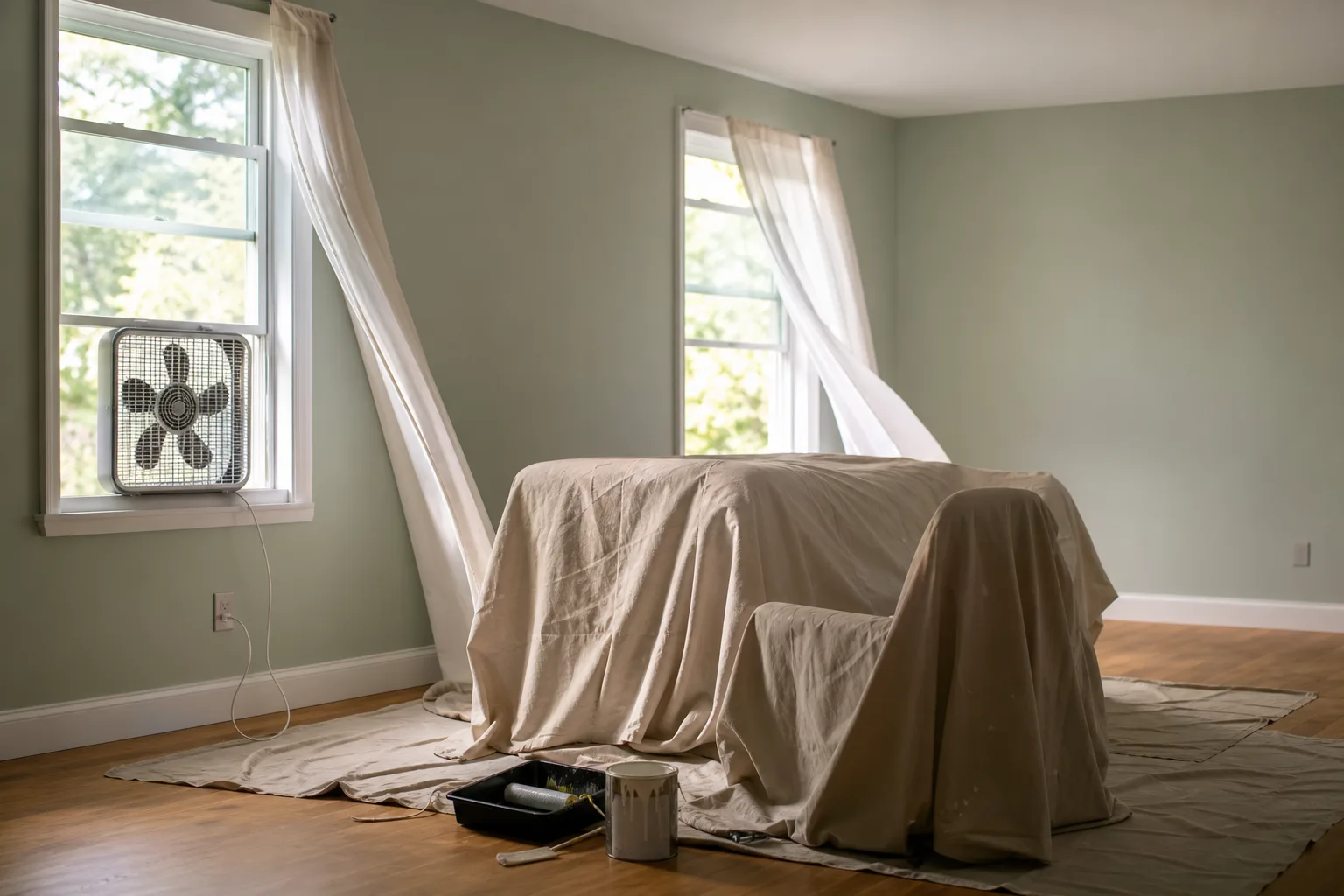
You walk back into the room and the color looks great — but the smell hits you the second you open the door. Fresh paint has that flat, chemical odor that makes a beautiful room feel unusable, and the question everyone asks the day after is the same: how do you get rid of paint smell fast and actually air the room out? The good news is it clears quicker than most people think, and the trick isn't a fancy product. It's moving air through the room the right way.
Here's exactly how we air out a room after painting, why cross-ventilation beats a single open window, and how our Gulf Coast humidity changes the game.
What causes the paint smell, and how long does it last?
That odor is the paint off-gassing: as the film dries, it releases the solvents and volatile organic compounds (VOCs) that kept it liquid in the can. The smell is strongest right after the last coat and fades as those compounds work their way out. With a modern low-VOC interior paint, the strong phase is short — most of it clears within 24 to 72 hours of real ventilation, and a faint trace can hang on a couple weeks while the paint cures. Oil-based products and damp air both drag that out.
So the goal of airing out a room isn't to mask the smell. It's to exchange the air — pull the fume-heavy air out and bring fresh air in — over and over until the off-gassing has mostly run its course.
How to air out a room after painting, step by step
The single biggest lever is cross-ventilation — air coming in one opening and leaving another. One open window barely moves air; two openings on different walls, with a fan helping, can flush a room many times over in an hour. Here's the sequence we use.
Open windows on two sides for cross-ventilation
Crack windows on opposite sides of the room so fresh air flows in one side and out the other. Two openings on different walls move far more air than one, and that exchange is the whole game.Put a box fan in a window blowing outward
Set a box fan in one window facing OUT so it actively exhausts fumes while fresh air gets drawn in the other window. Pulling fume-heavy air out clears a room faster than blowing fresh air in and letting it swirl.Keep air moving inside with a second fan
Run a small oscillating or floor fan inside, aimed along the freshly painted walls, so the odor sitting near the paint keeps drifting toward the exhaust window instead of pooling in still corners.Run your HVAC fan and AC
Switch the thermostat fan to ON so the system keeps exchanging and conditioning the home's air. On a humid day, running the AC dries and circulates the air so the smell clears without you flooding the room with damp outdoor air.Add odor absorbers as backup
Set out bowls of water, activated charcoal, or baking soda — or a sliced onion overnight — to soak up what ventilation leaves behind. Useful supplements, but they never replace airflow.Keep it ventilated for 24 to 72 hours
Leave the windows, fans, and HVAC working for the first one to three days. That's when most of the smell clears with low-VOC paint, though a faint odor can linger while the finish cures.
A couple of refinements make a real difference. Direction matters — the exhaust fan should face out, not in. Open the closet doors, drawers, and any cabinets in the room so trapped air in those pockets gets swept out too. And if the room has no usable second window, prop the door open and put the box fan in the doorway pulling air toward an open window elsewhere in the house — you're just borrowing a second opening from the next room.
Reduce paint fumes before you ever pick up a brush
The easiest way to air out a room is to put less into the air to begin with. The choice of paint does most of that work for you.
| Choice | Effect on fumes | Worth it? |
|---|---|---|
| Low-VOC paint | Far less odor and off-gassing than older formulas | Almost always — it's the standard now |
| Zero-VOC paint | Minimal odor; clears fastest | Great for nurseries, bedrooms, sensitive folks |
| Oil-based / alkyd paint | Strong, long-lasting fumes | Only where it's genuinely needed; ventilate hard |
| Painting with the AC running | Dries and clears faster in humid weather | Yes on the Gulf Coast |
For most interior walls, a quality low-VOC paint gives you a tough finish with a fraction of the odor, and zero-VOC options are worth it in a nursery or a room for someone sensitive. We dig into where the upgrade pays off in are low-VOC and zero-VOC interior paints worth it. If there are little ones or animals in the house during the work, our notes on painting safely with kids and pets in the house cover keeping them out of the freshly painted room until it's aired out.
When the Gulf Coast humidity fights you
Our climate is the wild card. Humid air holds moisture that slows water-based paint from releasing its own, so the paint dries slower, off-gasses longer, and the smell lingers — and throwing the windows wide on a muggy afternoon can pour damp air right back in. The fix is to let your air conditioning do the heavy lifting: it pulls moisture out and keeps the indoor air circulating and dry while a fan nudges fumes toward a cracked window. On a dry, breezy day, open everything up. On a sticky one, run the AC and ventilate in shorter, smarter bursts. Either way, give a freshly painted room a little extra time in our wetter stretches.
The short version
To get rid of paint smell fast: open two windows, put a box fan in one blowing out, keep a second fan moving air inside, run your HVAC, and let it all work for 24 to 72 hours — with absorbers as backup and the AC handling humidity. Choose a low-VOC paint up front and most of the problem never shows up.
That's the same approach we bring to every job. Pro 1 Painters has been a family-owned Gulf Coast painting crew since 2013, and a clean, low-odor process — quality low-VOC products, proper ventilation, and a tidy site at the end of each day — is part of how we work. One accountable crew runs your project from your free estimate through the final inspection, a manager signs off before final payment, and the work is backed by our 3-year workmanship warranty and a 4.8-star reputation. Want walls done right without living in the fumes for a week? Walk through your options in our interior house painting guide, or book a free in-home estimate for interior painting and we'll email a written quote within 24 hours. Pay by Cash, Check, or Credit Card.