
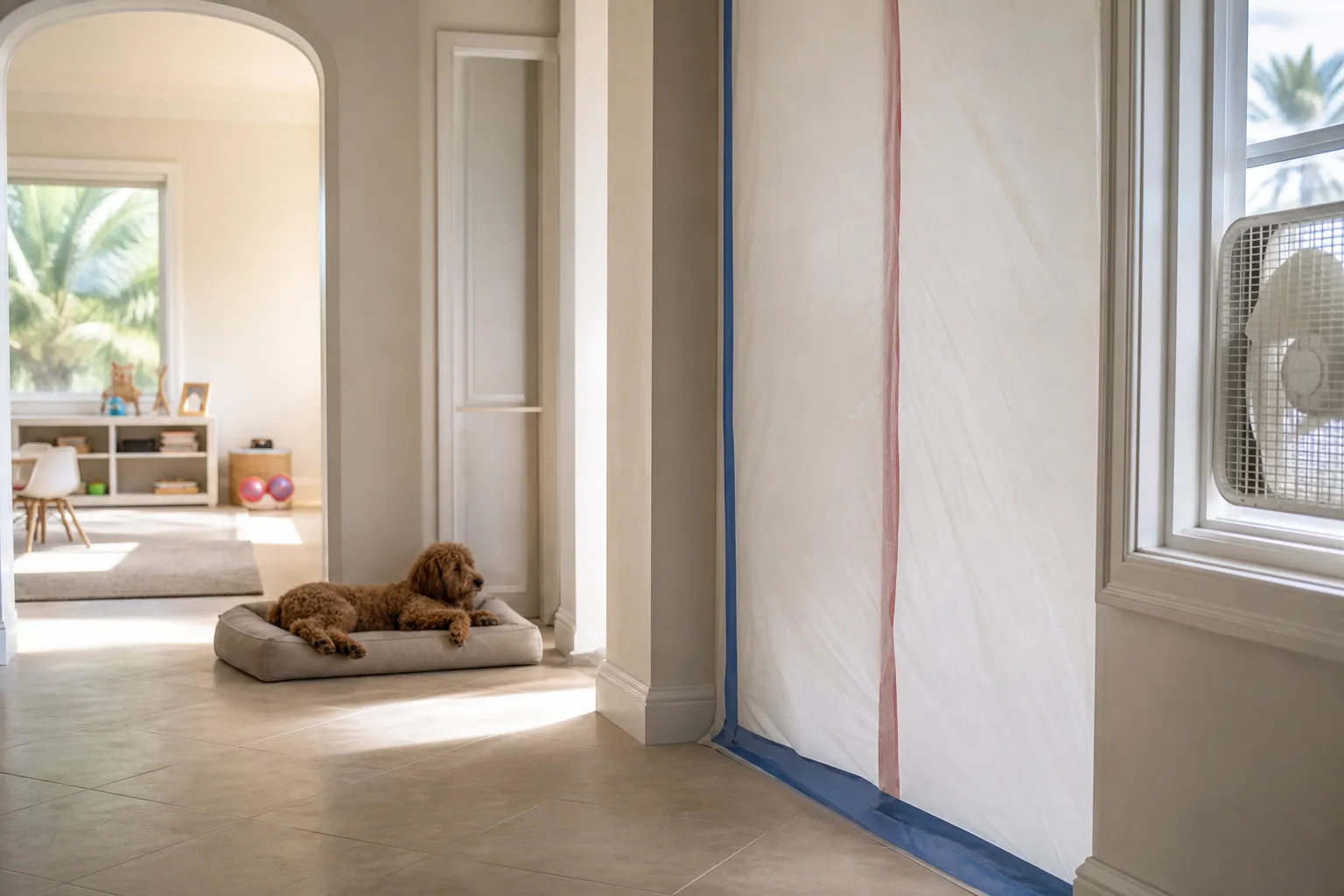
The dog wants to investigate the drop cloth. The toddler is fascinated by the roller tray. A freshly painted baseboard is exactly nose-and-finger height. Painting with kids and pets in the house safely isn't about banning anyone from their own home for a week — it's about keeping the small, curious members of the household away from wet paint, fumes, and the gear, while the rest of the place stays completely normal.
The good news: modern interior paint is mild and the real hazards are easy to manage with a plan. This guide is about the safety side specifically — the products, the fumes, sealing off wet rooms, and a clean handover. If you're more focused on how to keep daily life running while a whole-house project is underway, our guide to living in your home during an interior repaint covers the phasing and routine side. Here, we're keeping the kids and pets safe.
Are paint fumes actually dangerous for kids and pets?
Less than they used to be — but they're still the reason you keep little ones out of wet rooms. Today's interior latex paints put off far less odor and far fewer volatile organic compounds (VOCs) than the paint people remember, and low-VOC and zero-VOC products cut that further. The smell clears quickly with ventilation, and most rooms are comfortable to use again the same day.
That said, kids and pets have a lower tolerance for fumes than adults, and they can't tell you when something bothers them. Babies, anyone with asthma, and pets — birds especially — are the most sensitive. So the rule is simple: keep them out of the room while it's wet and airing out, and lean on low-odor products in the spaces that matter most.
The physical hazards matter just as much as the fumes. Open paint trays, ladders, wet edges at crawling height, and rolls of masking tape are all things a curious dog or a small child will get into. A taped-off, closed-door work zone handles both at once.
Start with low-VOC paint in the rooms that matter
The first safety decision happens before a brush comes out: the product. For a nursery, a kids' room, a playroom, or any space used by someone sensitive, ask for low-VOC or zero-VOC interior latex. It's widely available, it performs just as well, and it dramatically cuts the odor and fumes in the room. We're glad to spec low-odor products for the rooms where it counts — just flag them at your free estimate.
If you want to understand the trade-offs and where it's worth paying for, our companion post on whether low-VOC and zero-VOC interior paint is worth it breaks it down. And if you're picking colors for those rooms, you can preview real shades on your own walls with our free AI Color Visualizer — upload a photo of the nursery and see the color before you commit, so you're not repainting a room you just aired out.
Seal off the wet room — and set up a safe home base
The single most effective safety step is containment. The room being painted gets its door closed and the opening masked, so wet paint, trays, dust, and tape all stay inside it — and the kids and pets stay outside it. The rest of the house carries on as usual.
Close and mask the work zone
The active room's door stays shut and the opening is sealed off, so nothing wet, sharp, or sticky is reachable and the fumes stay contained to that one room.Give pets a closed-off room
Set pets up in a room that isn't being painted — their bed, water, and a familiar spot behind a closed door. Move birds well away from fumes. Board the most anxious pets on the busiest days.Give kids one paint-free home base
Pick one room that stays untouched as the kids' base for the day, with their things in it, so their world stays normal while other rooms get painted around them.Tell the crew where everyone is
This is the big one. When we know which rooms hold the pets and kids, doors stay shut, gear moves carefully, and nobody slips outside past an open door while we carry equipment in and out.
That last step is the one homeowners forget and it's the most important. A door left open while a painter carries a ladder out is how a dog gets loose or a toddler wanders into a wet room. Telling us up front where everyone is means the whole crew is watching those doors.
Ventilate to clear fumes fast — even in Gulf humidity
Moving air is what clears paint odor, and on the Gulf Coast that takes a little planning. Throwing every window open for a day isn't always realistic between summer humidity, pollen season, and the occasional storm rolling in off the bay.
The fix is targeted cross-ventilation, room by room, rather than opening up the whole house. For each room as it's finished, open windows on opposite walls and put a box fan in one of them blowing outward — that pulls the fumes out instead of pushing them deeper into the house. Keep the door to the rest of the home closed so the odor doesn't drift toward where the kids and pets are.
Hold the line on bedrooms overnight. Don't let anyone sleep in a freshly painted bedroom the first night — give it overnight to clear, and have the kids sleep in their paint-free home-base room. That's doubly true for a nursery: paint it well ahead of when the baby needs it, and air it out completely.
End with a clean, safe handover
Painting day isn't done until the rooms are safe to hand back. Before kids and pets return to a finished room, the floors should be clear of tape and debris, no open trays or tools left sitting out, and the room dry and aired. That's part of how we close out every job: one accountable crew runs your project from the free estimate to the final inspection, and a manager signs off before final payment — so you're not the one finding a stray strip of painter's tape after the dog already has.
We walk the finished rooms with you at that final inspection. It's the moment to confirm everything's tidy and cleared before the little ones move back in. For the bigger picture of doing an interior project right from start to finish, our interior house painting guide for Mobile and Baldwin County homes ties it together, and our interior painting crews handle the prep, protection, and cleanup so your household stays safe through the week.
A repaint with kids and pets around comes down to four habits: the right paint, a sealed-off wet room, a safe home base with the crew in the loop on doors, and ventilation that clears the air. Get those right and the only one who minds the project is the dog who wanted to see the drop cloth. Get a free in-home estimate and we'll plan the job around your family — backed by our 3-year workmanship warranty.