
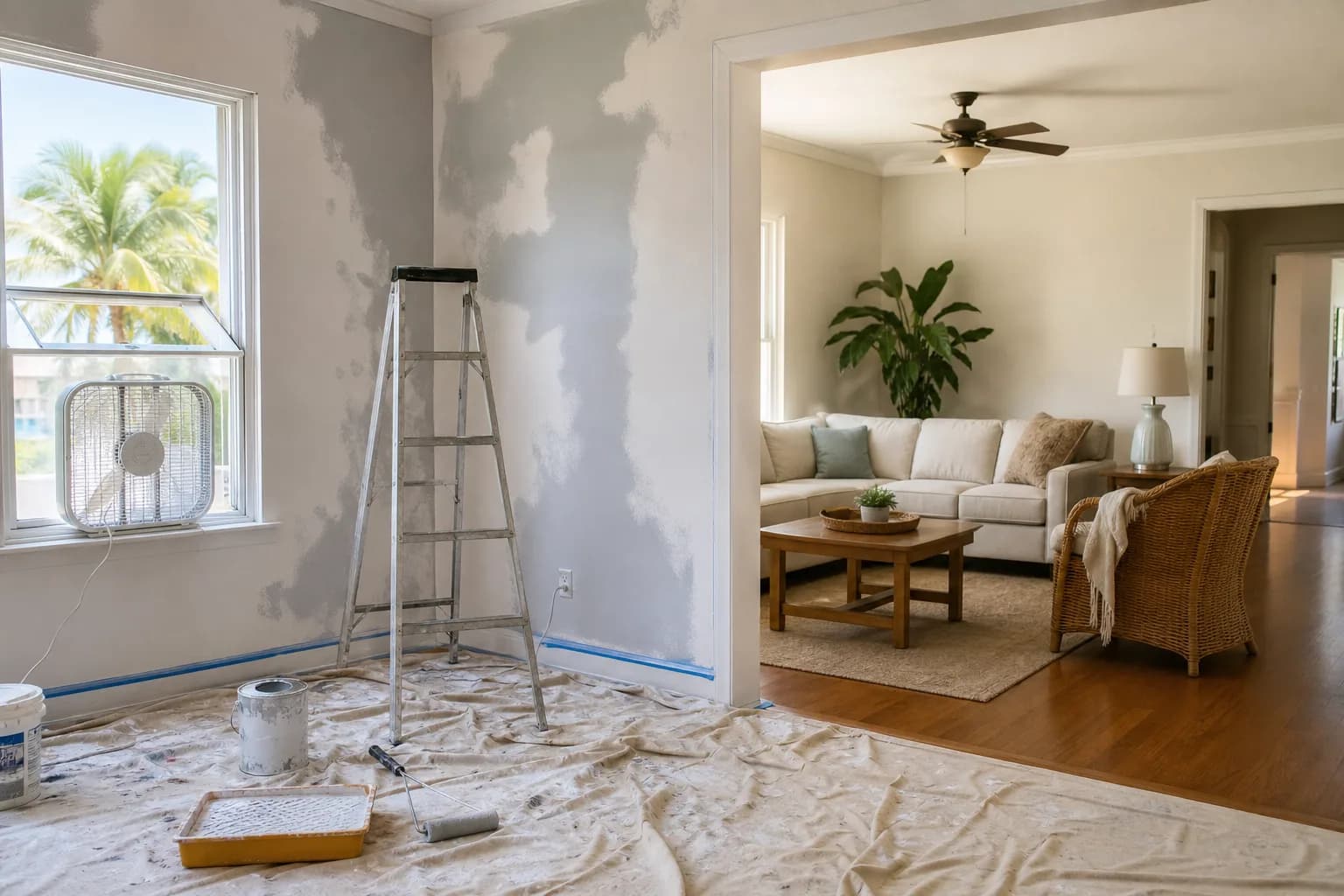
A whole-house repaint sounds like it means moving out for a week. It doesn't. The reality is that most families stay right where they are while the work happens — cooking dinner, putting kids to bed, walking the dog — in a home that's being painted around them one room at a time. Done well, an interior repaint barely interrupts your week. Done without a plan, it's a scramble for somewhere to sit, eat, and sleep.
The difference is phasing and a little setup. Living in your home during an interior repaint comes down to three things: sequencing the rooms so you always have livable space, keeping dust and paint odor managed while you're breathing the same air, and giving pets and kids a calm, safe place away from wet paint. Here on the Gulf Coast, where opening every window for a week isn't always realistic between summer humidity and the occasional storm, that ventilation plan matters even more. Here's how we keep a house livable through the job.
Phase the rooms so daily life keeps running during painting
The single biggest thing that keeps a home livable during a repaint is the order the rooms get painted. A good crew never tears up the whole house at once. Instead, the job moves through the home in phases, so there's always finished, usable space.
The logic is simple: protect the rooms daily life can't do without, and paint around them. You need a bed to sleep in, a kitchen that works, and a bathroom — so those get sequenced carefully, never all closed off on the same day.
Name your must-keep rooms
Decide up front which spaces you can't lose for a day: where you'll sleep, cook, and shower. The whole schedule is built so those stay open while the rest of the house gets painted.Start with the rooms you can spare
Guest rooms, a home office, a formal dining room — the low-traffic spaces go first. Finishing them early gives you somewhere to shift furniture and routines as the crew works deeper into the house.Time the high-traffic core to your day
Kitchens, main living rooms, and primary bedrooms get scheduled around your routine — kids' areas while they're at school, the kitchen on a night you can grab takeout or eat simply.Keep one room as home base
Hold one already-finished or untouched room as the family's retreat for the week — clean, paint-free, and stocked with the essentials so there's always somewhere comfortable to land.
We map this out at your free estimate so you know the rough order before day one. If you want a sense of how the days stack up across a full house, our realistic interior painting timeline breaks down how long each phase usually takes.
How do you manage dust and paint odor while you're living in it?
When you're sleeping in the house every night, air quality is the part you actually feel. Two things to stay ahead of: the fine dust from sanding and prep, and the odor from fresh paint.
On dust — prep is where it comes from, and a careful crew contains it. We mask off the work zone, close doors to the rest of the house, and clean up at the end of each day so dust doesn't migrate into your living space. You can help by keeping interior doors to the work area shut and changing your HVAC filter after the job wraps, since fine dust loves to ride the air handler around the house.
On odor — modern latex paint is far milder than the paint smell people remember, and low-VOC and zero-VOC products cut it further. Still, you'll notice it in a freshly painted room, and the fix is moving air.
Don't sleep in a freshly painted bedroom the same night it's done — use your home-base room and let the bedroom air out overnight. Anyone pregnant, asthmatic, or sensitive to smells should steer clear of just-painted rooms until they've fully cleared, and that's worth flagging to us up front so we can plan the sequence and the paint around it.
Keep pets and kids safe and calm
Wet paint, ladders, open trays, and taped-off rooms are no place for a curious dog or a toddler. The goal is to keep them comfortable and out of the work, and a phased job makes that easy because most of the house stays normal.
For pets, set them up in a room that isn't being painted that day — their bed, water, and a familiar spot behind a closed door — or board them for the busiest days. The most important thing is telling the crew where the pets are so doors stay shut and nothing slips outside past an open door while we're carrying gear in and out. Keep them off drop cloths and away from masking tape and wet walls.
For kids, give them one consistent un-painted room as home base for the week and keep them clear of active work areas entirely. Paint their bedrooms and play spaces while they're at school or out for the day, so those rooms are dry and back to normal by bedtime. A repaint is a lot less stressful for everyone when the kids' world stays mostly intact. We go deeper on this in our guide to painting safely with kids and pets in the house.
Let the crew carry the load
The less you have to handle, the more livable the week. You don't need to empty rooms to bare floors — the heavy furniture moving and protection is on us. Here's exactly what painters move and what you should clear so painting day starts smoothly. For the full picture of doing an interior project right, our interior house painting guide for Mobile and Baldwin County homes ties it all together.
A repaint shouldn't mean a week in a hotel. Our interior painting crews phase the work around your daily life, contain the mess, and clean up as we go — one accountable crew from your free estimate to the final inspection, backed by our 3-year workmanship warranty. Get a free in-home estimate and we'll map a plan that keeps your home livable the whole way through.