
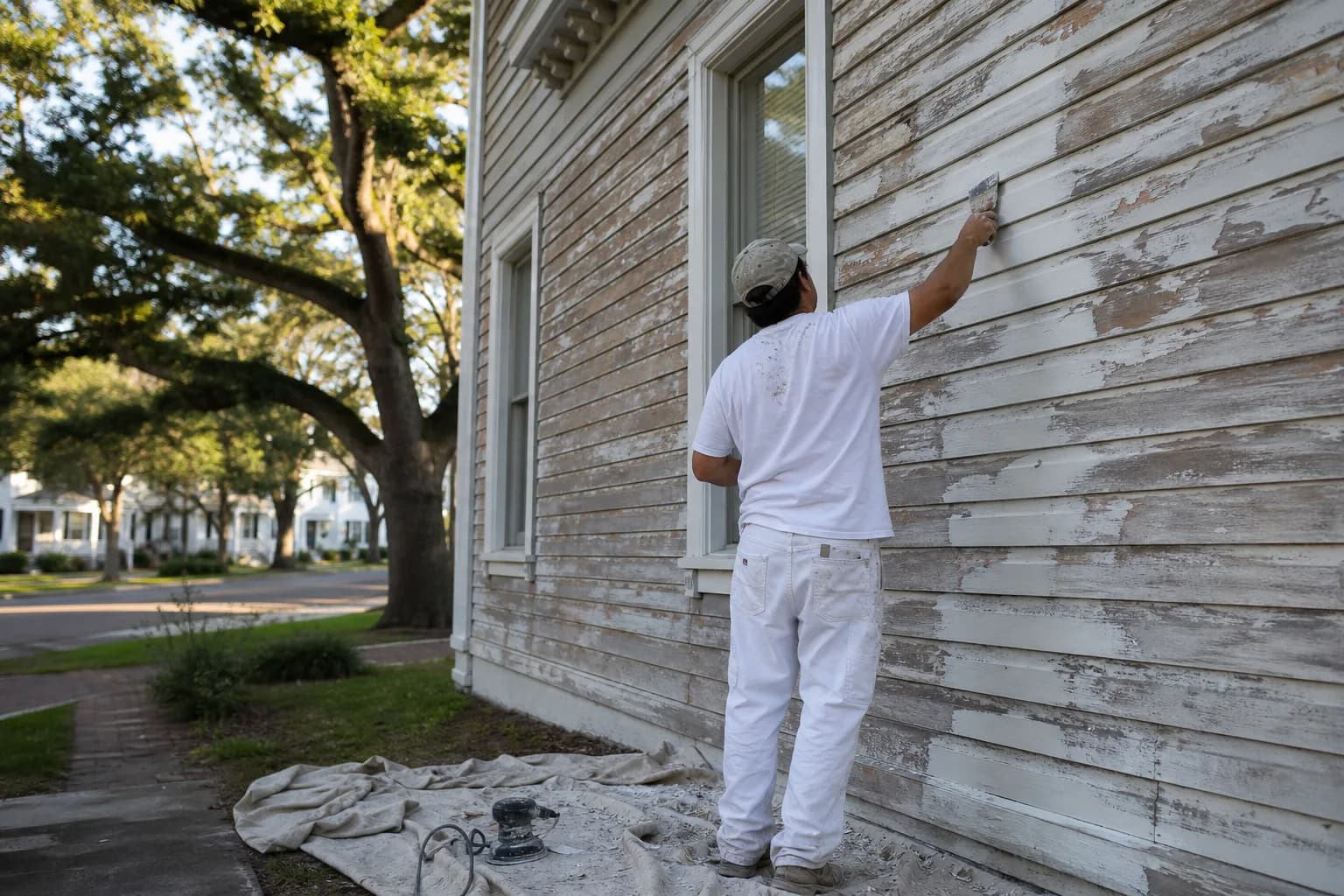
A homeowner once asked us, half-joking, why a couple hundred dollars of paint turned into a several-thousand-dollar quote. Fair question. The honest answer surprises most people: on a real paint job, the paint is one of the smallest costs. The painting prep cost — the hours of cleaning, scraping, sanding, filling, and priming before a finish coat ever goes on — is usually the biggest line on the page.
That's not padding. It's the part of the job that decides whether your new color still looks good in five years or starts peeling next season. Below is exactly what prep labor covers, how the labor-versus-materials split actually breaks down, and why "saving" by skipping prep is the most expensive choice you can make.
Why does painting prep cost more than the paint?
Here's the short version, snippet-ready: paint is a material you buy once, but prep is labor you pay for by the hour — and a quality repaint takes far more hours of prep than it does gallons of paint. A few hundred dollars of premium paint might cover a whole house. The days of skilled labor to get those surfaces ready to hold that paint cost much more.
Think about what a can of paint actually is in the math. It's a fixed, fairly small number. Now think about what has to happen before that can is opened: every dirty, glossy, cracked, peeling, or bare surface has to be made clean, sound, and ready. That's all time. And time — skilled, careful time — is what you're really buying when you hire a painter.
This is also why two quotes for "the same house" can be hundreds of dollars apart. They're usually not pricing the same amount of prep. Our house painters price the surfaces in front of them, not a generic square-foot rate, because a chalky, sun-beaten exterior and a clean five-year-old repaint are completely different amounts of work.
What prep labor actually covers
When you see "surface prep" on an estimate, this is what those hours pay for. None of it is the fun part. All of it is what makes the finish coat last.
| Prep step | What it involves | Why it costs hours |
|---|---|---|
| Cleaning / pressure-washing | Wash off dirt, chalk, mildew, salt residue, grease | Every surface has to be clean and fully dry before paint — slow but non-negotiable on the Gulf Coast |
| Scraping & sanding | Remove loose and peeling paint, dull glossy areas | Hand and power work over the whole surface, edge by edge |
| Filling & repairs | Fill cracks, nail holes, gouges; replace rotten wood | Detail labor, and rot repair adds carpentry time |
| Caulking | Seal gaps at trim, seams, windows, and joints | Done by hand, foot by foot, to keep water out |
| Masking & protection | Cover floors, fixtures, windows, landscaping | Careful setup and teardown on every work area |
| Priming | Seal bare, stained, patched, or porous spots | An extra coat and dry time before the finish even starts |
Every one of those lines is hours, not gallons. Pressure-washing a two-story home and letting it dry. Scraping a sun-beaten south wall back to a sound edge. Filling and sanding a wall full of nail holes after a gallery wall comes down. Caulking the seams so Gulf rain doesn't get behind the paint. That's the job. The color at the end is the quick part.
The labor vs material split, in plain terms
On a typical professional repaint, labor is the large majority of the cost and materials the smaller share. The exact ratio moves with the condition of your surfaces — and that's the real lever on your price.
A clean, well-maintained home that just needs a refresh tips toward less prep, so materials are a bigger slice of a smaller total. A neglected exterior with chalking, peeling, mildew, and soft wood tips hard toward labor, because there's simply more to fix before any color goes on. Same gallons of paint, very different number of prep hours.
That's why the most useful question to ask a painter isn't "what paint do you use?" It's "what prep is included, and what shape are my surfaces in?" The answer tells you where your money is actually going. For the full picture of what moves a quote up or down, see our guide to the cost to paint a house on the Gulf Coast, and what a written painting estimate should include so the prep is in writing.
Why skipping prep is the most expensive "savings"
The cheapest-sounding bid is usually the one that quietly skips prep — and it's how you end up paying twice.
Paint is mostly glue and color. It can only grip a surface that's clean, dull, and sound. Roll a fresh coat over grease, chalk, gloss, or peeling paint and it has nothing to bond to. It looks fine for a few months, then it starts failing: peeling sheets on the exterior, flashing and streaks inside, color lifting off slick trim. Now you're paying again — this time for someone to strip the failed coat and do the prep that should've happened the first time.
On the Gulf Coast this is brutal-fast. Salt air, humidity, and hard sun punish any coat that wasn't prepped right, so a skipped-prep job here doesn't limp along for years — it can start peeling in a couple of seasons. The prep you paid for is exactly what buys you the durability.
What this means for your project
So, does prep cost more than the paint? On most jobs, yes — and that's a sign the job is being done right, not overpriced. You're paying for the hours that make the color last, not for the can it came in.
When you compare painting quotes, look past the bottom-line number and read the prep. A good estimate names the washing, scraping, sanding, filling, caulking, and priming so you can see the work behind the price. A vague one that just says "paint the house" is the one to question — because the prep is where the cost, and the quality, really live.
Want a quote that shows its work? Get a free in-home estimate and we'll put the prep in writing, with a clear breakdown and a written quote within 24 hours — so you know exactly what you're paying for and why it lasts.