
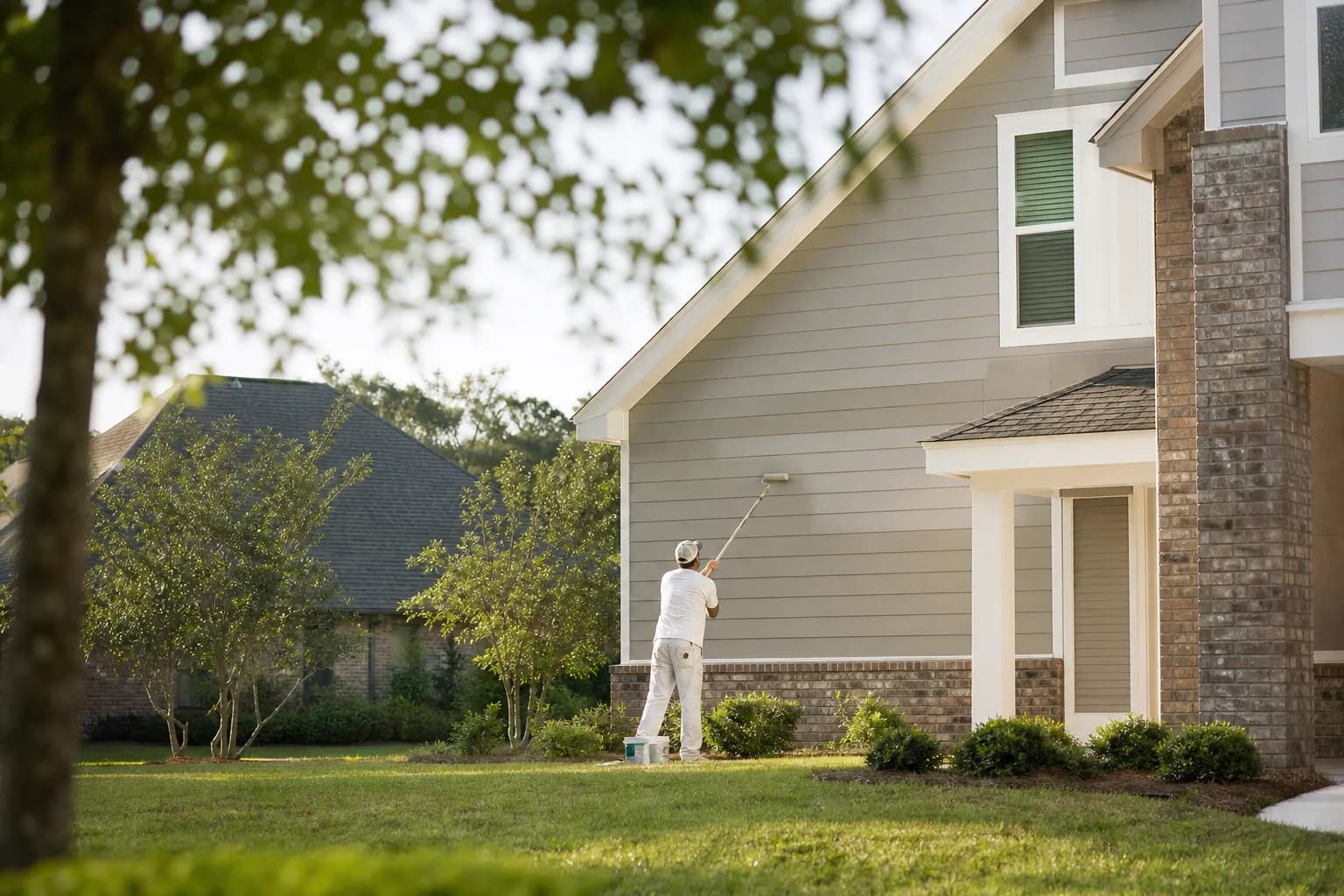
You found the perfect color, bought the paint, and then a neighbor mentioned the HOA has to approve it first. On the Eastern Shore, that's not a scare story — it's how most newer subdivisions in Daphne, Fairhope, and Spanish Fort actually work. Paint the wrong color without a sign-off and you can be looking at a notice to repaint, or worse.
The good news: HOA paint color rules on the Eastern Shore are usually straightforward once you know the steps. Here's how the approval process works, what your committee needs from you, and how to get a fast yes so your repaint goes smoothly. For the bigger picture of painting a home in this area, see our Eastern Shore painting guide.
How HOA Paint Color Rules Work in Eastern Shore Subdivisions
In a deed-restricted community, the rules about what color you can paint live in your CC&Rs — the recorded Covenants, Conditions and Restrictions every owner agrees to at closing. They typically say something like: all exterior body, trim, and door colors must be approved before they go on the house.
The body that does the approving is usually an Architectural Review Committee (ARC) — a handful of homeowner volunteers your HOA board appoints. The committee gets its authority straight from the covenants, so its decisions carry real weight. Painting a color it never approved is a covenant violation, and depending on your documents that can mean fines or a lien. That's the whole reason the approval step matters.
Why do these committees care so much about paint? Consistency. Daphne's housing stock is fairly young — the typical home here was built around 1995 — so many of these subdivisions were planned all at once with a coordinated look. Deed-restricted Daphne communities like Lake Forest, Timbercreek, and Jubilee Farms are exactly the kind of places where an Architectural Review Committee weighs in on color. The committee's job is to keep one house from going a color that clashes with the street and drags down everyone's value. That's also why so many communities maintain an approved color palette.
What Needs Approval — and What Usually Doesn't
Most Eastern Shore committees draw the line in a predictable place.
| Situation | Approval usually needed? |
|---|---|
| Repainting the exact same approved color | Often no — but confirm in your covenants |
| Changing body, trim, or door to a new color | Yes — written approval before you paint |
| Picking a color from the approved palette | Yes, but typically a fast, near-automatic yes |
| A non-standard color not on the palette | Yes — usually goes to the full committee |
| Painting a previously unpainted surface | Yes — treated as a real change |
The pattern across most communities: repainting in your existing, already-approved scheme is the easy case and often skips a fresh review. The moment you change a color — even just the front door — you're in approval territory. And a few communities want an approved color on file every single time the house is painted, same color or not, so it always pays to read your specific documents.
Some neighborhoods run a tighter process than others. If you're in Spanish Fort, our Spanish Fort HOA exterior color approval guide walks through what those committees tend to look for.
How to Get Your Colors Approved Fast
The difference between a one-week approval and a month of back-and-forth is almost always the quality of your submission. A complete, clear application that gives the committee everything it needs in one shot gets decided fast. Here's the order we walk our clients through.
Read your CC&Rs and find the ARC
Pull your subdivision's recorded covenants and architectural guidelines. Find who reviews exterior changes — usually an Architectural Review Committee or your property manager — and exactly how they want submissions sent.Choose your colors and get real samples
Pick your body, trim, and door colors. Start from the approved palette if there is one, get physical paint chips, and consider brushing a small sample on the house to see the color in Gulf Coast light.Submit a complete written application
Send a written request listing the paint brand, color names and numbers, where each color goes, and your chips or swatches. A complete first submission is what earns a fast decision.Wait for written approval before painting
Don't start until the approval is in writing. Standard palette colors can clear in days; a non-standard color may need the full committee to vote, so leave a couple of weeks.Keep the approval on file and paint
Save the approval with your records, then paint exactly what was approved. Many communities want an approved color on file at every repaint, so keeping the paperwork makes the next one easier.
One detail that trips people up: colors look different on a screen, on a small chip, and on a whole wall in full sun. Eastern Shore light is bright, and a color that reads as a soft greige on a chip can go noticeably warmer across a sunny elevation. Seeing it at scale before you submit saves a rejection.
How Do You Pick a Color the Committee Will Approve?
If your subdivision has a palette, the simplest path is to choose from it — those colors already have a track record of approval. But you're rarely locked in. Most committees will consider a color outside the palette as long as it fits the overall character of the neighborhood; you just have to submit it for prior approval instead of painting first and asking later.
This is where a little planning goes a long way, and it's exactly the kind of thing our color consultation service is built for. We help you land on body, trim, and door colors that you'll love and that stand a strong chance with the committee — coordinated, subdued where the covenants ask for it, and right for your home's brick, roof, and fixed elements.
Once your colors are approved, prep is what makes them last. Daphne sees roughly 50 inches of rain a year and summer highs around 91°F, so the same humidity and sun that age a home's siding will test a fresh coat too. We pressure-wash, scrape to a sound edge, treat any soft wood, and prime bare spots before finish goes on — because on the Eastern Shore, prep is what keeps that hard-won approved color looking right for years.
Get Your Eastern Shore Repaint Right the First Time
HOA paint color rules on the Eastern Shore come down to one habit: get written approval before you paint. Read your covenants, find your Architectural Review Committee, submit a complete application with real chips, and wait for the yes — then paint exactly what was approved.
Family-owned since 2013, we work in subdivisions across Daphne, Fairhope, and Spanish Fort every week, so we know how these committees think and how to help your project sail through. We run one accountable crew on your home from the free estimate through the final inspection, backed by a 3-year workmanship warranty and a 4.8-star reputation. When you're ready, book your free in-home estimate and we'll handle the rest. Pay by Cash, Check, or Credit Card.