
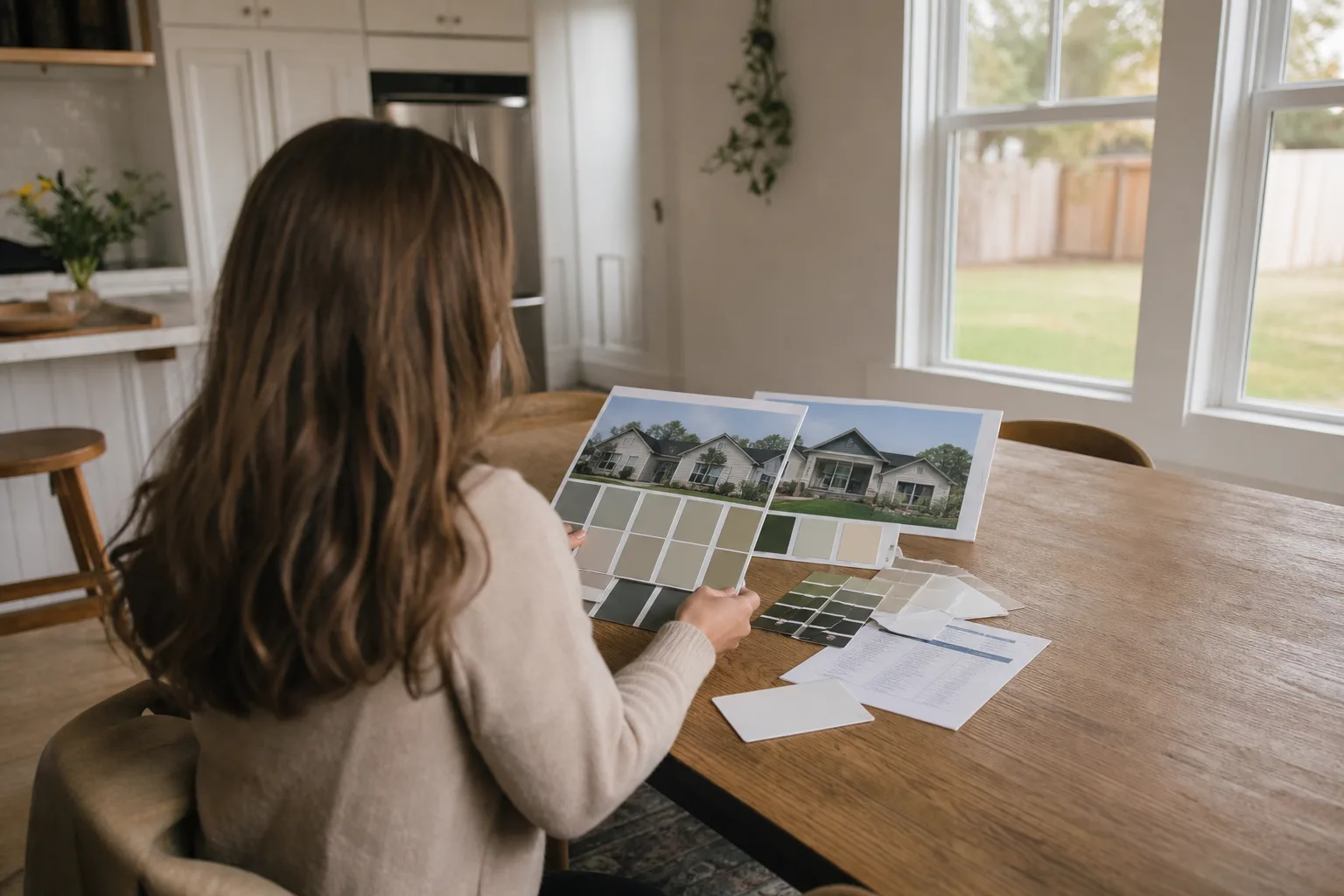
Picture finishing a beautiful exterior repaint in Spanish Fort, then opening your mailbox to a violation notice from the HOA — and an order to repaint at your own expense. It happens. In planned communities like Stonebridge and TimberCreek, the exterior color of your home is governed by the association, and painting first and asking later is the most expensive mistake a homeowner can make.
The fix is simple: get approval before a drop of paint goes on. This is a step-by-step guide to getting an exterior repaint approved by your Spanish Fort HOA — the architectural review process, how to submit color samples, and how to avoid a second review cycle.
How does HOA exterior color approval work in Spanish Fort?
Most Spanish Fort subdivisions with an HOA run exterior changes through an architectural review committee, sometimes called an ARC or architectural control committee. When you want to change your exterior paint colors, you submit a request, the committee reviews it against the community's covenants and guidelines, and you get a written yes or no before you can proceed.
This is common here because so much of Spanish Fort is newer, planned housing — the median home was built around 1997, and a large share of homes sit inside HOA communities with shared design standards. We see it across subdivisions like Spanish Fort Estates, Stillwater, Churchill, and Rayne Plantation, each with its own approved-color palette and review committee. Those standards exist to keep the neighborhood cohesive, which is also why the committee cares a lot about which exact colors go where. (If you want the broader Eastern Shore picture across Daphne, Fairhope, and Spanish Fort, our Eastern Shore HOA paint color rules explainer covers how these rules vary by community.)
The Spanish Fort HOA color approval process, step by step
Here's the path from "we want to repaint" to "we're approved," done in the order that keeps you out of a second review cycle.
Find and read your covenants
Locate your HOA's covenants, conditions, and restrictions plus any architectural guidelines — usually on the community or management-company portal. Read the exterior-paint section and note any pre-approved palette.Choose colors within the guidelines
Pick body, trim, and accent colors that fit the rules. Write down the manufacturer name and exact color code for each one — committees want specifics, not 'tan.'Make physical samples
Paint sample boards or small test patches of each proposed color. A real painted sample reads completely differently from a screen swatch, and most committees want to see the actual color.Complete the application
Fill out the architectural review application. Specify where each color goes — body, trim, accent, front door — and attach your samples, color codes, and any photos of your home the form requires.Submit and wait for written approval
Send the package to your ARC or management company and wait for written approval before scheduling work. Keep that approval letter — it's your proof if a question ever comes up.
The single biggest time-saver is submitting a complete package the first time. Missing color codes, no physical samples, or a blank "where does this color go" line are what send a request back for revisions and add weeks to your timeline.
How long approval takes — and how to avoid rework
Timelines vary by association, but many architectural review committees respond within two to four weeks of receiving a complete submission. Some meet monthly, so the calendar matters — submit right after a meeting and you might wait nearly a full cycle for the next one.
The way to protect that timeline is to get it right once. A clean submission with named colors, codes, sample boards, and clear placement gives the committee everything it needs to say yes. The alternative — painting without approval — risks a violation notice, fines, and an order to repaint at your own cost. That's the same job, paid for twice. Written approval in hand before any paint goes on is the cheapest insurance there is.
Picking colors the committee will approve
The colors most likely to clear review are the ones that read as intentional and fit the community's character. Saturated or unusual shades draw more scrutiny; classic, neighborhood-appropriate palettes tend to sail through. Our color consultation helps you land on colors you love that also stand a good chance with the committee — so you're not choosing between "approvable" and "what you actually want."
It also helps to see the colors before you submit them. Our free AI Color Visualizer lets you upload a photo of your home and preview real paint colors on it, which makes it far easier to pick a body-and-trim combination worth putting on the application. If you're in a specific community, our guide for house painters in Stonebridge, Spanish Fort speaks to that neighborhood directly.
How we help with your Spanish Fort repaint
We've painted enough Spanish Fort exteriors to know the HOA step is part of the job, not an afterthought. We help you pull the manufacturer color codes, prepare sample boards, and assemble the information the committee asks for — then, once you have written approval, we schedule the work. One accountable crew runs your repaint from the free in-home estimate through the final inspection, with a manager sign-off before final payment.
Pro 1 has been a family-owned painting crew in Mobile and Baldwin County since 2013, backed by a 3-year workmanship warranty and a 4.8-star rating across hundreds of Google reviews. For the local lay of the land, see our Spanish Fort painters guide and our exterior painting page. When your colors are picked, reach out for a free estimate — we serve Spanish Fort and the rest of the Eastern Shore, and you can pay by cash, check, or credit card.