
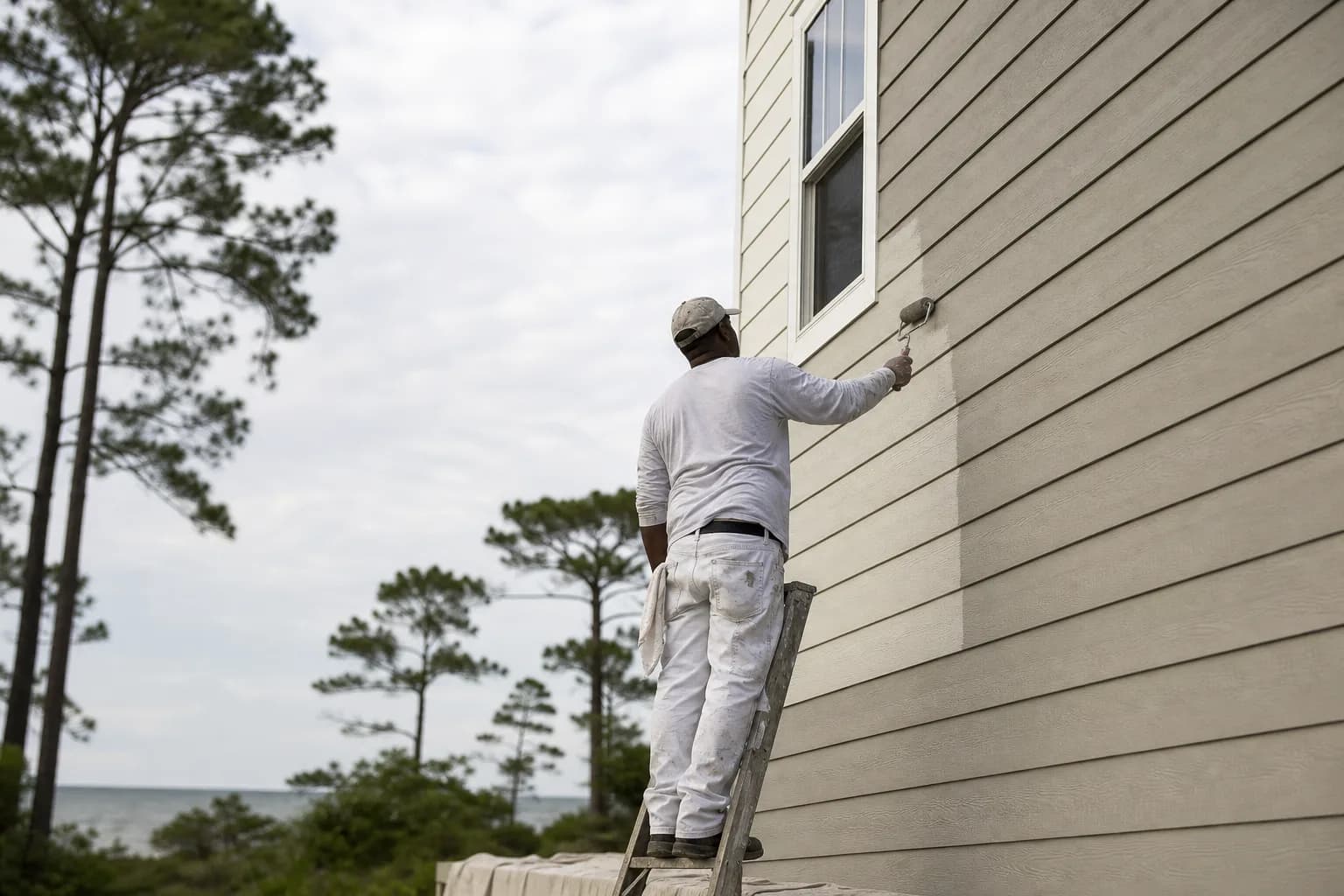
That fresh-built look on engineered wood siding doesn't last forever. Eight or ten years in, the factory finish on LP SmartSide starts to chalk and fade, and on the Gulf Coast — where sun, humidity, and salt air gang up on everything outside — it can happen faster. The good news: engineered wood is built to be repainted, and a repaint done right looks every bit as sharp as the day the house went up. The catch is that engineered wood punishes shortcuts harder than almost any other siding, and the place it punishes them is the cut edges.
Here's how to paint LP SmartSide and engineered wood siding the way it's meant to be done, plus the moisture pitfalls that send a coastal repaint south fast.
Can you paint LP SmartSide siding?
Yes — here's the short version. You can absolutely paint LP SmartSide and other engineered wood siding. It ships factory-primed and is designed to take a quality 100% acrylic exterior paint. The whole job comes down to four things: get it clean and dry, deal with any damaged boards, seal and prime every cut edge, then put on two solid coats. Skip any one of those on the coast and you'll be back up the ladder long before you should be.
Engineered wood is a wood-fiber product bound with resins and wax. That makes it strong and consistent, but the core still drinks water if you give it a way in — and the way in is almost always an unsealed cut edge or a failed caulk joint.
Prep is the whole job: wash, dry, inspect
Prep is 80% of a paint job that lasts, and on engineered wood it's closer to 90%. Start by pressure-washing the siding to strip off dirt, chalk, and any mildew — and we get plenty of mildew in this climate. Then walk away from it. Engineered wood needs to dry thoroughly before paint, and in Gulf Coast humidity that means a full day or two, not an afternoon. Painting over damp siding traps moisture under the film, and trapped moisture is what makes paint blister and peel.
While it dries, inspect every elevation. Look hard at the low courses near grade, the cut ends at corners and trim, and anywhere water sheds — under windows, along the bottom band, behind downspouts. You're hunting for boards that are swollen, soft, spongy, or "mushroomed" at the edge. That's water damage, and paint will not fix it.
Sealing cut edges: the pitfall that ruins coastal repaints
This is the part nobody talks about and everybody pays for. LP SmartSide is factory-sealed on its faces and edges as it ships — but the moment a board is cut to length on site, that fresh end is raw, exposed wood-fiber core. Every corner, every butt joint, every notch around a fixture is a field-cut edge. Left bare, those ends wick water like a straw, swell, and rot from the inside out. The siding can look fine on the face while the edges quietly fail.
So on a repaint, the move is twofold: re-caulk and re-seal. Cut out failed caulk at butt joints, trim, and penetrations, and re-caulk with a quality exterior sealant rated for siding. Then prime any field-cut edge that's exposed. The manufacturer calls for sealing cut edges for a reason — it's the single highest-payoff step on the whole job, and it's exactly the step a rushed crew skips.
The right paint, and putting it on
Once the siding is clean, dry, repaired, and sealed, spot-prime the bare spots — sanded areas, repairs, new boards, raw edges — with a quality exterior primer so the topcoat bonds evenly. Then it's two coats of a quality 100% acrylic exterior paint. Acrylic earns its keep here: it flexes as the board expands and contracts through our heat and humidity swings, and it breathes enough to let moisture escape instead of trapping it. Cheap paint goes brittle, cracks, and lets water past the film — which on engineered wood is how the trouble starts.
When we spray, we back-roll the coat so the paint works down into the wood-grain texture instead of just bridging the surface. That's what gives engineered wood that even, painted-in look and the adhesion to ride out coastal weather. Here's the full sequence we follow.
Wash and let it dry
Pressure-wash to strip dirt, chalk, and mildew, then give the siding one to two full dry days. Coastal humidity slows drying, and painting damp engineered wood traps moisture under the film.Inspect for swelling and damage
Walk every elevation. Replace any swollen, soft, or mushroomed boards — especially low courses and cut ends — before you paint. Paint can't fix water-saturated siding.Seal every cut edge and re-caulk
Recaulk failed butt joints, trim, and penetrations with a quality exterior sealant, and prime every exposed field-cut edge. Raw cut ends are the number-one way water gets into engineered wood.Spot-prime bare and repaired areas
Prime bare substrate, sanded spots, new boards, and raw edges with a quality exterior primer so the topcoat bonds evenly and repairs blend in.Two coats of quality acrylic
Apply two coats of a quality 100% acrylic exterior paint, back-rolling sprayed coats so the paint works into the wood-grain texture for an even, durable finish.
If you're weighing this against other materials, our guide on whether you can paint fiber cement siding on the coast covers the differences, and the full picture for our climate lives in our coastal exterior painting guide.
Picking your color — and getting it right the first time
Repainting is the moment to rethink the color, not just match the old one. A repaint is a big enough job that you don't want to second-guess the shade once it's on three walls. Before you commit, try our free AI Color Visualizer — upload a photo of your house and preview real paint colors on your own siding so you can see it in our light before a drop goes on. If you want a hand narrowing it down, our color consultation service is built for exactly that.
When to call a pro
Plenty of homeowners paint their own siding, and engineered wood is forgiving enough to make a DIY repaint workable on a single-story home. Where it gets real is two-story walls, widespread edge sealing, board replacement, and the prep-and-dry timing that this climate demands. Get the cut edges or the dry time wrong and the cost of redoing it dwarfs what you saved.
If your engineered wood is chalking, fading, or showing soft edges, the smart first step is a free, honest look. We'll tell you straight whether it's a repaint or whether some boards need to come off first, and you'll get a written quote within 24 hours. Our full exterior painting crew handles the wash, the repairs, the edge sealing, and two coats — backed by our 3-year workmanship warranty. Book a free estimate and we'll get your siding set up to last.