
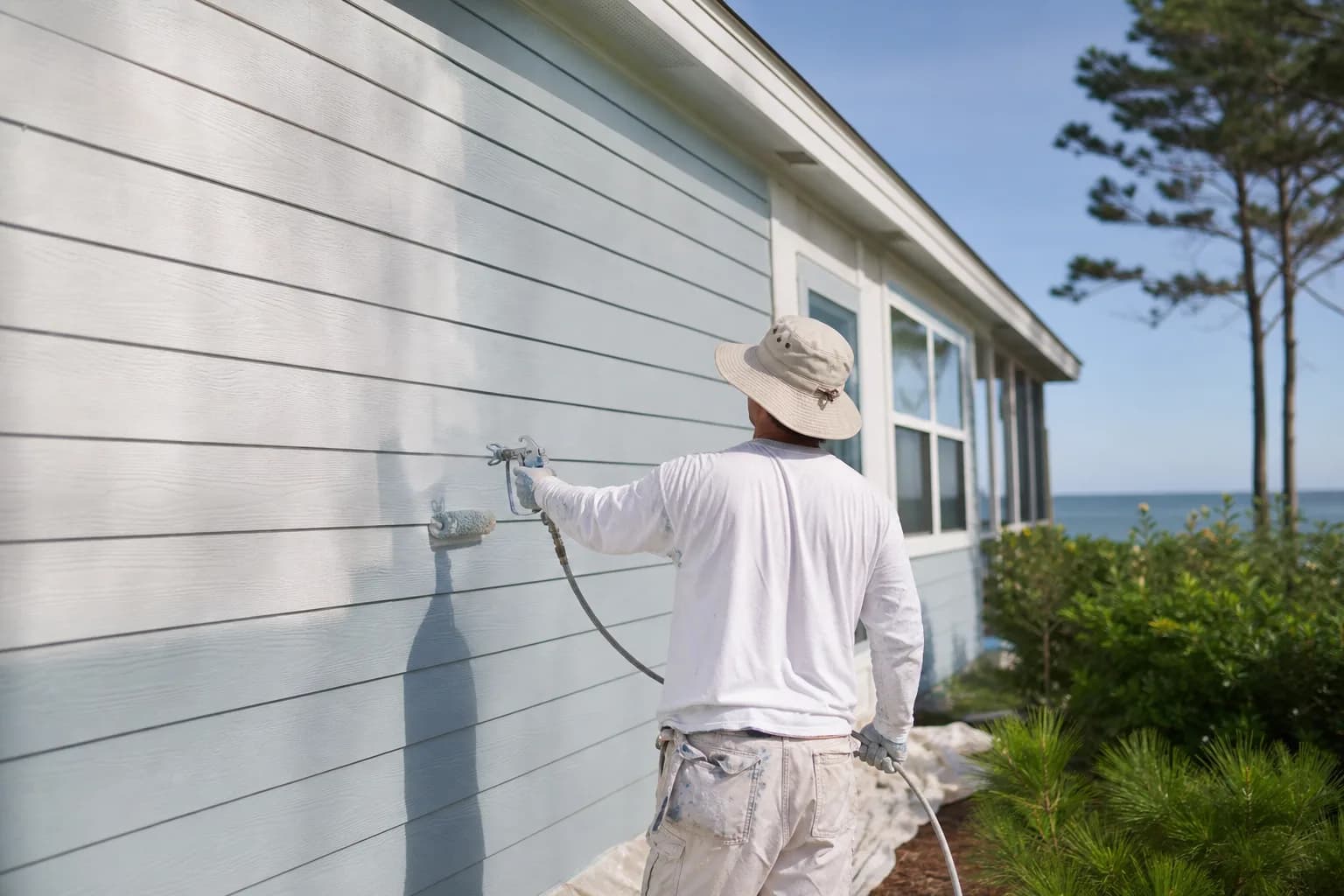
You bought the house partly because the fiber cement siding meant "low maintenance." Now the color's tired, or it's just not yours, and you're wondering if you're stuck with it. Good news: you're not.
So, can you paint fiber cement siding? Yes — and it's one of the best exterior surfaces there is to repaint. Hardie board and other fiber cement products are built to hold paint for years, even in coastal Alabama's salt air and humidity. The board doesn't rot, swell, or feed mildew the way wood does, which means the finish you put on it tends to last. Here's what every Gulf Coast homeowner should know before repainting fiber cement — including changing a prefinished color, the prep that actually matters, and the right timing.
Can you paint fiber cement siding? Yes — here's why it works so well
The direct answer: fiber cement takes paint beautifully. It's stable, it doesn't move much with moisture, and a quality exterior acrylic bonds to it and stays put. In a climate like ours, that stability is a real advantage — most paint failures on wood come from the wood itself swelling, splitting, or holding moisture. Fiber cement sidesteps most of that.
That's exactly why repainting fiber cement often outlasts a repaint on older wood siding nearby. The board isn't fighting you. The finish is the only thing that wears, and how long it lasts comes down to two things: the quality of the paint and the quality of the prep.
Can you change the color of prefinished Hardie board?
Yes — you can repaint prefinished fiber cement any color you like. Factory-finished panels ship in a set palette, but nothing about that finish locks you in. A clean surface and the right acrylic paint will cover and bond to a prefinished board without trouble.
This is one of the quiet perks of the material. Tired of that builder-grade gray every third house on the street has? Want a deeper, richer exterior than the factory offered? You can have it. A few things to keep in mind when changing color:
- Big color jumps may need two solid coats for even, full coverage — especially going dark over light or light over dark.
- Darker colors absorb more heat. That's usually fine on fiber cement, but it's worth a conversation about the shade and exposure.
- See it on your actual house first. Exterior color reads very differently in our bright Gulf light than on a tiny chip. Picking from a fan deck in the garage is how people end up surprised.
If you're weighing a color change, our color consultation helps you land on a shade that looks right on your home and your street — not just on paper.
What proper prep looks like on coastal fiber cement
Prep is what makes a fiber cement repaint last — full stop. The board may be tough, but paint still needs a clean, sound, dry surface to grip. On the coast, that means dealing with the salt film, chalk, and mildew our air leaves behind. Skip that and even premium paint can let go early.
Here's the sequence a fiber cement repaint should follow:
Wash the siding thoroughly
We pressure-wash the fiber cement to strip off salt film, chalk, mildew, and dirt. A clean, dry surface is what the new paint actually bonds to — this step alone separates a job that lasts from one that peels.Repair and caulk
We replace any cracked or damaged boards, re-caulk failed joints and trim seams, and let everything dry. Sound board and tight seams are what keep our wind-driven rain out of the wall.Spot-prime bare areas
We prime any bare, repaired, or previously unpainted fiber cement so the topcoat bonds evenly. Sound existing paint in good shape usually doesn't need a full re-prime — you only pay for the prep your siding needs.Apply quality acrylic topcoats
We spray and back-roll two coats of a 100% acrylic exterior paint built for our climate, working in the right weather window so the finish cures the way it should.Final inspection
We walk the whole exterior, touch up any misses, and a manager signs off before final payment — all backed by our 3-year workmanship warranty.
Notice that timing is built into that last painting step. Paint needs to cure before heavy heat, downpours, or high humidity hit it, so on the Gulf Coast the milder, drier stretches of spring and fall tend to give the cleanest windows. That said, the bigger factor is always condition: clean, dry, and sound beats any particular month on the calendar.
Should you repaint fiber cement or replace it?
For most homeowners with sound fiber cement, repainting is the clear winner. The board is the expensive, durable part — and it's still doing its job. The finish is the part that ages. Repainting refreshes the look, updates the color, and re-seals the exterior for a fraction of what re-siding costs, while keeping the low-maintenance material you already have.
Replacement only really enters the picture when boards are widely cracked, broken, or failing — and even then, it's usually a section, not the whole house. If you're not sure which camp you're in, that's a five-minute conversation at a free estimate.
To go deeper on coastal exteriors — products, timing, and how our salt air and sun treat different surfaces — read our full exterior house painting guide for Mobile and Baldwin County, or our step-by-step on how to paint Hardie board siding on the Gulf Coast. When you're ready to bring your fiber cement back to life, our exterior painting crew will give you a free in-home estimate and a written quote within 24 hours.