
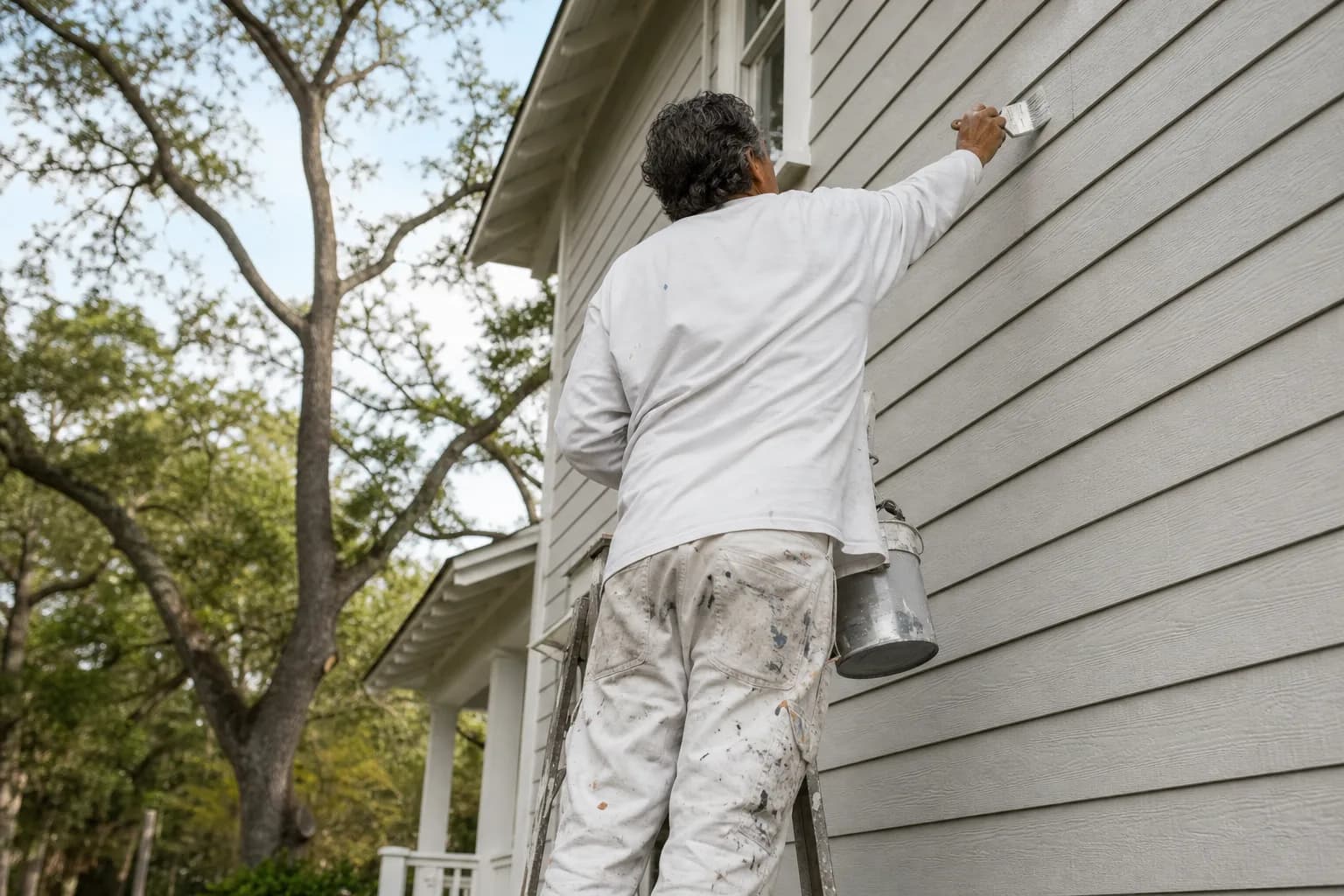
Fiber cement siding is everywhere on the Gulf Coast for a good reason: it shrugs off humidity, doesn't feed termites, and holds up to weather that eats wood alive. But "low maintenance" never meant "no maintenance." Sooner or later the color fades, the caulk lets go, or you just want a different look — and then the question is how to paint Hardie board siding so the finish actually lasts down here.
The short answer: the paint is the easy part. What makes a Hardie repaint last on the coast is the wash, the spot-prime, and the caulk before a drop of finish goes on. Do those right and a repaint holds for over a decade. Skip them and you'll be back on a ladder in a couple of seasons. Here's the full process we use across Mobile and Baldwin County, plus what coastal weather does to your repaint cycle.
How to Paint Hardie Board Siding: The Full Process
Painting fiber cement siding is straightforward when you respect the order of operations. Each step exists to solve a specific failure we see on coastal homes — chalk that wrecks adhesion, bare cut ends that wick moisture, open caulk joints that let water behind the boards.
Wash it clean
Pressure-wash or hand-wash off salt, pollen, mildew, and surface chalk. Treat mildew, rinse thoroughly, and let the fiber cement dry completely. Paint over a dirty or chalky surface and it peels — every time.Scrape, sand, repair
Scrape any failing paint to a sound edge, sand glossy spots so the new coat can grip, and repair cracked boards or chewed-up ends. A stable, clean surface is the whole foundation.Caulk and spot-prime
Caulk gaps at trim, windows, and butt joints with a paintable elastomeric caulk. Then spot-prime bare fiber cement, sanded areas, repairs, and raw cut ends with an acrylic exterior primer.Two acrylic coats
Roll and back-brush two coats of 100% acrylic exterior paint. Mind the dry time between coats, and don't paint into direct midday heat or right before rain.
The detail most DIY repaints miss is back-brushing — working the paint into the board's texture with a brush instead of just rolling it on. On fiber cement's slightly textured face, back-brushing pushes paint into the grain and dramatically improves how long the coat hangs on. It's slower, and it's exactly the kind of step that separates a five-year job from a fifteen-year one.
Choosing the Right Primer and Paint for Coastal Fiber Cement
The right paint for fiber cement on the Gulf Coast is a quality 100% acrylic latex exterior paint — full stop. Acrylic does three things our climate demands: it flexes as the siding expands and contracts with heat and humidity, it breathes so any trapped moisture can escape instead of blistering the film, and it resists fading under sun that's brutal nine months a year. Oil-based exterior products go brittle and chalk; on fiber cement down here, acrylic wins.
Primer depends on what you're painting over:
| Surface | Prime? | What to use |
|---|---|---|
| Sound factory-primed Hardie | No full prime needed | Just clean it well, then two acrylic coats |
| Prefinished ColorPlus siding | Spot-prime bare areas only | Clean, then acrylic finish — the factory coat is a great base |
| Bare or sanded fiber cement | Yes | Acrylic exterior or masonry primer before finish |
| Raw cut ends & repairs | Always | Acrylic primer to seal the exposed edge |
One question we get constantly: can you change the color of prefinished ColorPlus Hardie? Yes. That baked-on factory finish is a clean, low-chalk surface — once it's washed and any bare spots are primed, a fresh acrylic coat bonds beautifully and you can go any direction on color. Want to see a new color on your actual house before you commit? Try our free AI Color Visualizer — upload a photo of your home and preview real colors on your own siding.
How Often Do You Repaint Hardie Board on the Gulf Coast?
A good acrylic repaint on fiber cement generally lasts 10 to 15 years — but on the Gulf Coast, plan for the shorter end of that window. Three forces push the cycle in:
- UV. Our sun is relentless, and it fades color and breaks down paint film faster than it does up north. South- and west-facing walls always go first.
- Humidity and salt. Constant moisture and salt-tinged air stress the paint film and the caulk joints, especially closer to the water.
- Storm season. Wind-driven rain finds any gap, and a single failing caulk line can let water behind boards long before the paint itself looks tired.
The practical move is to inspect rather than assume. Every couple of years, walk the house and check the sun-facing elevations and the caulk lines. Catching a few open joints early — and re-caulking them — protects the whole job and stretches the years between full repaints. For the bigger picture on coastal exteriors, our exterior house painting guide for Mobile and Baldwin County covers prep, products, and timing across every siding type.
Fiber cement isn't the only siding we repaint down here, and the right approach shifts a bit by material — see how we handle painting wood lap siding on the Gulf Coast and painting LP SmartSide engineered wood. And if you're still weighing whether to repaint or replace, our take on whether you can paint fiber cement siding in coastal Alabama walks through the decision.
Get Your Hardie Board Painted to Last
Painting Hardie board well isn't complicated, but it is exacting — the wash, the spot-prime, the caulk, and the back-brush are what turn a repaint into one that holds up to a decade-plus of coastal sun and salt. Cut those corners and the paint tells on you fast.
Family-owned since 2013, we run one accountable crew on your home from the free estimate through to the final inspection, our manager signs off before final payment, and our exterior painting work carries a 3-year workmanship warranty and a 4.8-star reputation. If your fiber cement siding is faded, chalking, or just not the color you want anymore, book a free in-home estimate — we'll send a written quote within 24 hours. Pay by Cash, Check, or Credit Card.