
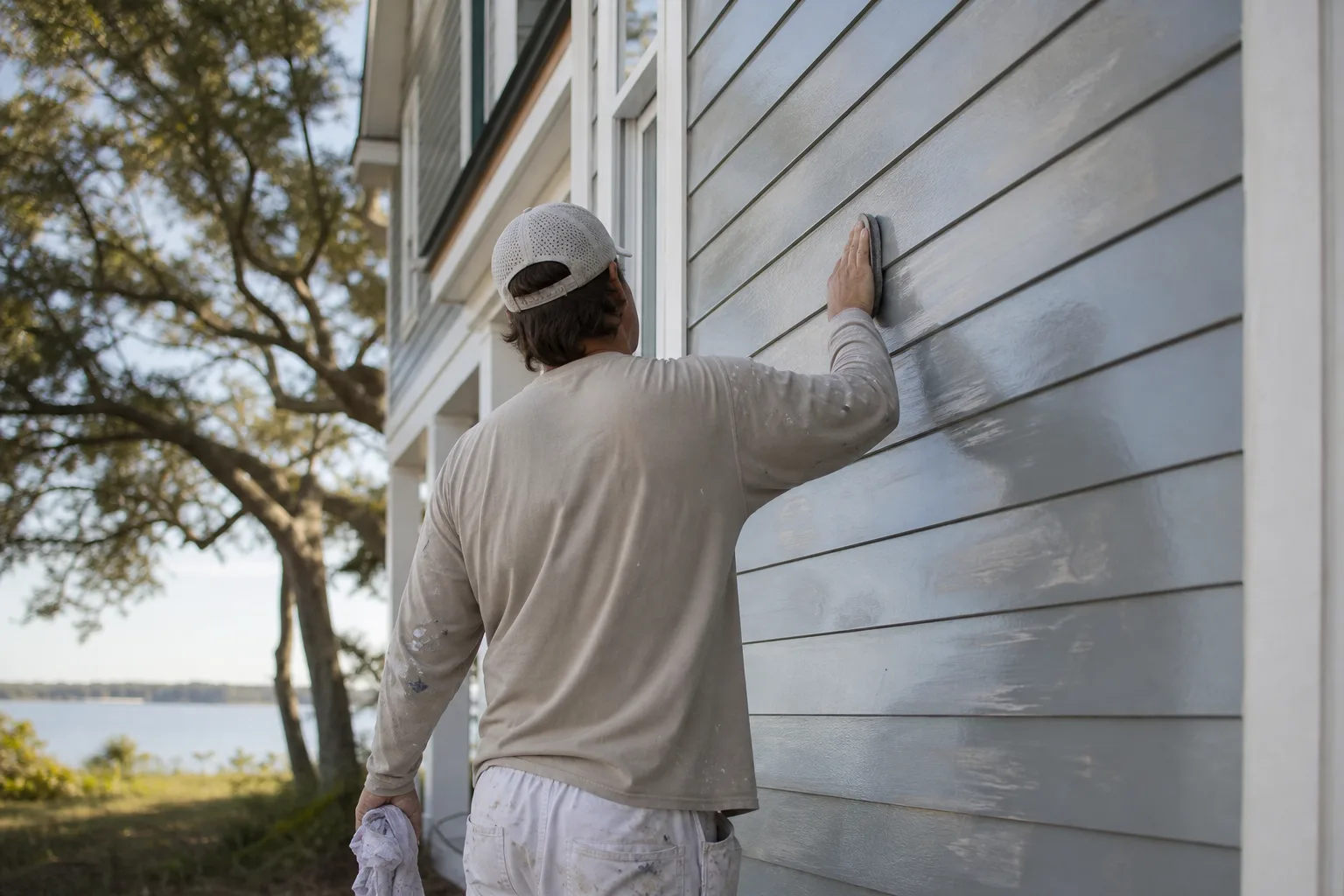
You picked a color, you bought good paint, you rolled it on a clean wall — and a month later it's curling off in strips along the south side of the house. Nine times out of ten on the Gulf Coast, the culprit isn't the paint. It's what was already on the wall: an old glossy coat that gave your new coat nothing to grab.
Glossy and semi-gloss finishes are slick by design. That's great for shedding water and wiping clean, but it's the enemy of adhesion. Painting over glossy exterior paint is absolutely doable, but only if you knock that sheen down first and pick the right primer. Skip that step here in coastal Alabama and the humidity will find the weak bond and pry your fresh paint right off.
How do you know if old paint is too glossy to repaint?
Before you reach for sandpaper or a stripper, find out what you're dealing with. Two quick checks tell you most of what you need to know.
The adhesion test is the tape test. Clean a small patch, scuff it lightly, press a strip of painters tape down hard, then rip it off fast. If the tape comes back clean, the old coat is well-stuck and you're in scuff-and-prime territory. If paint flakes lift with the tape, that coat is already failing and no topcoat will save it. The second check is just your hand and a hose: wet a section and run your palm over it. A chalky film on your hand means the surface is degrading and needs a wash and a binding primer, which we get into below — and if your siding has been shedding a powdery residue, our breakdown of exterior paint chalking and how to fix it walks through that specific problem.
De-gloss, or strip? Match the method to the surface
Here's where most people overthink it. You're choosing between three levels of effort, and the old paint tells you which one. Light scuff-sanding handles a sound glossy coat. A liquid deglosser is for detailed trim and railings you can't sand evenly. Full stripping is only for paint that's already cracking, blistering, or peeling — there's no point prepping a coat that's on its way off the wall.
| Method | When to use it | What it does |
|---|---|---|
| Scuff-sand (120–150 grit) | Old gloss is firmly stuck and sound | Dulls the sheen so primer and paint mechanically grip |
| Liquid deglosser | Detailed trim, spindles, shutters you can't sand evenly | Chemically softens the slick surface; no grit needed |
| Full strip / scrape | Paint is cracking, blistering, or peeling in sheets | Removes the failing coat back to a sound layer or substrate |
For most homes the answer is a thorough scuff. You're not trying to sand it to bare wood — you just want to take the shine off so the surface goes from slick to slightly toothy. Wipe the dust, and you're ready to prime. Deglosser earns its keep on ornate trim and the kind of spindle railings where a sander can't reach the curves; it dulls the finish chemically so you keep the detail.
The primer is what actually saves the job
Scuffing buys you tooth; the primer buys you a chemical bond. Over a glossy or previously coated exterior, a bonding primer is non-negotiable — it's formulated to bite into surfaces that ordinary paint slides off of. We bridge old gloss with the right Sherwin-Williams bonding primer, then topcoat in Emerald or Duration so the finish stands up to UV and salt air. This is exactly the prep sequence we lay out in our full guide to exterior prep — scrape, caulk, prime, and it's the part DIYers skip most.
Don't forget the gaps. Once you've dulled the surface and before you prime, re-caulk the seams that have opened up — that's where wind-driven coastal rain gets behind the paint. Our guide to the best exterior caulk and where to caulk covers the joints that matter most on a humid-climate home.
Why the Gulf Coast punishes a skipped step
In a dry climate you can sometimes get away with a lazy prep job for a few years. Not here. Daphne-to-Mobile humidity, salt air, and driving summer storms attack any weak bond relentlessly — moisture works into the seam between old gloss and new paint and lifts it. That's why the picture-perfect wall fails in a single season while the properly-scuffed-and-primed one holds for years.
Timing matters too. Paint needs to cure before the next afternoon downpour rolls in, which is its own coastal challenge — our take on whether you can paint when rain is in the forecast is worth a read before you start. If you're weighing the broader question of when to even tackle the project, see our notes on the best time to paint a house exterior in coastal Alabama. We handle exterior repaints like this across Mobile and Baldwin County every week, and the prep is always where the longevity comes from.
Bottom line
Glossy old paint is the most common reason a fresh exterior coat peels on the Gulf Coast, and the fix is simple: test it, dull it, prime it. Match your method to what the old coat is doing — scuff a sound finish, deglosser the fussy trim, strip what's already failing — then bond it with the right primer. Do that, and your color lasts.
If you'd rather not gamble your weekend on guessing whether the old paint will hold, we'll figure it out for you. Pro 1 Painters has been family-owned since 2013, we back our work with a 3-year workmanship warranty, and one accountable crew runs your job from your free in-home estimate to the final inspection. Schedule your free estimate and we'll give you a written quote within 24 hours.