
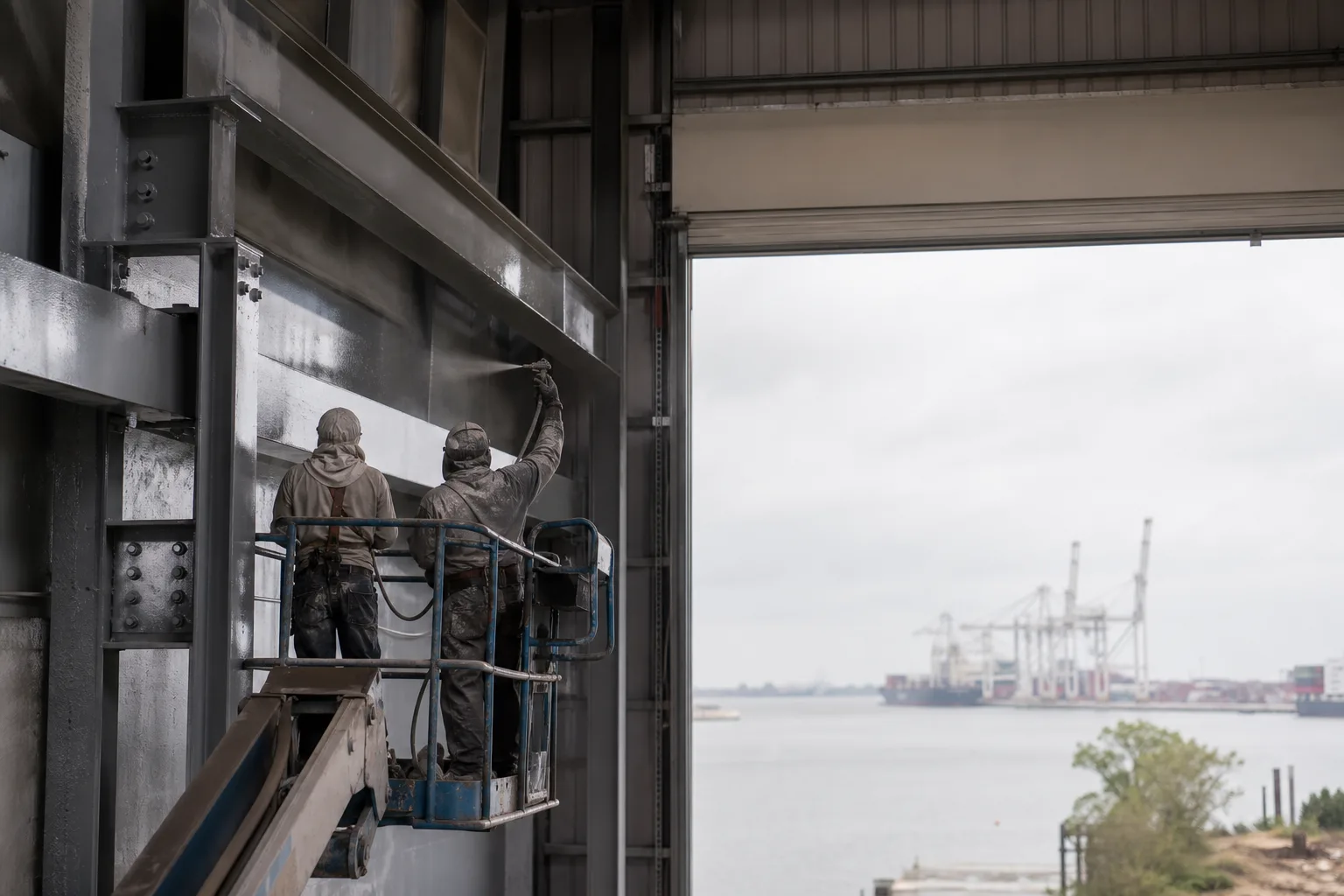
Stand on a dock at the Port of Mobile and you can feel why steel takes a beating here. Salt air rides straight in off the river channel, the humidity rarely lets up, and the gantry cranes and yard equipment never really stop. The buildings that keep cargo moving — transit sheds, warehouses, terminal structures — live in one of the harshest environments a paint job ever has to survive. Industrial painting at the port isn't a cosmetic job. It's corrosion control on a working waterfront.
This is different from a warehouse out in a business park. At the port, two things dominate every decision: the marine exposure right at the water, and the fact that the terminal can't stop for paint. If you manage a dock-side facility, here's what industrial painting near the Port of Mobile actually involves — and how a crew gets it done without getting in the way of the cargo.
What industrial painting at the Port of Mobile covers
Answer-first: port-side industrial painting spans structural steel, high-bay transit-shed and warehouse interiors, metal siding and roofing, handling equipment and railings, and floor striping — all specified for a marine-industrial setting rather than a typical commercial one.
It's part of our commercial painting service, and the surfaces lean heavier toward steel and metal than a standard building does. Terminal structures are tall, open, and built to move freight, which means a lot of exposed structure overhead and a lot of metal taking direct weather.
| Surface | What it needs at the port | Why it matters on the channel |
|---|---|---|
| Structural steel | Rust treatment and corrosion-resistant industrial primer | Direct marine salt air drives rust at seams and fasteners |
| High-bay shed interiors | Lift access and overhead spraying | Brighten tall open spaces and protect steel from condensation |
| Metal siding & roofing | Degreasing and a marine-rated bonding system | Coastal humidity and salt punish exposed panels |
| Equipment & railings | Cleaning and tough enamel finishes | Constant handling traffic plus salt wears finishes fast |
| Floor & lane striping | Clear layout for forklift lanes and safety zones | Keeps a busy terminal floor moving and compliant |
Not every facility needs all of it. One terminal might want a full structural-steel repaint before corrosion gets ahead of it; another just needs the metal exterior re-protected before another humid summer on the water. We scope each building on its own rather than quoting off a square-foot table, because the exposure and the logistics vary that much dock to dock.
Why is the waterfront harder on steel than inland Mobile?
Mobile is a working port city of roughly 186,000 people, and a building sitting on the river channel sees a tougher version of the coastal climate than one a few miles inland. Summer highs average near 94 degrees, the area gets about 52 inches of rain a year, and — the part that matters most here — salt-laden air comes straight off the water with nothing to soften it. That's the engine of corrosion on a port facility: rust working out from fasteners, seams, and any spot where bare steel meets damp, salty air. A distribution warehouse out in West Mobile or up in Mobile County feels a milder version of the same Gulf Coast climate; right at the channel, the salt load is in a different class.
The defense is prep, not just a better can of paint. Steel has to be cleaned and any rust treated, and bare metal needs the right primer before a finish goes on. Metal panels need degreasing and a bonding system made for marine exposure. Skip those steps right at the channel and even a premium industrial coating lifts and flakes inside a season — exactly the failure you can't afford on structure forty feet over a working transit shed.
Painting around live port operations
Answer-first: the way to paint an active port facility is to phase it around the cargo — sequencing by area, working nights and weekends where it helps, and planning for gate access and security so the terminal keeps running.
A terminal can't simply close for a paint job, and the logistics go beyond ordinary commercial work. Beyond sequencing zones and using off-hours for the disruptive parts — high-bay spraying, floor striping that needs cure time — port work means planning around gate hours, security clearance, and any escort or TWIC requirements to get a crew dock-side. We map all of that during the estimate, walking the facility against your operation, so the plan fits your terminal instead of fighting it. The result is painting that progresses while trucks, forklifts, and yard equipment keep moving.
How a port-side industrial project runs
Here's how we approach a dock-side job from first call to sign-off, built around the marine exposure and keeping your terminal running.
Walk the facility and map the logistics
We tour the dock-side building, note the surfaces and the marine exposure, and map the work against your gate hours, security requirements, and cargo schedule, then send a written quote within 24 hours.Prep for a marine-industrial environment
Cleaning, degreasing, rust treatment on steel, and the right primer come first. Right at the channel, prep is what makes an industrial coating survive direct salt air.Phase around live port operations
We sequence the job by area and use nights, weekends, or gaps in the cargo flow so trucks, forklifts, and yard equipment keep moving.Apply marine-grade finishes and striping
Corrosion-resistant industrial finishes go on steel, panels, and high-bay interiors, with floor and lane striping where traffic and safety zones call for it.Final inspection before sign-off
A manager inspects the finished work against the scope before final payment, so nothing is left incomplete and the facility is left clean and operational.
One accountable crew runs the project from the free estimate through that final inspection, so you always know who's on site and who to call — which matters when there's a security badge tied to the gate. If your facility also has office or breakroom interiors that need attention, our interior painting crews cover that under the same roof. You can see the area we serve on the Mobile service area page.
Protecting your facility on the channel
The takeaway on industrial painting at the Port of Mobile is simple: the value is corrosion control, not color. Prepped and properly coated steel and metal hold off the salt the channel pushes at them, durable finishes survive constant handling traffic, and clear floor striping keeps a busy terminal safe and moving. The same salt-air durability principles that protect a home's exterior — covered in our guide to coastal salt-air paint durability — apply double on bare structural steel right on the water. Done right, a port-side repaint buys years before corrosion forces your hand again.
Whether you run one transit shed on the docks or a multi-building terminal, the next step is the same. Reach out for a free facility walk, and we'll send a written quote within 24 hours — scoped to your surfaces, the marine exposure, your security logistics, and a plan that keeps the cargo moving.