
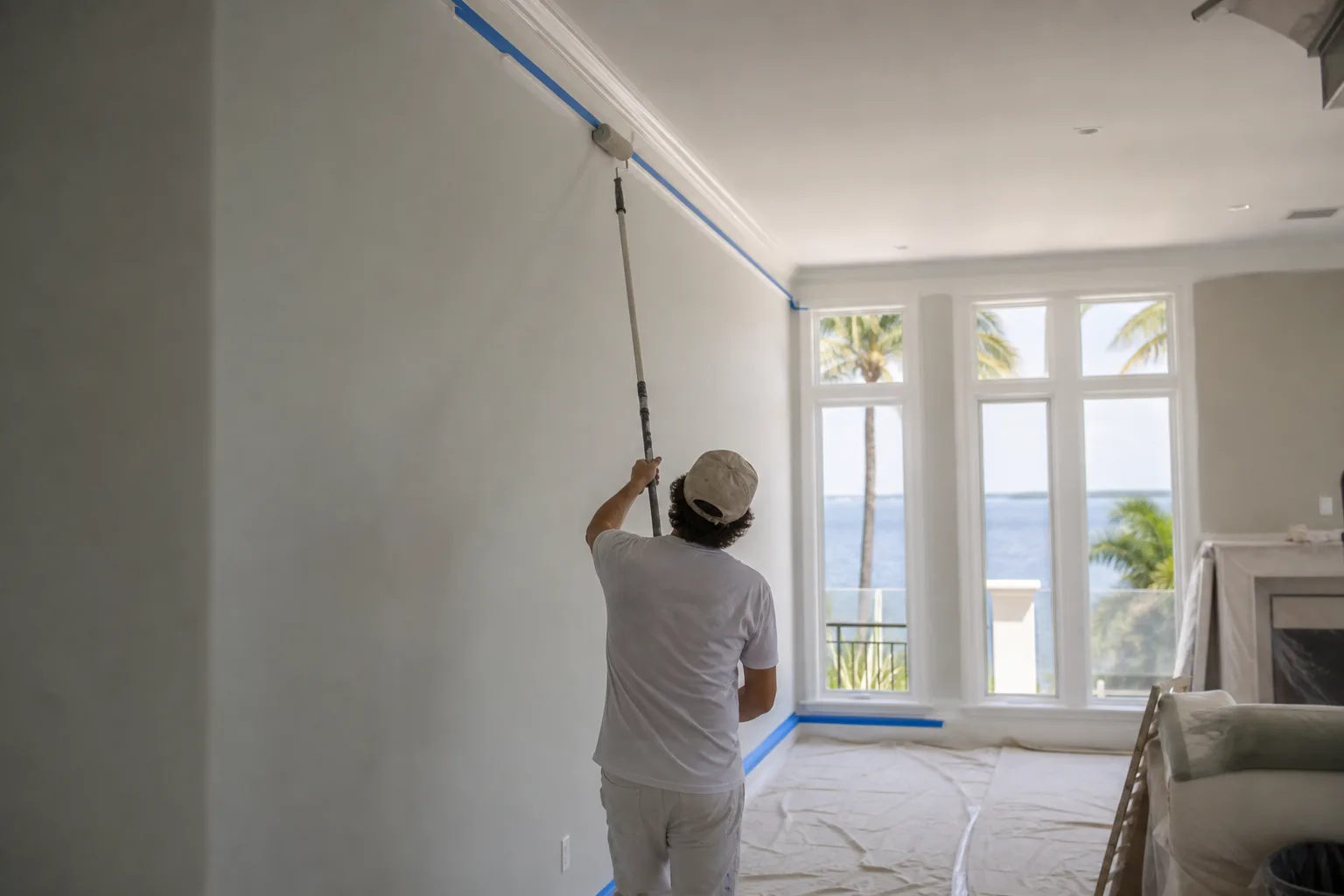
Type "interior painting cost per square foot" into a search bar and you'll get a clean little number that makes the whole thing feel like fifth-grade math. Take your home's square footage, multiply by the rate, and there's your repaint. Tidy. The trouble is that the number almost never matches what you'll actually pay — and not because a painter is padding the bid. It's because inside your home, "per square foot" measures a surface most homeowners aren't picturing.
So before you anchor on a figure off the internet, here's how interior painting cost per square foot is really calculated, why the walls and ceiling carry two to three times the area of your floor, and how to use the rate as a gut-check instead of a quote that fits the wrong house.
What "per square foot" measures inside a home
Start with the plain version: a per-foot rate is just the total job price divided by a square-footage number. The entire question is which number — and indoors, that's where the confusion lives.
There are two very different figures at play, and they get used interchangeably:
- Floor area — the "1,900 sq ft" on your listing or tax record. It describes how much floor you walk on. It has surprisingly little to do with how much wall there is to paint.
- Paintable surface area — the actual skin a roller touches: every wall, plus ceilings, trim, doors, and closets if they're in scope. This is what a coat of paint covers, and it's the number a real interior estimate is built on.
Those two numbers aren't close. As a rough rule, the wall surface in a room runs two to three times the floor area once you stand up all four walls — and that's before you add the ceiling or the trim. So a painter quoting "a dollar fifty a foot" might mean a dollar fifty per foot of floor or per foot of wall, and those describe wildly different jobs. The first thing to pin down on any per-foot rate is which surface it's counting.
Why a small room can carry a lot of surface
Here's the part a flat floor number can't capture: walls go up, and your floor doesn't.
This is why two homes with the same listed square footage can price differently. A home with 9- or 10-foot ceilings has taller walls than an 8-foot home of identical floor area — more surface, plus more reaching and more careful cut-in along a higher ceiling line. Open layouts, lots of windows, stairwells, and tall foyers all add wall (or hard-to-reach wall) without adding a single foot of floor. The square footage on your listing simply doesn't see any of that.
It's also why a single national "per square foot" figure is shaky. It's blending 8-foot ranches with two-story foyers, walls-only refreshes with full trim-and-ceiling repaints, and easy color matches with dark-over-light coverage — into one number that fits none of them.
What the rate quietly leaves out
Even once you know which surface a rate counts, the figure still hides the things that actually move an interior price. A per-foot number can be identical on two quotes that describe completely different work:
| What changes the price | Cheaper version | More involved version |
|---|---|---|
| What's coated | Walls only | Walls + ceilings + trim + doors + closets |
| Coats | One coat over a similar color | Primer plus two finish coats |
| Color change | Light over light | White over deep color, or color over white |
| Ceiling height | 8-foot walls | 9-10 foot walls, stairwells, tall foyers |
| Wall condition | Sound, smooth drywall | Patching, sanding, stain-blocking first |
| The home | Empty between owners | Furnished and lived-in — move, mask, protect |
Ceilings and trim are the big one. Walls-only is the cheapest way to express a per-foot rate, and a lot of low online figures quietly assume it. Ceilings add a whole second plane of surface and slow, neck-craning cut-in. Trim, doors, and baseboards are detail work — taped, brushed, and sanded, foot by foot — so they cost more per square foot than open wall, not less. When a rate looks low, the question isn't "why are they cheaper," it's "what did they leave out of the number."
Color change matters more than people expect, too. Going light-over-light might be one coat. Covering a deep navy with a clean white, or pushing color over a stark white, can mean primer plus two coats to land evenly — same wall, more material and labor. And in a furnished, lived-in home, the crew is moving furniture, masking floors and fixtures, and working around your life, none of which a raw square-foot figure accounts for.
Why interior and exterior rates aren't the same animal
It's tempting to grab any "painting per square foot" number you find and run with it, but interior and exterior rates measure different surfaces under different conditions — so they don't transfer.
Inside, most surfaces are reachable from the floor or a short ladder, but the work is loaded with cut-in: every window, door casing, baseboard, and ceiling edge is a slow, careful brush line, and the whole job happens inside an occupied home. Outside, you trade that for height, weather windows, and siding texture — ladders and staging, sun and humidity, rough or smooth cladding. If you want the outdoor side of this, we break it down in exterior painting cost per square foot, explained. The short version: same phrase, different math, so an exterior rate is the wrong yardstick for your living room.
How do you actually use a per-foot rate?
A per-foot number isn't useless — it's just a sanity check, not a quote. Used right, it tells you when a bid is wildly off, not what your job costs to the dollar. Here's the move:
Ask which surface the rate counts
Floor area or wall-and-ceiling surface? Until you know, two rates aren't comparable. Reputable interior quotes are built on paintable surface, not your listing's floor number.Ask what's inside the rate
Walls only, or walls plus ceilings, trim, doors, and closets? How many coats? Is primer included? A low rate almost always means a narrower scope, not a better deal.Match scope before you compare
Put both bids on the same footing — same surfaces, same coats, same prep — then the per-foot numbers finally mean something side by side.Get it measured and itemized
The only accurate figure comes from someone standing in the room. Insist on a written quote that lists surfaces, coats, and products so the per-foot rate is backed by a real scope.
If you want the bigger picture — how rooms, prep, and paint grade add up across a whole house, not just one rate — our cost to paint a house in Mobile & Baldwin County guide walks the full budget. And if you're trying to decide whether per-foot is even the right way to price your job, how painters price a job: square foot vs room vs project compares the three methods head to head.
The bottom line on interior painting cost per square foot
Interior painting cost per square foot is a fine starting frame and a poor finish line. The rate only means something once you know which surface it counts and what's bundled into it — walls versus walls-plus-ceilings-and-trim, one coat versus primer-and-two, an empty house versus your furnished one. Get those pinned down and a per-foot figure becomes a useful gut-check. Skip them and you're comparing numbers that quietly describe different jobs.
The honest way to know what your rooms cost is to have them measured. We give a free in-home estimate across interior painting and send a written quote within 24 hours — surfaces, coats, and products itemized — so you can see exactly what any per-foot number is really buying. You can pay by cash, check, or credit card. Book your free estimate and we'll give you the real figure for your home, not a rate borrowed from someone else's.