
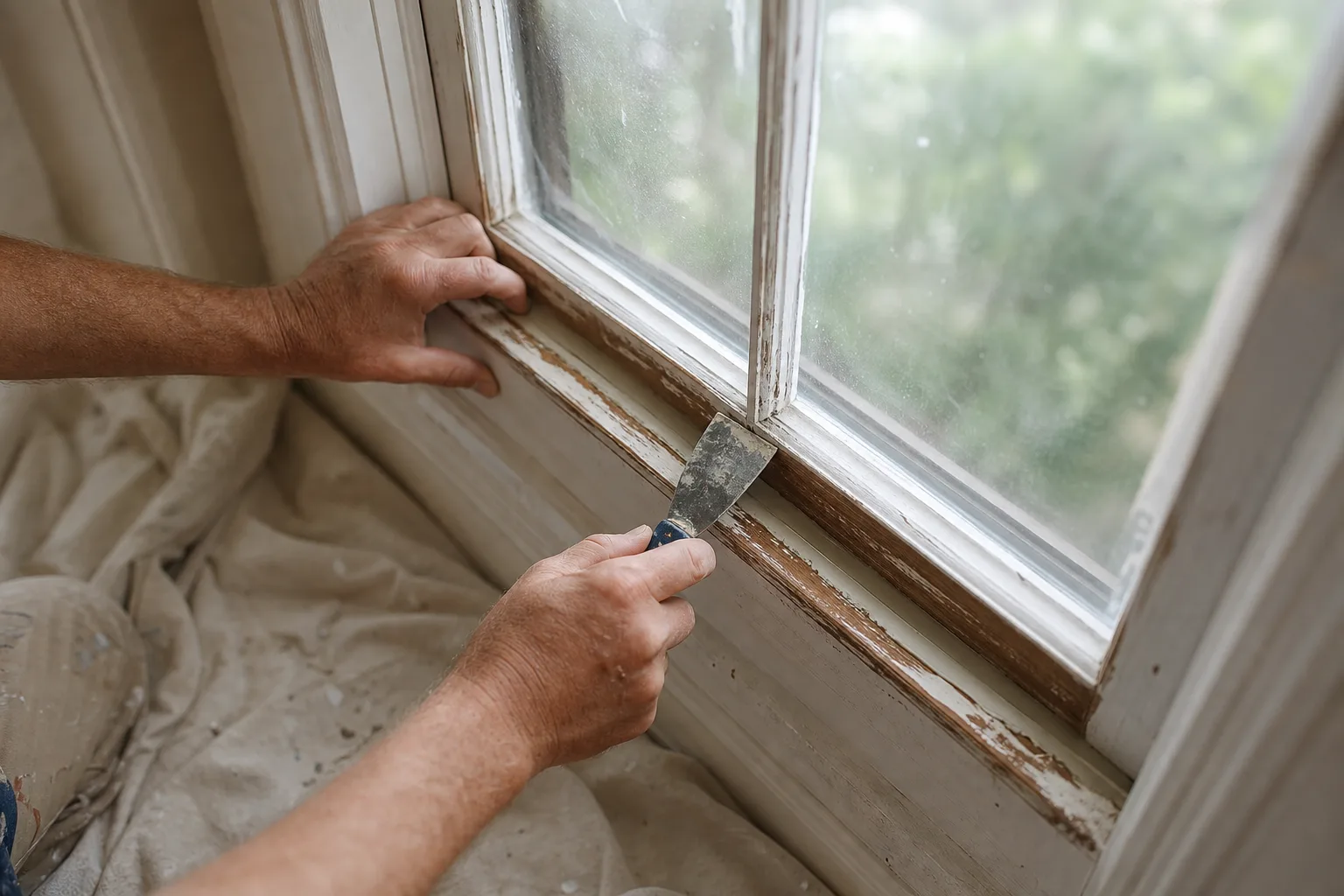
A salesman will tell you the original windows on your old Mobile home are beyond saving and quote you a wall of vinyl. Most of the time, that's just not true. The wavy-glass double-hungs in a hundred-year-old house are usually made of old-growth wood that's denser and more rot-resistant than anything you can buy new — and they can be repaired, re-glazed, and repainted to last another generation.
Painting historic wood windows in Mobile the right way means treating them as the repairable assets they are. Here's how a window goes from painted-shut and peeling to smooth-operating and sealed — without replacing it.
Why does repairing beat replacing on a historic home?
Answer first: on most historic Mobile homes, repairing the original wood windows beats replacing them. Old-growth sash was milled from slow-grown timber that holds paint and resists rot far better than the fast-grown wood or hollow vinyl in many replacements. Repaired well, those windows can outlast a new unit by decades.
There's a district angle too. Mobile's historic neighborhoods often favor keeping original wood windows, so repairing them usually keeps approval simpler than swapping them out. We see this across the city's older districts — the tall double-hungs in Old Dauphin Way, the Italianate and Greek Revival sash in De Tonti Square, and the cottages around Oakleigh Garden are exactly the kind of original windows worth saving. Before you change anything visible from the street, check with the City of Mobile's Architectural Review Board — it's far easier to confirm up front.
What goes wrong with old wood windows
Three things usually fail on a historic window, and all three are fixable:
- Cracked glazing putty. The angled bead that holds the glass dries out, cracks, and falls away — and once it's gone, water gets behind the glass and rots the wood.
- Failing paint. Decades of layers chalk, crack, and peel, especially on the sun-and-rain-exposed sash.
- Stuck or sloppy operation. Paint seals the sash shut, or old cords and balances give out so the window won't stay up.
None of those means the window is done. They mean it's due for the kind of restoration that prep-first painters and carpenters handle all the time.
There's also a comfort and efficiency payoff people overlook. A repaired, properly sealed wood window with a tight glazing line and working sash stops the drafts and the rattling that make an old window feel like a liability. You keep the wavy original glass and the period proportions — the things that make the house feel like itself — without the cold air that a failed window lets in. On a Mobile home, where summers are long and humid, a sash that seals and operates is worth more than a brochure full of replacement promises.
How to restore and repaint a wood window
Here's the order we follow on a historic Mobile sash. Each step sets up the next, which is why skipping one shows up later.
Free up and assess the sash
Cut any paint seal so the sash moves, then check the wood, the joints, and the glazing. Sound old-growth wood is worth saving even when the paint looks rough.Scrape and repair lead-safe
Scrape failing paint to a sound edge using lead-safe practices, then consolidate or fill soft spots and repair loose joints so the sash is solid again.Re-glaze the panes
Remove cracked, failed glazing putty, prime the bare rabbet, and lay a clean new bead of putty to re-seat the glass and seal out water.Prime and paint, lapping the glass
Prime bare wood, then paint the sash and lap the finish slightly onto the glass to seal the putty line. Mind the sash edges so it still opens cleanly.Reset hardware and final inspection
Repair or replace cords and balances, reset the locks and lifts, confirm the window operates, and a manager signs off at the final inspection.
The glazing and the paint-to-glass lap are the parts most DIY jobs get wrong. Get them right and the window sheds Mobile's rain instead of soaking it up.
Lead-safe matters most on windows
Windows are the single most common source of lead paint trouble on an old home. The friction of a sash opening and closing grinds old paint into dust, and pre-1978 layers often contain lead. Mobile's median home is around 50 years old, and the historic-district homes near Mobile Bay are older still — many across Mobile County predate the war.
We're an EPA RRP lead-safe certified firm, so window prep gets containment, careful scraping and sanding, and a thorough clean-up — not a careless sander throwing dust into the yard. On a window, where that dust collects right on the sill, doing it lead-safe is the whole point.
Where painting meets carpentry
Window restoration sits right where painting and woodwork overlap. Sometimes the sash just needs glazing and paint; sometimes a corner joint or a sill needs real repair first. That's why our carpentry and wood repair and our exterior painting work as one crew on these — we'd rather fix the wood and seal it correctly than paint over a problem.
| Repair the original window | Replace with a new unit |
|---|---|
| Keeps old-growth wood and character | Often fast-grown wood or vinyl |
| Usually simpler for district approval | May require review and may be denied |
| Re-glaze, repair, repaint to last | New unit, new failure points over time |
| Lower cost when the wood is sound | Higher cost, plus disposal |
Keep the windows that came with the house
Your home's original windows are part of what makes it worth living in. Free the sash, scrape lead-safe, re-glaze, prime, and paint — and they'll open smoothly and shed water for years. For more on detailed historic exterior work, see our guide to painting ornate Victorian trim and brackets, and for the bigger picture, our guide to painting Mobile's National Register historic homes.
Pro 1 Painters is family-owned since 2013 with a 4.8-star Google rating, a Mobile office about 15 minutes from downtown, and a 3-year workmanship warranty on our work. Ready to save your windows? Call us for a free on-site estimate and a written quote within 24 hours. Pay by Cash, Check, or Credit Card.