
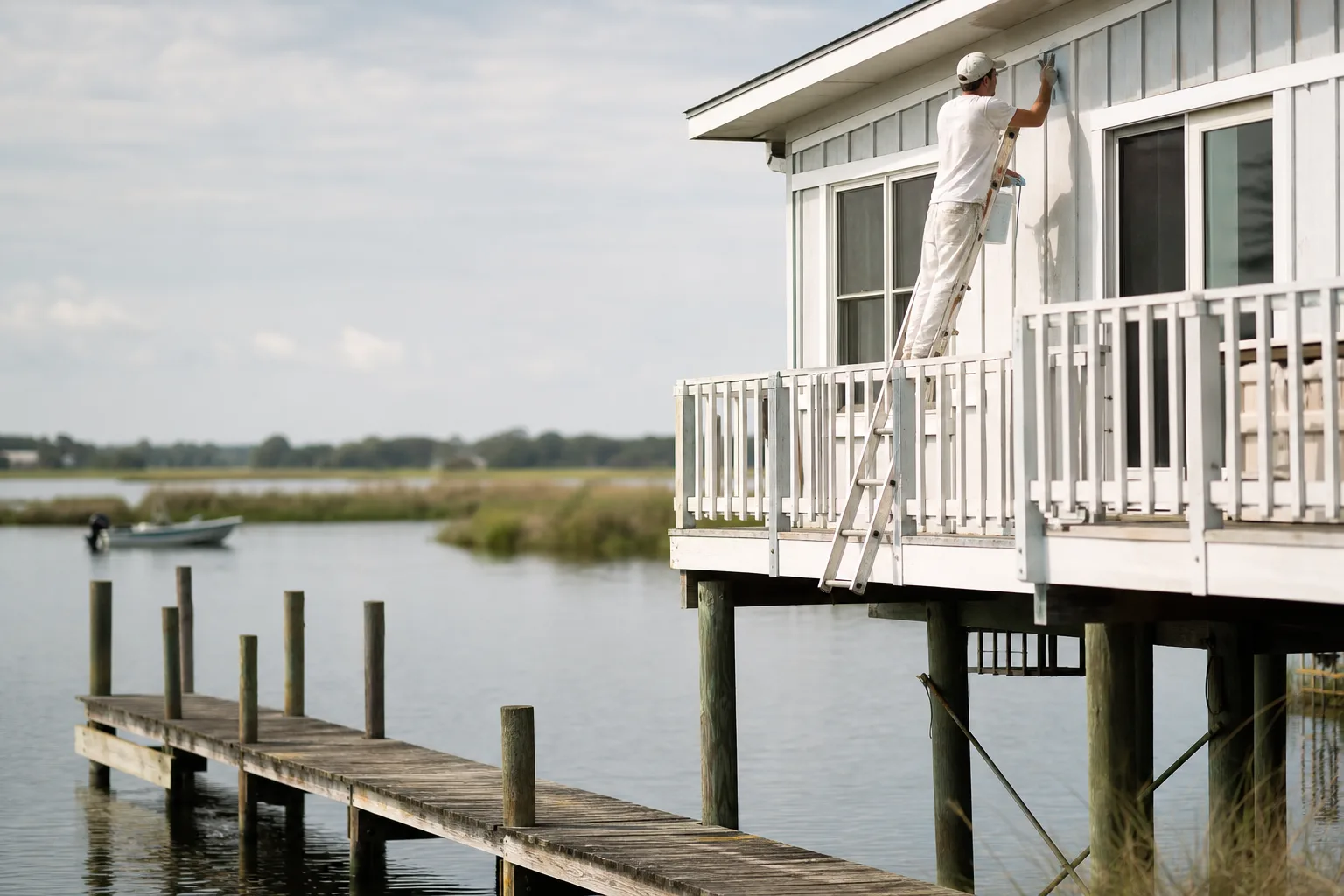
Painting a waterfront home in south Mobile County means treating one house as two paint jobs. The side facing the bayou or bay takes a steady wash of salt spray and wind-driven moisture; the street side, fifty feet away, barely knows it's on the coast — so the water-facing elevation needs the most aggressive prep and coating while the sheltered side needs less. From the working bayou at Bayou La Batre to the river homes along Fowl River, a coastal repaint that ignores that split is one that fails early on the water side.
We're exterior painters who work this part of the county, and waterfront jobs get a different plan than anything inland. Salt, humidity, flood exposure, and the dock-and-piling woodwork that comes with living on the water all change how you prep, what you coat, and where you start.
What makes painting a waterfront home its own job?
A true waterfront home is exposed in ways an inland house — even a coastal-town house a few blocks back — simply isn't. The direct line to open water means salt-laden air settles on the water-facing siding constantly, working under any weak spot in the coating. The humidity barely lets up, and the Gulf sun is merciless from spring through fall, breaking down the finish from above while the salt attacks from the side.
Then there's the water itself sitting under the house. Much of south Mobile County's waterfront falls in FEMA flood zone AE — around Bayou La Batre the base flood elevation runs near 15 feet — which is why so many homes here are raised on pilings. We see it on the docks and bulkheads along the Shell Belt Road corridor, on the older cottages in Downtown Bayou La Batre, and out toward Coden where lots back right up to Portersville Bay and the Mississippi Sound. The lower courses of the house and those pilings take the most moisture, the most storm exposure, and the most splash. They need prep and protection the upper walls don't.
There's also the woodwork that comes with the water: docks, railings, boathouse siding, and the bottoms of pilings. Above-water wood can be cleaned, repaired, and coated. Wood that sits in or gets submerged by the water is a different animal, and we'll always be straight with you during the free estimate about what paint can and can't do down at the waterline. For the broader coastal playbook, our exterior house painting guide for Mobile and Baldwin County covers prep and products that apply across the region.
How We Approach a Waterfront Repaint
The order of operations matters more on the water than almost anywhere. Here's the sequence we follow on a south Mobile County waterfront home:
Read the exposure side by side
We grade every elevation. The water-facing side takes direct salt spray and wind-driven moisture, so it gets the most aggressive prep; the sheltered street side may need less. One plan for the whole house never works on the water.Wash off salt, mildew, and chalk
We pressure-wash the entire exterior plus the dock and railing woodwork to strip the salt film, mildew, and chalk. Coastal coatings won't bond over the residue salt air leaves behind, so this step isn't optional.Repair waterfront wood before painting
We check fascia, soffits, dock decking, railings, and pilings for the rot that's common on the water, then repair or replace soft boards before coating — never paint over a problem that will keep spreading.Seal, prime, and protect the lower courses
We caulk gaps and spot-prime every bare spot, paying special attention to the lower courses and raised pilings that take the most moisture and storm exposure in a flood-zone setting.Coat for the coast and inspect
We apply durable exterior coats built for salt air and UV — worst-exposed walls first — then a manager walks the home with you for a final inspection before final payment.
That prep-heavy approach is the difference between a waterfront repaint that holds for years and one that's chalking on the water side by the next storm season. Where the wood is too far gone — and on the water, soft fascia and dock boards are common — our carpentry and wood repair crew repairs or rebuilds it before a drop of finish goes on. Painting over rotten waterfront wood just buys you a redo.
Timing, Salt, and Making It Last
Even a perfect waterfront repaint lives a shorter life than an inland one — often closer to 5 to 8 years, with the water-facing side sometimes needing a touch sooner. That's not a knock on the work; it's the reality of living on salt water. What you can control is timing and upkeep.
We time the work for drier, lower-humidity stretches so the coatings cure properly, and we like to get bare or storm-damaged wood sealed before hurricane season arrives. South Mobile County averages roughly 49 inches of rain a year, so working around the wet stretches genuinely matters for cure and adhesion. Between repaints, a periodic rinse of the salt film off the water-facing walls — and catching any bare spot early — buys you real time.
If you want to understand why coastal coatings break down the way they do, our piece on how salt air and humidity shorten paint life digs into the chemistry, and for the town-by-town view our guide to exterior painters in Bayou La Batre and the farm-belt and rural-acreage homes around Grand Bay round out the south-county picture.
What the House Is Made Of Changes the Plan
Waterfront homes down here aren't all built the same, and the material on the walls changes the repaint as much as the exposure does. An older wood-sided fishing cottage on the bayou, a raised Hardie-clad home over Fowl River, and a brick house set back from the water each ask for a different hand — especially on the water-facing side that catches the salt.
Wood is the most demanding on the coast: it moves with the humidity, it's where rot starts on docks and fascia, and it needs the most scraping, repair, and priming. Fiber-cement siding holds up well to salt and moisture but still relies on sound caulk joints and a coating that bonds to its factory finish. Brick sheds water but its trim, soffits, and any wood detail are still fully exposed. Knowing which surface you're dealing with — and grading it against the water side — is how we right-size the prep instead of guessing.
| Surface on the waterfront | Main concern in salt air | How we handle it |
|---|---|---|
| Older wood siding & trim | Rot, movement, and salt working under failing paint | Scrape to sound wood, repair soft boards, spot-prime, then coat |
| Fiber-cement (Hardie) siding | Open caulk joints and bonding to the factory finish | Re-caulk seams, prep the surface, use a coating built to adhere |
| Brick body with wood trim | Exposed fascia, soffits, and detail even when brick sheds water | Focus prep on the wood elements; tighten and seal trim joints |
| Docks, railings & boathouse wood | Constant moisture and splash above the waterline | Clean, repair, and coat above-water wood; be honest about the waterline |
If you're weighing whether your siding is even worth repainting versus a longer-term fix, it's a conversation we'll have straight with you at the free estimate — no upsell, just what the house in front of us actually needs.
Get a Free Estimate for Your Waterfront Home
Painting a waterfront home in south Mobile County well comes down to respecting the water — grading each elevation honestly, washing off the salt, repairing the dock-and-piling woodwork, protecting the flood-exposed lower courses, and coating for the coast in the right weather window. That's the work, and it's where a careful crew earns the next call.
Family-owned since 2013 with offices in Mobile and Spanish Fort, we run one accountable crew on your home from the free estimate through to the final inspection, our manager signs off before final payment, and our exterior painting work carries a 3-year workmanship warranty and a 4.8-star reputation across the Gulf Coast. To get started, book a free on-site estimate or learn more about painting throughout south Mobile County and Bayou La Batre — we'll send a written quote within 24 hours. Pay by Cash, Check, or Credit Card.