
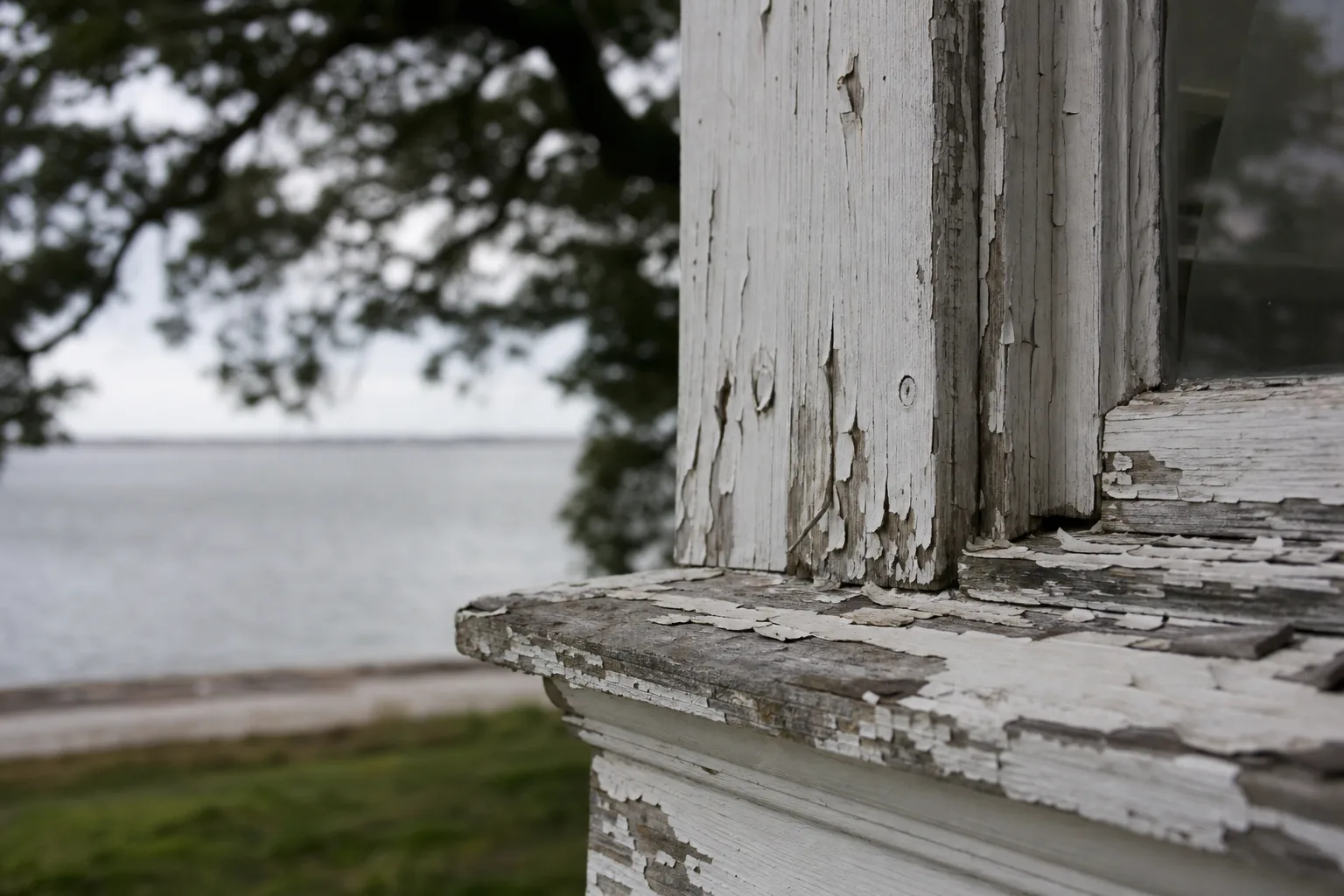
A paint job that would last a decade in Birmingham can start failing in a couple of seasons three blocks from Mobile Bay. Same paint, same painter, same care — but a completely different enemy. Homeowners along the coast often blame the brand, or the crew, or bad luck. The real culprit is invisible and relentless: salt air and the heavy, humid climate that carries it. Understanding how they attack a finish is the difference between repainting every few years and getting a coat that actually earns its keep.
This is the mechanism behind salt air paint damage — what's physically happening between the salt, the moisture, the sun, and your siding — and, just as important, the system that stands up to it. If you're trying to sort a serious coastal painter from one who'll cut corners, knowing this is your best filter; our guide to hiring a painter on the Gulf Coast puts it to work.
What salt air paint damage actually is
Start with the salt itself, because it's the part people picture least clearly. Salt spray off the water doesn't just settle on beach-front homes — it rides the wind for miles, coating every surface inland with a fine, invisible film. You can't see it, but it's on your siding, your trim, and your fascia right now.
Here's why that matters: salt is hygroscopic — it pulls water out of the air and holds it. A layer of salt on your wall is a layer of tiny moisture magnets, constantly drawing humidity out of our heavy coastal air and trapping it against the surface. The substrate under the paint never fully dries. And a paint film over a chronically damp surface is a film losing its grip.
There's a physical attack on top of the chemical one. Salt that works into pores and hairline gaps crystallizes, and those crystals expand and contract with every swing in temperature and moisture. That movement is microscopic but ceaseless, prying at the bond between the paint and the surface like a million tiny wedges. Over months, it shows up as the failures coastal homeowners know too well: peeling at the edges, blisters that bubble up from underneath, and adhesion that just gives out.
Humidity: the quiet partner in coastal paint failure
Salt gets the blame, but it rarely works alone. Our climate's persistent humidity is its partner, and it attacks at two different stages.
During the job, high humidity slows the cure. Paint hardens by releasing moisture into the air; when the air is already saturated, that release crawls, and a film that cures too slowly never reaches full hardness or full adhesion. It bonds weaker from day one. (This is why timing matters so much here — we cover the daily window in our coastal exterior painting guide.)
Long after the job, humidity keeps the substrate damp, and damp wood is a buffet for mildew and a partner for salt. Moisture trapped behind the film expands and contracts, feeds rot in any unsealed wood, and works with the salt to push the coating off from below. It's the force behind most coastal failures, and the one that almost never gets named.
There's a third hammer: the sun. Intense, often water-reflected UV light breaks down a paint's binder — the resin that holds the pigment together and grips the wall. As the binder degrades, the surface chalks and loses its flexibility, and a brittle film cracks instead of moving with the wood. Inland homes deal with one or two of these forces at a time. A coastal home faces salt, humidity, and UV simultaneously, every single day. That's the whole reason the same paint job doesn't last as long here.
| Force | How it attacks the finish | What it looks like |
|---|---|---|
| Salt deposits | Hold moisture against the surface; crystals expand and pry the bond apart | Edge peeling, blistering, lost adhesion |
| Coastal humidity | Slows the cure during the job; keeps the substrate damp afterward | Weak bond, mildew, soft rotting wood |
| Reflected UV / sun | Breaks down the binder that grips the wall and keeps paint flexible | Chalking, fading, brittle cracking |
Why does a quality job still beat salt air?
If salt, humidity, and sun are unavoidable here — and they are — the natural question is whether good paint even matters. It does, but not the way most people think. You don't beat the coast by buying the most expensive can; you beat it by building a system that accounts for all three forces. That system is mostly prep, and prep is where a real coastal crew earns its keep — our breakdown of exterior paint prep on the Gulf Coast walks through the scrape-caulk-prime sequence step by step.
Here's the order we work in to build a finish that stands up to salt air and humidity. Each step targets one of the forces above.
Wash off the salt and chalk first
Pressure-wash every surface to strip the invisible salt film, chalk, and mildew that block adhesion, then let it dry fully. Washing is the only thing that removes the salt that would otherwise sit trapped under your new coat.Scrape, sand, and feather failing paint
Remove any paint that's already lifting and feather the edges so the new system bonds to a sound surface instead of riding on top of a coat that's already letting go.Repair wood and seal every gap
Treat soft or rotted wood and re-caulk open joints and seams so wind-driven rain and humid air can't get behind the finish and push it off from underneath.Prime bare spots for adhesion and moisture resistance
Spot-prime all bare wood and repairs with the right primer so the topcoats grip evenly and gain a moisture-resistant foundation before the color goes on.Apply a coating built for moisture movement
Finish with a flexible, breathable exterior coating rated for the coast, applied at the right film thickness so it sheds water, blocks UV, and moves with the wood instead of cracking.
Notice that four of the five steps happen before any color goes on. That's not an accident — it's the answer to everything above. Strip the salt and you remove the moisture trap. Seal the gaps and humid air can't get behind the film. Prime the bare wood and the topcoat grips. Only then does the quality of the coating get its chance to shine. Choosing that coating wisely matters too, which is why we wrote a whole breakdown of the best paint brands for Gulf Coast homes.
The bottom line on salt air and your paint
You can't change the climate three blocks from the bay, but you can change how long your paint survives it. Salt air paint damage isn't bad luck or a bad brand — it's a predictable result of salt holding moisture, humidity slowing the cure and feeding rot, and UV breaking down the binder, all at once. It's also why coastal homes need repainting sooner than inland ones, which we lay out in how often to repaint a house exterior on the Gulf Coast. Beat it the only way that works: a system that strips the salt, seals the gaps, primes the wood, and finishes with a coating made for the coast.
That's exactly how we approach every exterior painting job. Family-owned since 2013, we've spent more than a decade learning what the Gulf Coast does to a finish and how to make one last anyway — one accountable crew from your free estimate through the final inspection, backed by a 3-year workmanship warranty and a 4.8-star reputation. If your home's exterior is chalking, peeling, or just due, book a free in-home estimate and we'll tell you honestly what it needs. You can pay by Cash, Check, or Credit Card.