
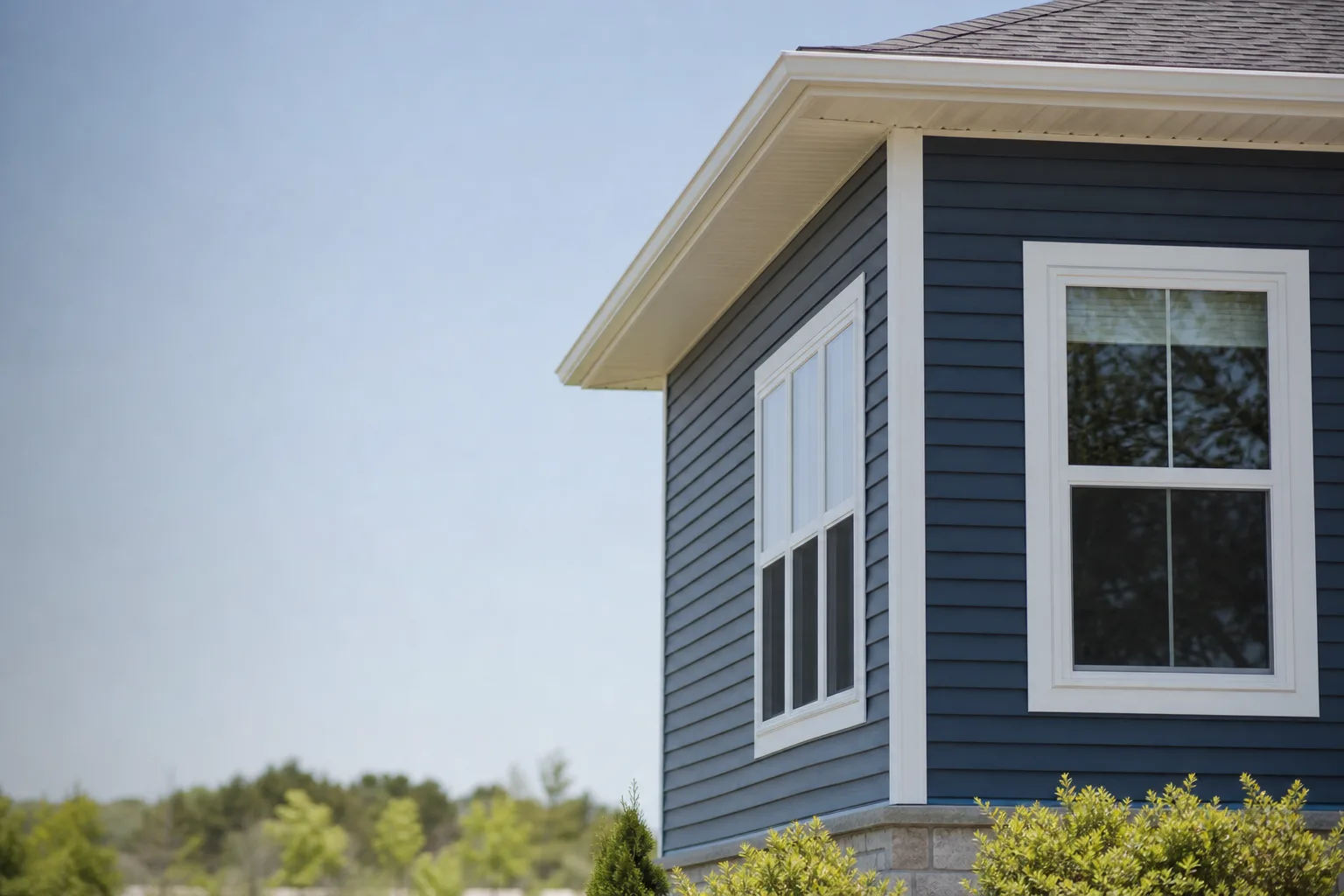
A homeowner came to us set on charcoal. Their beige vinyl looked dated, and the deep gray on the sample card looked sharp. The problem is what charcoal does to vinyl in full sun: the panel soaks up heat, softens, and warps — and once it ripples or buckles, no amount of repainting brings it back flat. We steered them to a vinyl-safe slate instead. Same modern, deeper look they wanted; the siding stayed dead flat. That whole conversation came down to one thing most people never hear about until it's too late: vinyl-safe paint colors, and the heat math behind them.
The how-to side of a vinyl repaint — washing, deglossing, the right acrylic — is its own subject, and we cover it in how to paint vinyl siding without warping. This post is about the part that decides whether the job survives the first summer: the color. Why dark colors warp the panel, how to read the numbers that tell you a color is safe, and how to get a richer look on your home without cooking the siding.
Why dark colors warp vinyl siding
It comes down to heat. Vinyl is built to expand and contract with temperature, but only within a set range. A color's darkness controls how much of the sun's energy the panel turns into heat: lighter colors reflect it, dark colors absorb it. Paint a panel darker than it was made for, point it at the afternoon sun, and the surface temperature can climb past vinyl's tolerance. The panel softens, then ripples, buckles, or pulls loose at the seams — and that warp is permanent.
The same color won't behave the same on every wall, either. A deeper shade might hold fine on a shaded north elevation and warp the south wall that bakes all afternoon. That's why the rule isn't just "avoid dark" — it's "know the heat load the color puts on the panel, and keep it inside the safe range on every wall."
What makes a color "vinyl-safe"?
Two numbers tell the story, and a vinyl-safe color is engineered around both.
The first is light-reflectance value (LRV) — a 0-to-100 scale where 0 absorbs all light and runs hottest, and 100 reflects it and stays coolest. For ordinary paint on vinyl, the common guidance is to stay above an LRV of roughly 55. The second is the part that lets you cheat the limit: heat-reflective pigments. Vinyl-safe collections are built with special pigments that bounce back infrared energy, so the panel stays cooler than the apparent darkness would suggest. A vinyl-safe color can read noticeably deeper than its raw LRV implies and still keep the surface temperature in the safe zone.
That's why you can't judge safety by eye. Two grays that look identical on the rack can put very different heat loads on a panel — one's vinyl-safe and one isn't. The label, not the swatch, is what tells you.
| Color choice | Roughly how it behaves on vinyl | Verdict |
|---|---|---|
| Light neutrals (whites, soft grays, beiges) | High reflectance, panel stays coolest | Safe — the easy zone |
| Mid-tone color, vinyl-safe collection | Heat-reflective pigments hold temps down | Safe — your room to go deeper |
| Mid-to-dark color, NOT vinyl-safe | Absorbs more heat than the panel was built for | Risky — can warp in full sun |
| True charcoal / near-black, any line | No pigment reflects enough at that darkness | Avoid on vinyl — warps the panel |
How to get a deeper look without warping
The good news: vinyl-safe collections have come a long way. You're no longer stuck with pale neutrals. The rated lines now include richer greiges, deeper grays, muted blues, and earthy tones that read modern and warm — plenty of room to move past builder beige. What you won't find is a genuinely vinyl-safe true black or deep charcoal, because no pigment reflects enough heat at that darkness. If your heart's set on near-black, that's a conversation about other options, not forcing a color the panel can't survive.
Here's how we approach the color call on a vinyl repaint.
Start from the original color
Note the existing shade — the panel was manufactured to tolerate that heat load. Staying at or lighter is always safe; going deeper means leaning on vinyl-safe pigments to stay in range.Shop the vinyl-safe collection
Pull colors from the manufacturer's published vinyl-safe collection and check each one's rating. That's where the deeper shades live that can still take full sun without warping the panel.Account for the sunniest wall
Judge the color against the elevation that gets the most direct afternoon sun, not the shaded side. If it's safe on the hottest wall, it's safe on the house.Preview it on your actual home
See the color on your own siding, in your home's real light, against your roof and trim, before you commit. A two-inch swatch lies; the wall tells the truth.
That last step is the one most people skip and most regret. Before you buy a drop of paint, our free AI Color Visualizer lets you upload a photo of your home and preview real colors on your actual siding — the fastest way to find a deeper shade you love that still stays vinyl-safe.
When you want help choosing
Picking a vinyl-safe color that flatters your home — and reads the way you imagined once it's up on a whole wall in coastal light — is harder than it looks on a card. Coastal sun is bright and a little cool-toned, and it shifts a color from how it looks indoors; we get into that in how coastal light changes exterior paint colors. This is exactly where a little guidance pays for itself, and our color consultation helps you land on a shade that's both safe for the panel and right for the house, so you don't repaint a color you regret.
The bottom line on vinyl-safe colors
You can absolutely give vinyl siding a richer, more current color — the secret is staying inside the vinyl-safe range. Lighter colors are the easy zone; vinyl-safe collections, built with heat-reflective pigments and a published rating, are how you go deeper without pushing the panel past its limit. Skip the true blacks and deep charcoals on vinyl, judge the color on your sunniest wall, and preview it on your own home before you commit.
Thinking about a new color for your siding? Preview it with our color visualizer, then book a free in-home estimate. We're a family-owned crew that's painted Gulf Coast exteriors since 2013 — one accountable crew from your free estimate through the final inspection, all backed by our 3-year workmanship warranty. Learn more about our exterior painting work, and we accept payment by Cash, Check, or Credit Card.