
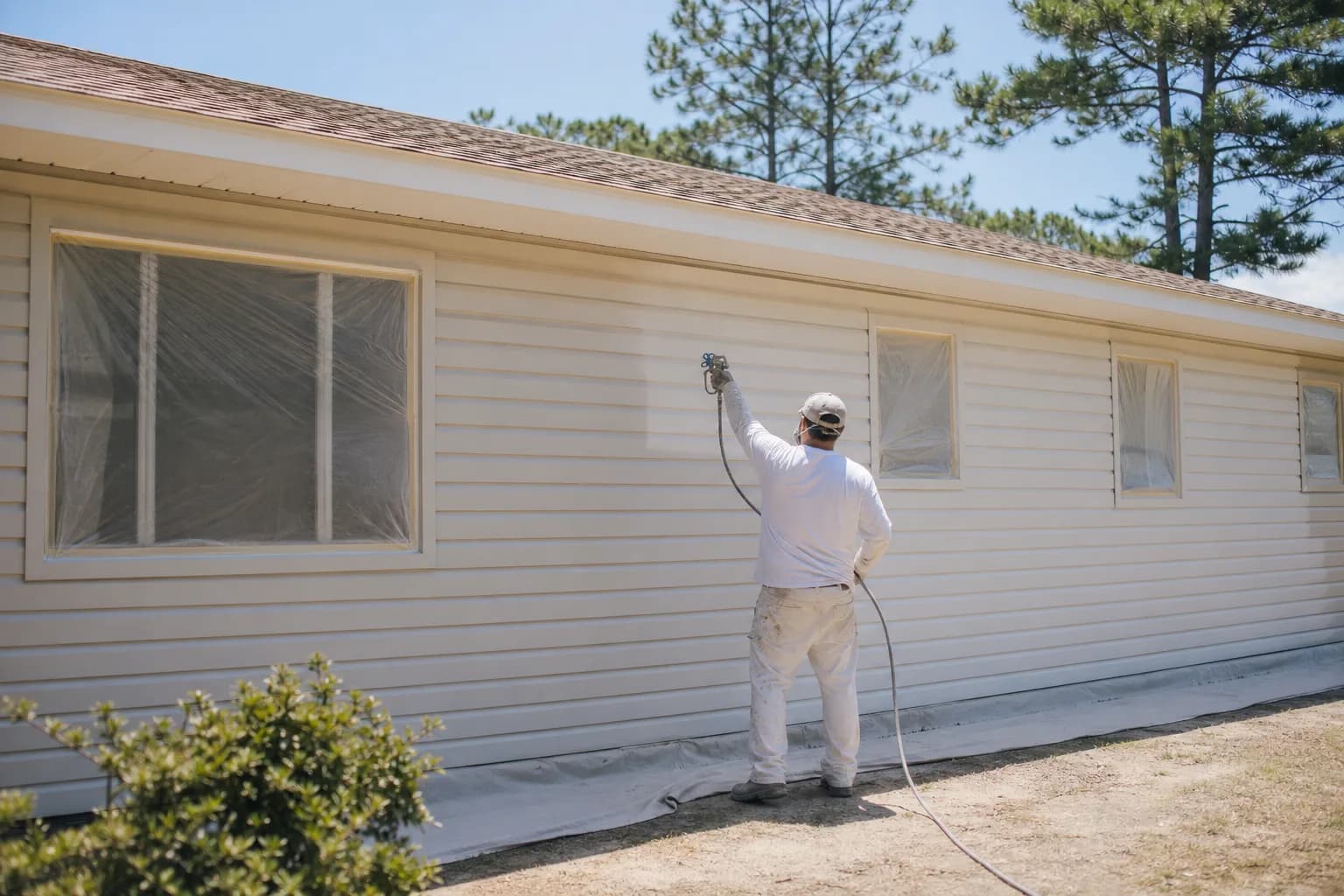
A homeowner in Daphne wanted to take their tired beige vinyl to a deep charcoal. Looked great on the sample. The problem is what charcoal does to vinyl in August on the Gulf Coast: it soaks up heat, the panels soften, and you get rippling and buckling that no amount of repainting will undo. We talked them into a vinyl-safe slate instead, and the siding stayed flat.
That's the whole game with painting vinyl. Yes, you can paint vinyl siding — it's one of the most cost-effective ways to refresh an exterior. But our climate is unforgiving, and the wrong color is what warps the panel. Here's how to paint vinyl siding without warping it, what "vinyl-safe" actually means, and how to know whether a repaint is even the right move.
Why does vinyl siding warp in the heat?
The reason vinyl warps comes down to one thing: heat. Vinyl is built to expand and contract with temperature, but only within a set range. Paint a panel darker than it came, point it at full Gulf Coast sun, and the surface temperature can climb past that range. The panel softens, then ripples, buckles, or pulls loose — and that warp is permanent.
So the number-one rule for how to paint vinyl siding is simple: never go darker than the original color unless you're using a vinyl-safe color rated for it. Two things keep the panel in the safe zone:
- Color value. Lighter colors reflect heat; dark colors absorb it. Staying at or lighter than the existing shade is the safest path.
- Vinyl-safe pigments. The major paint manufacturers publish vinyl-safe color collections built with heat-reflective pigments, each with a measured solar-reflectance value. Those let you go a little deeper without cooking the panel.
This matters even more on color choice than on technique. Our companion post on vinyl-safe paint colors and why dark colors warp siding goes deeper on reading solar-reflectance values. And if you want to see a vinyl-safe color on your own house before you buy a drop of paint, our free AI Color Visualizer lets you upload a photo and preview it on your actual siding.
How to paint vinyl siding, step by step
Once the color is settled, the job lives or dies on prep. Vinyl is slick and it collects salt film, chalk, and mildew on the coast — and paint won't grip any of that. Here's the order we follow on a vinyl repaint.
Confirm the color is safe
Choose a vinyl-safe color no darker than the existing siding so the panels stay inside their heat range and don't warp in full Gulf Coast sun.Wash it clean
Pressure-wash or scrub off dirt, salt film, mildew, and chalk, then rinse fully and let the siding dry — paint won't bond to a dirty or chalky surface.Dull and spot-prime
Lightly degloss slick panels and apply a bonding primer to any chalky, previously painted, or failing areas so the topcoat bonds across the whole wall.Mask and protect
Cover windows, trim, lights, and plantings, and pick a mild, dry stretch of weather so the coats flash off evenly instead of in baking heat.Apply two thin coats
Spray and back-roll, or brush and roll, two thin even coats of a quality 100% acrylic exterior paint in a vinyl-safe color, letting each coat cure before the next.
A couple of coastal notes. Time the job for a mild, dry stretch — painting in the hottest part of an August afternoon makes the paint flash off too fast and works against you. And don't skip the wash thinking a quick rinse will do; the cleaning step is the single biggest factor in whether the new finish actually sticks. The same prep-first discipline applies across siding types — see our guides on painting aluminum siding and fixing chalking and painting T1-11 plywood siding.
Vinyl-safe paint: what to actually use
Not every exterior paint belongs on vinyl. Here's the short version of what works on the Gulf Coast.
| Choice | Use it for | Watch out for |
|---|---|---|
| 100% acrylic exterior paint | The topcoat on clean, sound vinyl — flexes with the panel | Lower-grade paints chalk and fade faster in salt air and sun |
| Vinyl-safe color collection | Going slightly deeper than the original color safely | A standard dark color outside the safe list can warp the panel |
| Bonding primer (spot) | Chalky, slick, or previously painted failing areas | Skipping it where it's needed leads to peeling |
| Full siding replacement | Cracked, brittle, or panels pulling off the wall | Costs far more than a repaint when the siding is still sound |
Repaint or replace? Be honest about the panels
Painting vinyl siding is almost always far cheaper than replacing it — but only if the panels are sound. If your siding is just faded, chalky, or a color you've outgrown, a repaint is the budget-friendly win. If panels are cracked, brittle, or pulling off the wall, paint won't save them and replacement is the honest answer.
A few signs the panels are still good candidates for a repaint: they're solid when you press on them, they don't crack or flex when bumped, and they're sitting tight against the wall with no panels sagging or popping loose. A few signs to replace instead: long cracks, brittle panels that snap at the edge, melted or warped sections from an old dark color, or siding that's pulling away at the seams. Faded, dull, and chalky are paint problems; cracked and brittle are replacement problems.
We make that call panel by panel at your free estimate, not by a blanket rule. For the full picture on exterior repaints in our climate — prep, timing, and what makes a coastal finish last — see our exterior house painting guide for Mobile and Baldwin County or the main exterior painting service page.
The bottom line
You can absolutely paint vinyl siding without warping it — the secret is staying at or lighter than the original color, using a vinyl-safe shade and quality 100% acrylic paint, and doing the cleaning and prep that lets the finish grip. Get those right and a vinyl repaint refreshes the whole house for a fraction of replacement.
Thinking about giving your siding a new color? Preview it on your own home with our color visualizer, then book a free in-home estimate. We're a family-owned crew that's painted Gulf Coast exteriors since 2013 — one accountable crew from your free estimate through the final inspection, all backed by our 3-year workmanship warranty.