
Run your hand down an old aluminum-sided wall and you'll usually come away with a chalky film on your palm, the same washed-out color the house used to be. The siding looks tired — flat, faded, maybe an avocado or dusty-blue shade that dates the whole place. Here's the good news most people don't expect: aluminum siding is one of the most repaintable surfaces on a house. You don't have to tear it off. You have to clean it right and bond a fresh coat to it.
That chalk is the catch, though, and it's the single reason aluminum repaints fail. So this is how to paint aluminum siding the way it actually holds on the Gulf Coast — what the chalking is, how to get it fully off, and how to lay down a finish that revives the siding for years instead of peeling by next summer.
Can you paint aluminum siding?
Yes — and here's the catch. Answer first: aluminum siding paints beautifully and repainting it costs a fraction of replacement. The catch is the chalking. Aluminum comes with a baked-on factory finish, and after years in the sun that finish oxidizes — it breaks down and sheds its pigment as a fine, powdery chalk. New paint laid straight over that powder sticks to the powder, not the metal, and peels within a season. Get the chalk off and the rest is straightforward.
This is why aluminum chalking is its own problem, not just generic exterior paint chalking. On wood or fiber-cement, you're dealing with a paint film breaking down. On aluminum you're dealing with the metal's original factory coating oxidizing — heavier, more uniform across whole panels, and the make-or-break prep step for the entire job. It's also a different animal from painting vinyl siding, where the worry is heat and warping, not oxidation; aluminum won't warp, but it chalks like nothing else.
Why aluminum siding chalks and fades on the coast
The factory finish on aluminum is durable, but it isn't permanent, and our climate is hard on it. Long, intense Gulf Coast sun breaks the coating down faster than a milder climate would, so the pigment lets go as chalk and the color bleaches pale and flat. Like any exterior surface, the south and west walls fade first — those elevations take the most UV, so they'll usually be the chalkiest and most faded panels on the house.
Salt air and humidity add their own wear, and on older aluminum you'll sometimes find spots of corrosion or panels worn down to bare, dull metal where the finish gave out entirely. None of that means the siding is done — it means the prep has to address it: clean off the chalk everywhere, and treat the bare and corroded spots before you coat.
How to paint aluminum siding step by step
Here's the sequence we follow. The cleaning is most of the work, and skipping it is what gets people in trouble.
Confirm the chalk with the wipe test
Rub a dark cloth across the siding. Fine, flat-colored powder on the cloth means the factory finish has oxidized and is chalking — that layer is coming off before anything goes on.Wash off all the oxidation
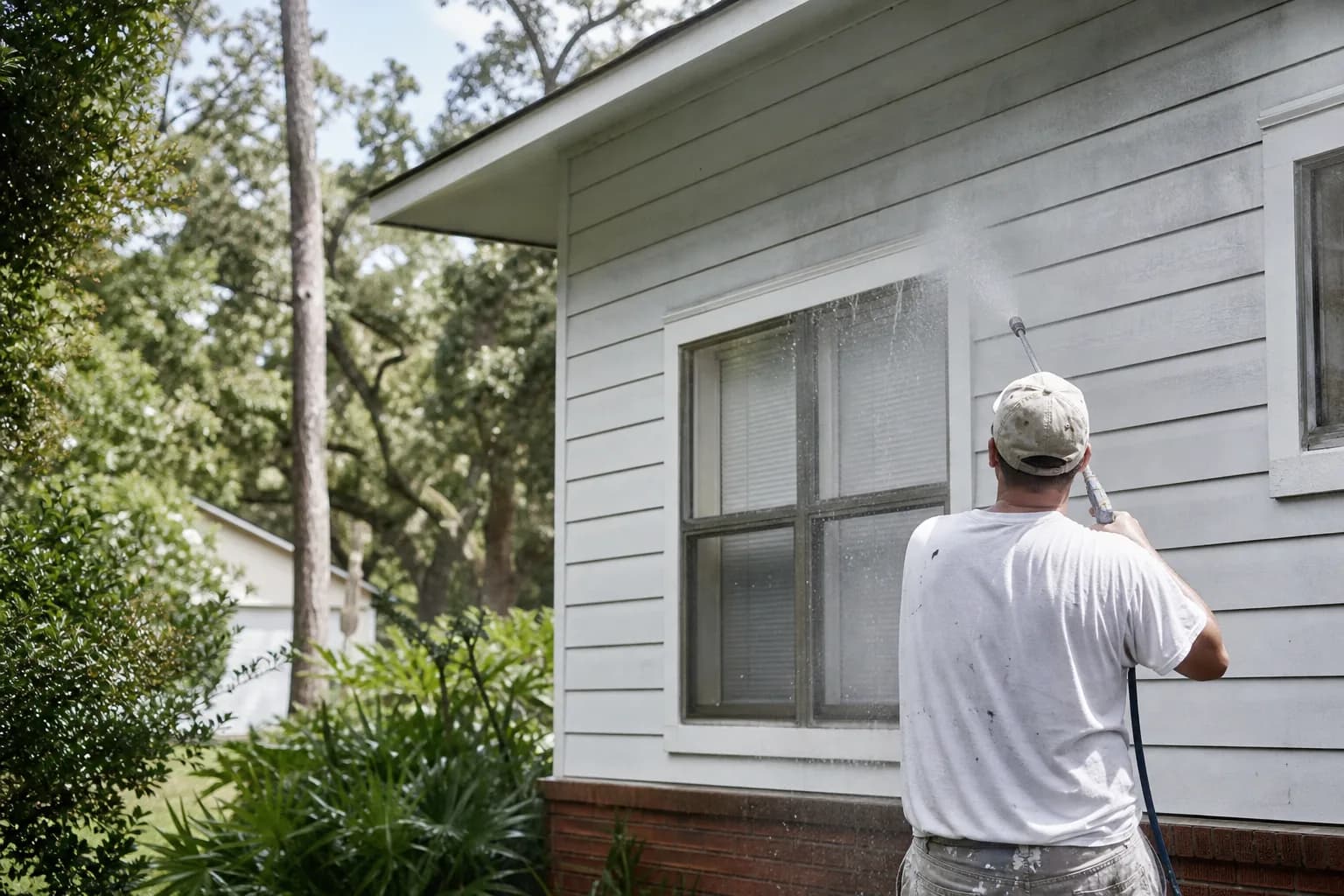
Pressure-wash the panels and scrub chalky areas with a stiff brush and a cleaner so the powder lifts instead of smears. Rinse from the bottom up and let the aluminum dry completely.Wipe-test again until it's clean
On dry siding, rub a cloth across it once more. If it still picks up powder, wash again. The metal has to come away clean — that's the gate the whole job depends on.Scuff, sand, and spot-prime bare metal
Lightly scuff glossy spots, sand any corrosion back to sound metal, and spot-prime every bare aluminum area with a metal-bonding primer so the topcoat has something to grip.Roll or spray two coats of acrylic
Apply two thin, even coats of a 100% acrylic exterior paint rated for metal and UV. Thin coats level out and bond better than one heavy pass, and acrylic flexes with the panels.
A couple of details that matter on aluminum specifically. Use 100% acrylic — it flexes as the metal expands and contracts through our heat-and-cold swings, where a stiffer paint can crack. Don't prime the whole house if the cleaned painted panels are sound; you spot-prime the bare and corroded metal and let good acrylic go over the rest. And paint in the cooler, drier part of the day — aluminum heats up fast in direct sun, and paint laid on hot metal can flash-dry and bond poorly.
When to repaint versus replace aluminum siding
If the panels are sound and just chalky, faded, or stuck in a dated color, repainting is almost always the right move — it costs far less than new siding and makes the house look new again. Replacement only earns its price when the aluminum is widely dented, corroded through, or you're switching materials for another reason. For most homes around Mobile and the Eastern Shore, a proper wash-prime-and-repaint is the smart, cost-effective call.
The thing to be honest with yourself about is the prep. A beautiful aluminum repaint and a one-season failure look identical the day the crew packs up — the difference is whether the chalk really came off. That's the part worth getting right, and worth handing to someone who does it for a living.
If your aluminum siding has gone chalky and faded, our exterior painting crew handles the full wash, prep, and acrylic recoat for our climate, and the complete coastal exterior painting guide shows how aluminum fits alongside the rest of an exterior job. When you're ready, reach out for a free in-home estimate and a written quote within 24 hours.