
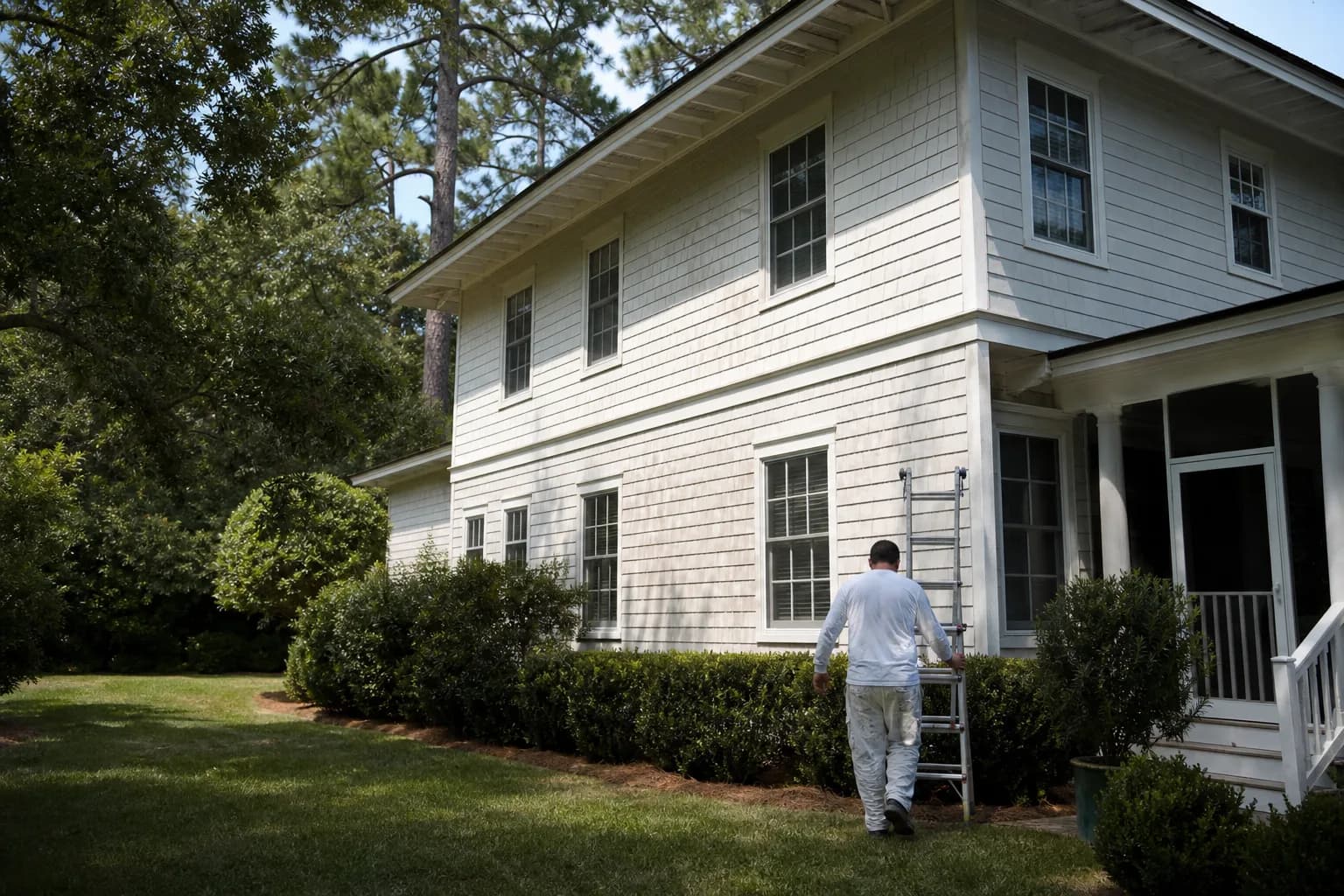
Walk around your house some bright afternoon and look at the corners. One wall is crisp and saturated; turn the corner and the next one looks washed-out, a half-shade paler, maybe powdery to the touch. Same paint, same day it was applied, same crew — and yet one side has aged years faster than the other. That isn't a bad batch of paint or a missed coat. That's the sun, and it always picks the same walls first.
Knowing which side of a house fades first is genuinely useful, because it lets you plan a repaint around the walls that actually need it instead of guessing. On the Gulf Coast the answer is consistent: south and west go first. Here's why those two elevations lose their color before the others, and how to use that when it's time to repaint.
Which side of a house fades first on the Gulf Coast?
Answer first: the south wall and the west wall fade first, nearly every time. They take the most direct sun over the course of a day, so the paint film on them breaks down faster than on the shaded north and gentler east elevations. On most homes here you can see it plainly — the south and west sides look lighter, flatter, and chalkier than the rest of the house, sometimes by a wide margin.
It comes down to how the sun moves. In our hemisphere the sun arcs across the southern sky all day, so a south-facing wall is lit from morning to evening. The west wall then catches the afternoon sun when it's low, hot, and aimed almost straight at the siding. Those are the two elevations getting pounded with UV, and UV is what wears paint out.
Why the sun fades paint (and why our coast speeds it up)
Sunlight fades paint two ways at once, and both run faster here. First, UV light breaks down the binder — the resin that glues the paint into a tough film and sticks it to your siding. As the binder degrades at the surface, it stops holding the pigment, which sheds as a fine powder. That's chalking, and it's the texture half of sun damage. Second, UV bleaches the pigment itself, draining the color until it looks pale and flat. That's fading, the color half. On a sun-blasted south or west wall you usually get both together. (If yours is shedding heavy powder, our guide on what exterior paint chalking means and how to fix it walks through the wash-and-recoat fix.)
Our climate leans on both. The Gulf Coast gets long, intense sun across most of the year, so the UV load on a wall here is higher than in a milder, cloudier place. Add the surface heat — a dark west wall in July afternoon sun gets genuinely hot — and the paint film ages quickly. It's the same reason a dark exterior color holds heat on the coast and why color choice matters as much as paint quality on the sunny elevations.
Two things make the fade worse on a given wall:
- Color. Deep, saturated colors — strong reds, blues, dark greens — fade more visibly than soft whites and light neutrals, because they rely on pigments that UV bleaches faster.
- Paint grade. Cheap or builder-grade paint uses weaker binders and less fade-resistant pigment, so it chalks and washes out years before a premium UV-rated finish does.
How to plan a repaint around the fade
Once you know the south and west walls lead, you can be smart about the repaint instead of reactive. A few things we tell homeowners on the Eastern Shore and around Mobile:
Inspect the south and west walls first
Those two elevations tell you the true age of the whole paint job. If they're faded and chalking, the clock has run out on the exterior even if the north side still looks decent.Plan to repaint the whole house, not one wall
A fresh coat on just the faded side reads brighter than the weathered walls beside it and leaves you mismatched at the corners. Doing the full exterior keeps the color even all the way around.Upgrade the color or product on the sunny sides
If a deep color faded fast, this is the moment to rethink it. A quality UV-resistant exterior paint, and often a lighter shade, will hold far longer on the south and west elevations.Re-prep the worn walls properly
Faded, chalking walls need a thorough wash so the new coat bonds to sound paint, not powder. Prep is what makes the repaint last — on the coast it's most of the job.
Timing helps too. The faded sides are also the hottest, and paint shouldn't go on siding that's baking in direct sun, so a good crew sequences the work to follow the shade around the house and avoid the worst afternoon heat. That's part of picking the best time to paint a house exterior in coastal Alabama — cooler, drier stretches give the film the best shot at curing well and lasting.
What this means for your house
Sun fade is the most predictable thing about an exterior paint job here: the south and west walls go first, the north goes last, and the difference grows every year. Use it. When you're deciding whether it's time to repaint, judge the sunny sides — they're the honest gauge. And when you do repaint, treat those elevations as the ones to get right, with the better color and the better product, because they'll be carrying the most sun for the next decade.
If your south or west walls have gone pale and powdery, that's the house telling you the finish is spent. Our exterior painting crew preps for our climate and uses fade-resistant finishes built for Gulf sun, and the full coastal exterior painting guide covers how it all fits together. When you're ready, reach out for a free in-home estimate and a written quote within 24 hours.