
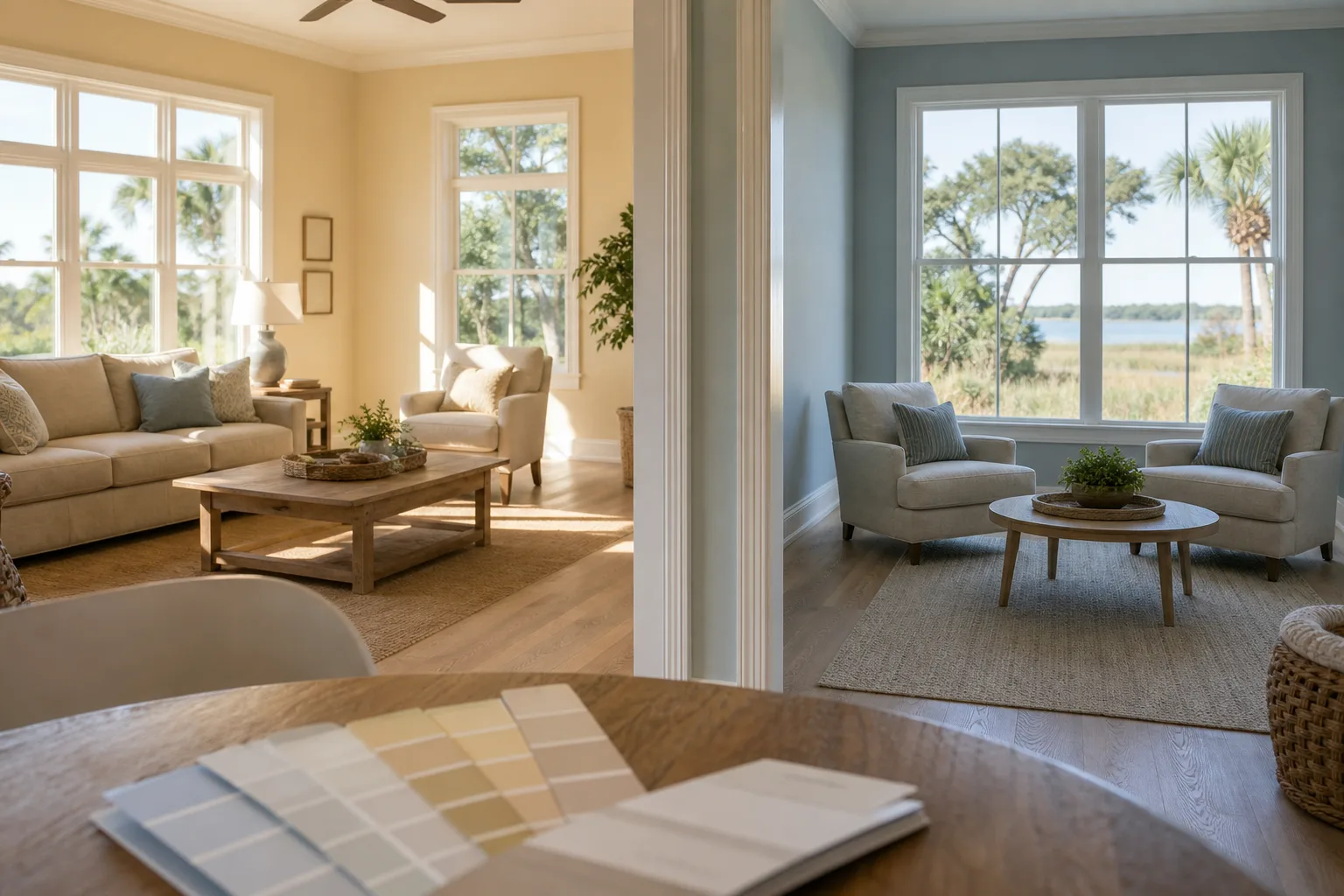
You painted the bedroom the exact greige your neighbor used in her living room. Hers glows. Yours looks like dishwater. Same can, same brush — completely different result. The culprit isn't the paint. It's which way the windows face.
Room orientation is the single most overlooked factor when people pick a color, and it's why the best paint colors for north-facing rooms are almost never the best colors for south-facing ones. Light direction changes how your eye reads a shade, all day, every day. Get that right and a $60 gallon looks like a designer chose it. Get it wrong and no brand on the can can save you. Here's how light works in a Gulf Coast home, and how to choose colors that look right in your room instead of someone else's.
Why does room orientation change paint color?
Here's the short version: the color on the wall is just the color the light lets you see. Change the light and you change the color.
Sunlight isn't neutral. North light is cool and indirect — it never gets direct sun, so it skews slightly blue and stays even but dim. South light is the opposite: warm, bright, and strong for most of the day. East light is warm and golden in the morning, then cool by afternoon. West light is weak early, then turns hot and orange at sunset. Your paint sits there absorbing all of it and reflecting back whatever's left.
That's why the same color genuinely looks different from one room to the next. It's not in your head.
Best paint colors for north-facing rooms
North-facing rooms need warmth. Because they only ever get cool, indirect light, they tend to read bluer, grayer, and dimmer than the swatch promised. A crisp "cool gray" that looked sharp in the showroom can turn flat and lifeless on a north wall.
The fix is to lean warm and a little richer to push back against that chill:
- Warm whites and creams instead of stark, blue-based whites — they keep the room from feeling cold and clinical.
- Soft greiges with a warm (yellow or brown) undertone rather than a gray-blue one. The undertone is everything here.
- Earthy, saturated colors — warm terracottas, soft golds, mushroomy taupes, deep warm greens — actually thrive in north light because the coolness keeps them from feeling too heavy.
- Avoid icy grays, pale blues, and minty greens unless you genuinely want a cool, quiet room — north light will amplify the cold.
Think of it as adding back the sunlight the room never gets.
Best paint colors for south-facing rooms
South-facing rooms can take almost anything — so use the freedom. They get the most light, and the warmest, for the longest stretch of the day. That abundant light intensifies whatever color you put up and warms it further.
That means south rooms are where bold and cool colors finally work:
- True, clean whites stay bright and luminous instead of looking dull.
- Blues and greens hold their character beautifully — the strong light keeps them crisp rather than murky.
- Deep, saturated shades — navy, charcoal, forest green, even moody jewel tones — get enough light to read as rich instead of cave-like.
- Watch the warmth on already-warm colors. A strong yellow or warm beige can go almost gold in full south light. If you want warm-but-calm, pull the shade back a notch from what looks right on the swatch.
On the Gulf Coast this matters even more. Our sun is long and intense, so south- and west-facing rooms run brighter and warmer than the same rooms would up north. That's good news — it makes cool and dramatic colors easier to pull off here than almost anywhere.
A simple way to choose — and test — the right color
You don't have to guess. The process is the same whether your room faces north, south, east, or west: narrow it down, then test it where it's going.
Note which way the room faces
Stand at the main window. North light is cool and steady, south is warm and bright, east is golden in the morning, west turns hot at sunset. That direction sets whether you warm the color up or can cool it down.Preview shades on your actual room
Snap a photo of the room and try real colors on it with our free AI Color Visualizer. It's the fastest way to kill the obvious wrong picks before you spend a dime on samples.Sample your top one or two on the wall
Paint a patch at least two feet square on more than one wall. Small chips lie; big patches tell the truth. Use real paint, not a printed swatch.Look at it morning, noon, and night
Check the sample in early light, midday sun, and after dark with your lamps on. A color you love at noon can fall apart under warm bulbs at night, especially in a north room.Then commit
Once a color holds up across the whole day in that specific room, you've got your color. That's the one worth painting the whole space.
If you want a second opinion before you roll a single wall, that's exactly what color consultation is for — we'll walk through your room's orientation, light, and finishes together so the color works in the space you actually live in. And when you're ready to put it up, the same care that goes into picking the shade goes into our interior painting work, from prep through the final inspection.
The takeaway
The best paint color isn't a name on a fan deck — it's the one that looks right in your room's light. North-facing rooms want warmth to counter their cool, even light. South-facing rooms can handle clean whites, cool tones, and bold, saturated color because they're flooded with warm light all day. Once you know which way your windows face, you're choosing from the right shortlist instead of fighting the room.
Want a fuller guide to choosing colors, sheens, and finishes for every room in the house? Start with our interior painting guide for Mobile and Baldwin County, then test your favorites on a photo of your own room before you commit. When you're ready, we'll bring color help and a free in-home estimate to your door.