
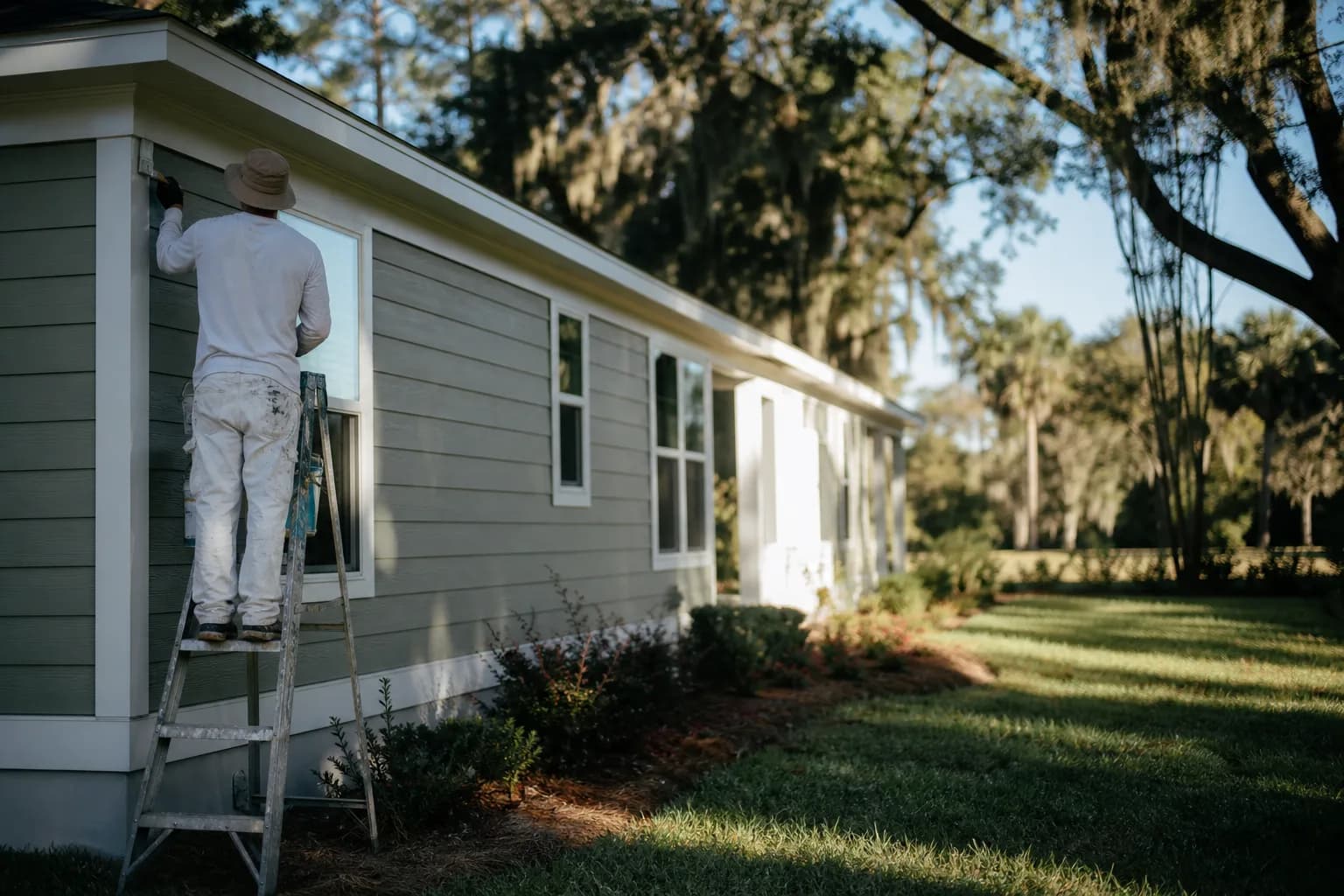
The thermometer on your porch says 88°F, but the wall you want painted is closer to 120°F. That gap is the whole story of summer painting on the Gulf Coast. Yes, you can paint in summer heat here — crews do it productively all season — but the question that actually matters isn't how hot is it outside. It's how hot is the surface, and what the heat does to wet paint the second it touches a baking wall.
Get that right and summer is a fine time to paint your house. Get it wrong and you'll see the heat in the finish for years.
Can you paint in summer heat? Yes — within limits
Answer first: summer heat doesn't stop a paint job on the Gulf Coast, but it sets hard limits on when and where you paint each day. Most exterior paints carry an upper temperature limit somewhere around 90°F, and just as important, they're rated for the temperature of the surface — not the air.
That distinction is everything in our climate. A wall in direct summer sun can run 20 to 30 degrees hotter than the air around it. So an 88°F afternoon — ordinary for a Gulf Coast July, where highs sit right around the low 90s — can mean a sunlit elevation well past what the paint can handle, even though the air reading looks fine. The air temperature tells you almost nothing. The surface temperature tells you whether you can paint.
What goes wrong when you paint a wall that's too hot
When paint hits a surface that's too hot, it flash-dries — it skins over before it can do its job. That single problem branches into the three defects you see on heat-rushed jobs.
- Lap marks. Paint needs to stay wet at the edges long enough for each pass to blend into the last. On a hot wall it dries too fast to keep that wet edge, so the overlaps show as streaks and stripes once it cures.
- Brush and roller drag. Paint that's setting up as you apply it pulls and tears instead of laying down smooth, leaving texture and marks in the finish.
- Weak adhesion and blistering. When solvent or water flashes out of the film too quickly, the paint can fail to bond properly or trap vapor and blister. In heat, fast drying isn't a head start — it's the defect.
Heat works against you in the opposite way that cold does. Where cold weather slows curing to a crawl and you wait, heat speeds it past the point where the paint can level and bond. Different enemy, same result if you ignore it: a finish that doesn't last.
How pros work around the summer heat
The trick isn't avoiding summer — it's chasing the shade and the cool hours so every wall gets painted within range. Here's the routine that keeps a hot-weather coat smooth and well-bonded.
Start early while surfaces are cool
Begin in the cool of the morning, once any dew has dried, while the siding is still close to air temperature. The first hours of the day are the best window before the sun heats the walls up.Follow the shade around the house
Paint whichever elevation is out of direct sun and move with the shade as the sun crosses the sky, so no wall gets coated while it's baking. A shaded wall stays cool enough for the paint to level and bond.Check the surface, not just the air
Feel the wall or read it with an infrared thermometer. If it's too hot to rest your hand on, it's too hot to paint — keep it under the product's surface limit, usually around 90°F.Keep a wet edge, work smaller sections
In heat, break the wall into smaller areas and keep a wet edge so each pass blends into the last before it skins over. That's how you beat lap marks when the paint wants to dry fast.Stop before the afternoon peak
Quit the sun-blasted sides during the hottest part of the day and come back as they fall into shade or cool toward evening, so every coat goes on a surface that's in range.
There's a reason this matters beyond comfort. The same Gulf humidity that makes summer afternoons heavy also plays into the cure, which is why a good crew watches more than the thermometer — dew point and humidity move the window too. Reading all of it together is the difference between a crew that paints when the wall is ready and one that paints when the schedule says so.
So, is summer a good time to paint?
It can be one of the best, as long as the work is timed to the heat instead of fighting it. Summer on the Gulf Coast means long daylight, dry stretches, and fast turnaround — real advantages — but only if each wall gets coated while it's cool enough to take the paint. The pros don't beat the heat by working through it. They beat it by starting early, following the shade, and watching the surface, not the air. If you're weighing the season, our guide to the best time to paint a coastal Alabama exterior puts summer in context with the rest of the year.
Thinking about a summer repaint? Reach out for a free in-home estimate from a crew that times the heat right — written quote within 24 hours, one accountable crew, and a 3-year workmanship warranty on the finished job.