
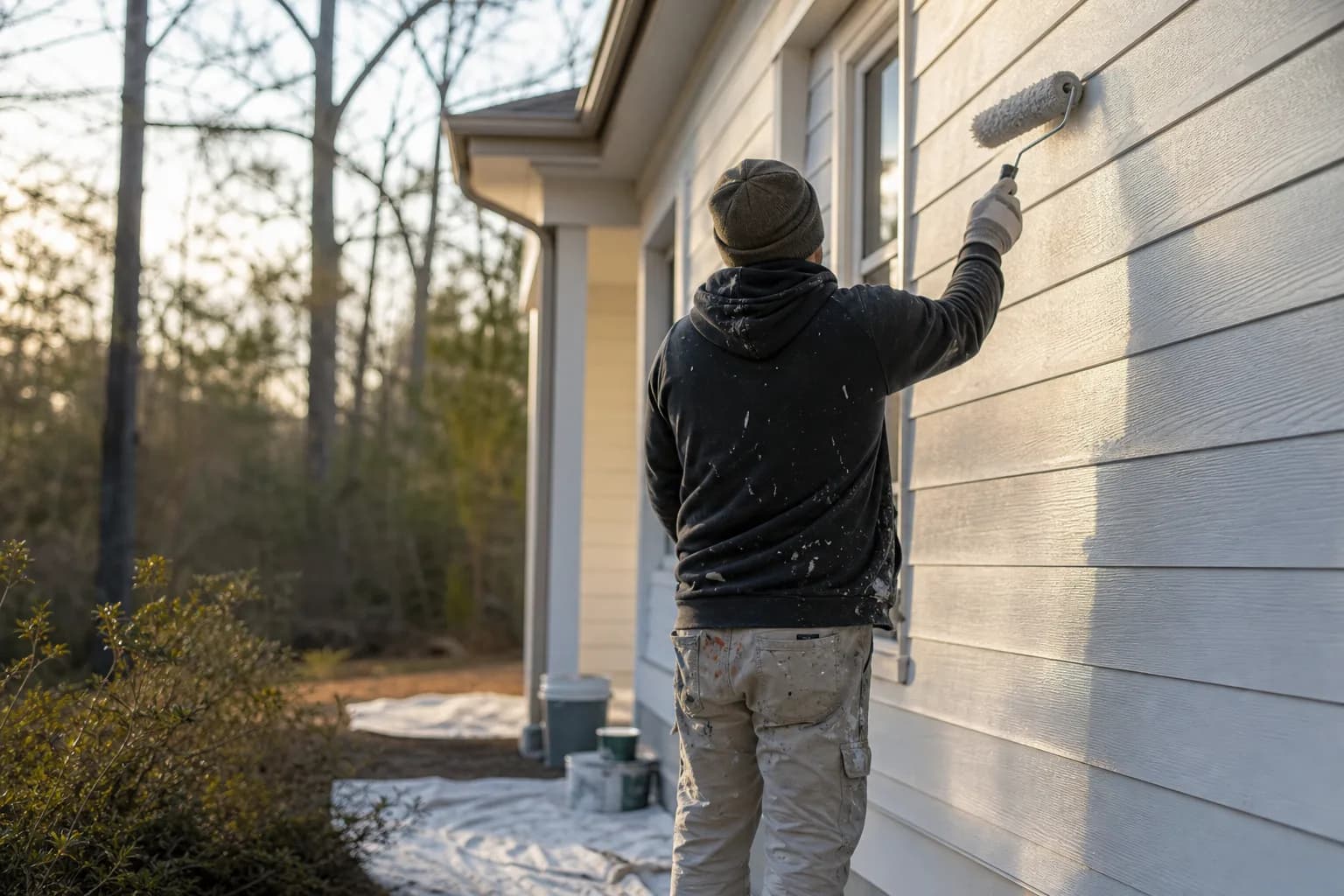
The label on the can says the paint works down to 35 degrees. The wall says it's more complicated than that. We've seen a coat go on during a bright, 60-degree December afternoon, look perfect at quitting time, and crack or blush by morning because the temperature dropped into the 30s overnight before the paint could cure. So when homeowners ask whether you can do cold-weather painting here — whether you can really paint in winter — the honest answer is: usually yes, but the number that matters isn't the one on the thermometer at lunch.
On the Gulf Coast we're lucky. Our winters are mild enough that exterior painting stays on the table most of the season. This guide covers the minimum temperature to paint outside, why the overnight low is the number that decides everything, how cold changes the way paint cures, and how we time winter work so the finish actually lasts.
Can you paint outside in winter on the Gulf Coast?
Answer-first: yes, you can usually paint outside in winter on the Gulf Coast, because our cold isn't deep or constant — but every coat has to go on and cure above the paint's rated minimum temperature, and that means watching the overnight low, not just the daytime high.
Our coastal winters help. January lows here average around 49°F, and plenty of afternoons climb into the 60s, so the season offers real working windows that a place further north simply doesn't get. The trade-off is that those windows are shorter and pickier than summer's. You're not fighting heat and afternoon storms; you're threading the day between a damp, cold morning and a cold night.
The minimum temperature to paint outside
There isn't one magic number, because it depends on the product. Here's the practical version of what the temperature ratings mean.
| Paint type | Minimum temperature | What to know |
|---|---|---|
| Standard exterior latex/acrylic | About 50°F | The most common rating. Air and surface both need to be above it, and stay there to cure. |
| Low-temperature exterior formulas | Down to about 35°F | Specialty products built for cold; useful on the Gulf Coast's cooler stretches, still no margin for error on the overnight low. |
| Oil-based products | Varies by product | Generally need warmth too and cure slower in cold; always check the specific can. |
Two things people miss. First, surface temperature isn't the same as air temperature. A shaded north wall can sit several degrees colder than the air, and a wall the sun left at dusk holds heat into the evening — so we follow the warm side of the house through the day. Second, the rated minimum is a floor, not a goal. Paint applied right at 50°F cures slowly and unforgivingly; a few degrees of cushion makes a better film. Our exterior painting work is scheduled around real surface conditions, not just the forecast headline.
Why cold weather changes how paint cures
Paint doesn't just dry — it cures, and cold interferes with the chemistry. Understanding that is what separates a finish that lasts from one that fails by spring.
Water-based paint cures by coalescence: as the water leaves, microscopic resin particles flow together and knit into one continuous, durable film. That coalescing step needs warmth. Below the rated temperature, the particles can't fully merge, and you're left with a coat that stays soft, cracks, powders, or never reaches full hardness and adhesion. It might look fine for a few weeks, then start failing once it's weathered.
Cold also slows evaporation, which keeps the film vulnerable to moisture far longer. That matters here because of dew. On cool coastal mornings, condensation settles on siding overnight and lingers until the sun burns it off, and a fresh, still-soft coat caught by that moisture can blush milky, streak, or fail to bond. It's the winter version of the humidity problem we fight in summer — different season, same enemy: water in the film. The same moisture rule is why we watch the sky in any season; our take on whether you can paint when rain is in the forecast covers the warm-weather side of it.
How we time exterior painting in winter
When a winter exterior job makes sense, it comes down to timing the work around the cold and the dew. Here's the playbook we follow.
Check the overnight low, not just the high
Look at the forecast low for the full cure window, usually overnight. The temperature has to stay above the paint's rated minimum the whole time, so a warm afternoon with a cold night is a no-go.Match the product to the temperature
Standard exterior paints want it above 50°F; specialty low-temperature formulas are rated down to about 35°F. Pick a paint rated for the conditions you'll actually have, not the ones you hope for.Wait for surfaces to dry
Cool mornings leave dew and condensation on siding. Start only after the moisture burns off so the paint bonds to a dry surface, never a damp one.Paint the warm part of the day
Work the warmest, driest stretch — usually late morning to mid-afternoon — and follow the sun around the house so each surface is as warm as it can be when the coat goes on.Stop early enough to set before dew
Quit with enough daylight and warmth left for the coat to set before evening dew returns. A fresh film caught by overnight moisture can blush, streak, or fail to bond.Allow extra cure time between coats
Cold slows curing, so give each coat longer to harden before recoating or before you call the surface weather-ready. Patience in winter is what protects the finish.
There's an upside to all this. Winter on the Eastern Shore brings lower humidity than summer and no afternoon-thunderstorm gauntlet, so on a clear, mild stretch the air can actually be friendlier to a curing film than a muggy July day. And if the forecast won't cooperate for an exterior, winter is a great time to move interior painting up the list — a heated, controlled indoor space sidesteps the temperature and dew problems entirely, so that work runs year-round. (For more on timing inside work, see the best time to paint a house interior on the Gulf Coast.)
The bottom line on cold-weather painting
So, can you paint in winter on the Gulf Coast? Usually — as long as the temperature stays above the paint's rated minimum through the whole cure, the surface is dry when the coat goes on, and you give cold-slowed paint the extra time it needs to harden. Get those right and a winter exterior can last just as long as one done in fall; get them wrong and you'll be repainting by summer.
The simplest way to plan it is to let someone who watches these forecasts for a living tell you whether your project is a winter job or a wait-for-spring job. Before you hire anyone, our guide to hiring a painter in Mobile and Baldwin County covers the questions that separate a careful crew from a careless one — and timing is one of them. You can also read up on the best time to paint a house exterior on the Gulf Coast for the full-year picture.
We're a family-owned crew that has painted the Gulf Coast since 2013, and we schedule exterior work around the weather so your finish gets the conditions it needs. When you're ready, reach out for a free in-home estimate — you'll have a written quote within 24 hours, and we'll tell you honestly whether your project should go now or wait for a warmer window.