
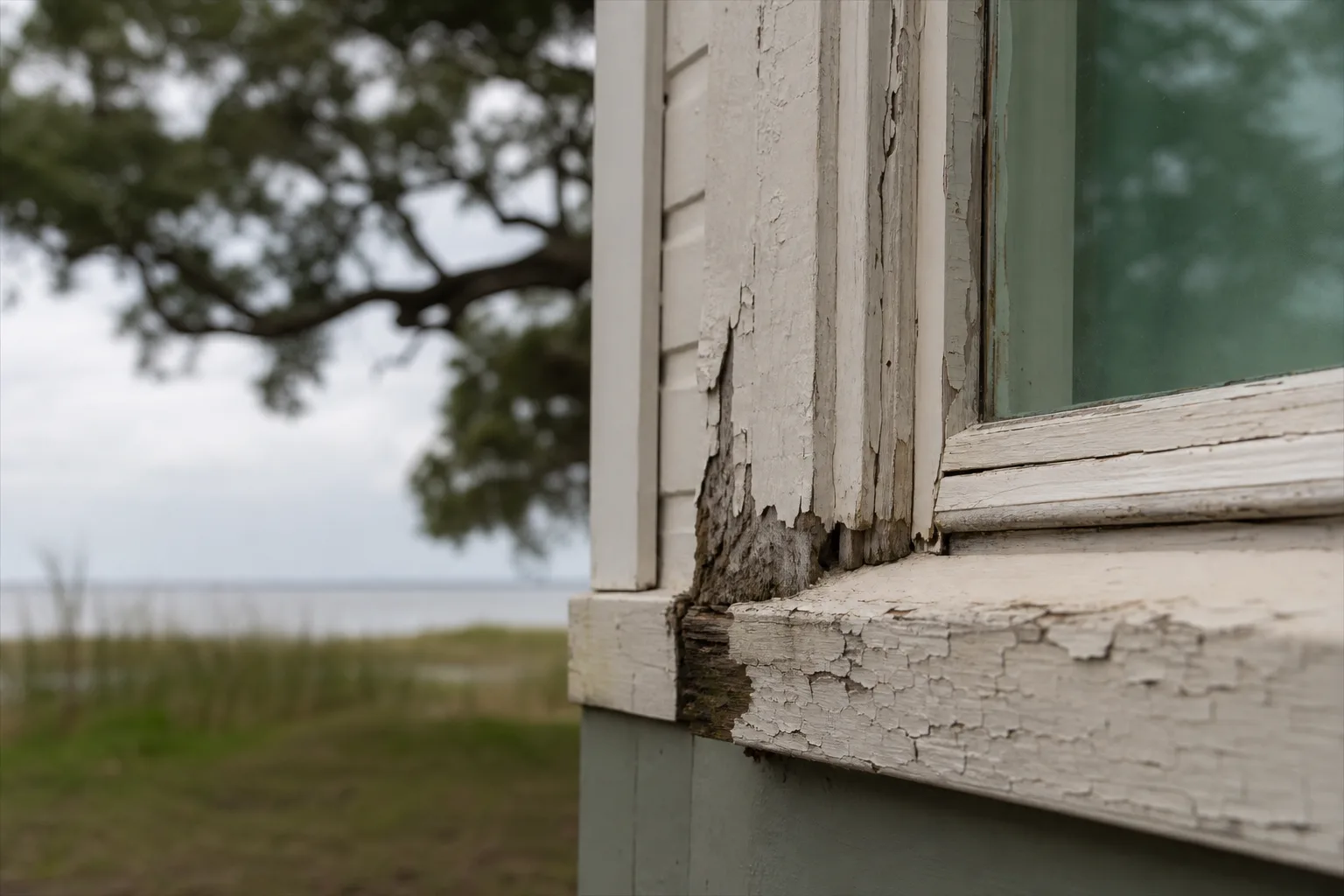
Wood rot rarely announces itself. It starts small and out of sight — a soft corner on a sill, a darkened streak of fascia behind the gutter, a deck board that gives a little underfoot — and by the time it's obvious, the repair has grown from a board to a whole section. The trick to keeping it cheap is knowing exactly where to look, because rot is predictable. It almost always begins in the same handful of spots on every house.
So where does wood rot start on a house? This is the checklist we run when we inspect a home before painting on the Gulf Coast. Walk your own exterior with it and you'll catch trouble while it's still a ten-minute fix instead of a carpentry project.
Where does wood rot start on a house, and why there?
Rot needs one thing above all: water that sits and can't dry out. The fungus that eats wood wakes up when moisture content climbs and stays there. That's why the trouble spots are always the low, flat, shaded, or water-catching parts of the house — the places where rain pools, gutters overflow, or two boards trap moisture in the seam between them.
Our climate stacks the deck. High humidity, frequent rain, salt air, and shaded north and east walls that dry slowly all keep exterior wood damp longer than it would be inland. If you want the full picture of the moisture cycle behind it, here's what causes wood rot on coastal homes. For now, just know that water plus time is the whole story — and these are the spots where both collect.
The trouble-spot checklist
Here are the places rot starts, ranked roughly by how often we find it, with what to look for and why each one's a magnet for moisture.
| Spot to check | What to look for | Why it rots here |
|---|---|---|
| Window sills & lower trim | Soft, spongy corners; cracked or peeling paint on the underside | Flat tops catch rain; water wicks into end grain at the corners |
| Exterior door frames (bottom 12 in.) | Crumbling or darkened wood at the base of the jamb and casing | Splashback and standing water sit against the bottom of the frame |
| Fascia behind gutters | Staining, sagging, paint failing in a run along the board | Clogged or overflowing gutters dump water straight onto it |
| Soffit & eave returns | Discoloration, peeling, or a musty smell underneath | Trapped, poorly ventilated, and slow to dry after rain |
| Deck & porch ledger boards | Soft wood where the deck meets the house; rusty fasteners | Tight shaded joint against the wall holds water for days |
| Post & column bases | Punky wood at the bottom; paint blistering up from the base | Wicks moisture up from concrete and catches splashback |
| Trim joints & outside corners | Open seams, failed caulk, gaps you can slip a coin into | Seams wick water into the end grain behind the paint |
| Stair stringers & deck boards | Springy boards; dark soft spots at cut ends | Horizontal surfaces and cut ends drink standing water |
A few of these deserve their own close look. Fascia is the one homeowners miss most, because it's up high and behind the gutter — but it's also where a single clogged downspout can rot a long run before you ever notice from the ground. Here's how to spot rotted fascia and soffit before it spreads. Door frames are the other sneaky one: the bottom foot of an exterior jamb takes constant splashback, and once it goes soft the door starts to stick. If yours is already crumbling, see exterior door frame rot repair before painting.
How to run the check yourself
You don't need tools beyond a screwdriver and ten minutes. Work around the house in order so you don't miss a side, and press on the wood — your eyes can be fooled by a fresh coat of paint, but soft wood gives itself away the moment you push on it.
Start at windows and doors
Press the bottoms of window sills, the lower trim corners, and the bottom foot of every exterior door frame. These low horizontal spots catch and hold water and are where rot most often begins.Look up at fascia and soffit
Check the fascia behind the gutters and the soffit beneath, especially near downspouts and any gutter that overflows. Look for staining, sagging, or paint failing in a long run.Check deck and porch connections
Examine the ledger board where a deck or porch meets the house, the post bases, and the stair stringers. Tight, shaded joints hold water and rot from the inside out.Probe trim joints and corners
Press the joints where two boards meet, the outside corners, and column bases. Open seams and failed caulk wick water into the end grain behind the paint.Test anything suspect
Push a screwdriver into any spot that looks or feels off. Firm wood resists; if it sinks in or crumbles, you've found rot that needs repair before paint.
Do this once a year — spring is ideal, after the damp winter — and again whenever you clean the gutters. Catching a soft sill in April is a quick fix; finding it after it's spread to the framing is not.
What to do when you find rot
Don't paint over it and hope. Paint won't stop rot — the fungus keeps eating the wood under the new coat, and the paint peels straight back off because it can't grip soft, damp wood. The rotted section has to come out and be repaired or replaced, then primed, before any finish paint goes on. On exposed, high-failure spots like sills and column bases, replacing wood trim with PVC or another rot-proof material is often the smarter long-term call than patching wood that'll just rot again.
That repair-and-paint sequence is the heart of a lasting exterior, and it's covered start to finish in our carpentry, prep, and rot guide. The short version: fix the wood, fix the water source that rotted it, then paint — in that order.
The bottom line
Wood rot starts in the same predictable places on nearly every house: window sills, door bottoms, fascia behind the gutters, deck ledgers, post bases, and trim joints — the low, shaded, water-catching spots that stay wet on the coast. Run the checklist once a year, press on anything that looks off, and treat failing paint as a clue, not just a cosmetic flaw. Catch it early and it's a small repair.
Not sure whether that soft corner is a quick patch or a bigger job? We'll tell you straight. Book a free in-home estimate and we'll inspect the trouble spots, handle any carpentry the right way, and email a written quote within 24 hours.