
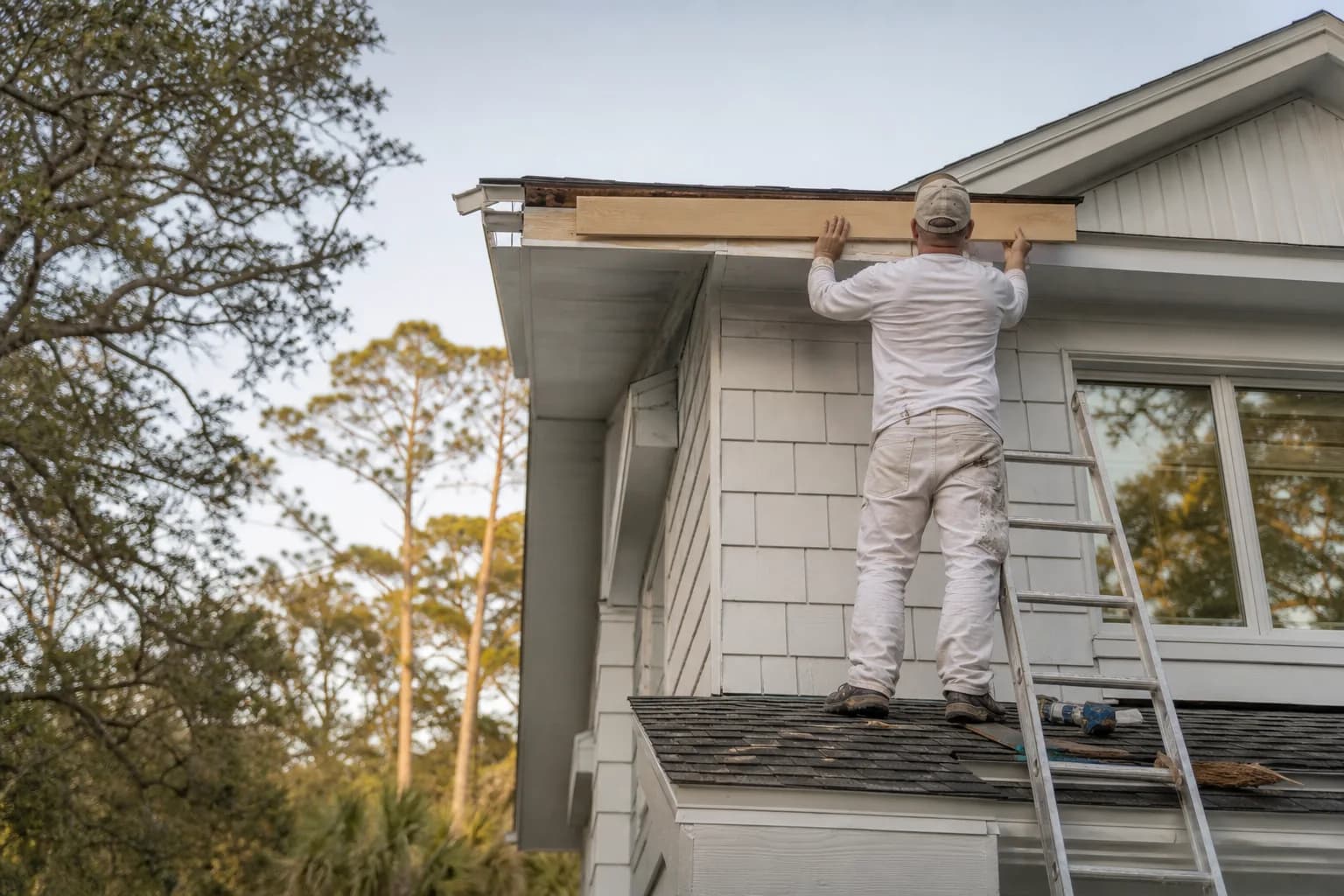
You ask for an exterior paint quote and the number comes back with a line for carpentry on it. If you weren't expecting that, it's fair to wonder what wood repair has to do with painting your house. The short answer: everything. Paint is only as good as the surface under it, and on a Gulf Coast home, prep almost always uncovers wood that has to be fixed before a brush ever touches it.
That carpentry line isn't padding — it's the difference between a paint job that lasts and one that peels off rotten boards in a season. Here's why it shows up on an exterior paint quote, how it gets priced, and how to read an estimate so there are no surprises halfway through the job.
Why does carpentry show up on an exterior paint quote?
Exterior paint is a coating, not a glue and not a filler. It needs solid, dry, sound wood to bond to and protect. When the wood underneath is soft, swollen, or rotted, paint can't fix that — it just seals the problem in and fails over it, usually within a season or two.
On the Gulf Coast, that wood damage is common, not rare. Our humidity, salt air, hard sun, and storm season are tough on the exposed wood around a house, and certain spots take the worst of it: fascia boards behind gutters, soffits, window and door trim, sills, corner boards, and the bottoms of siding and columns. By the time a home is due for a repaint, prep work routinely turns up at least a few soft spots. A painter who actually inspects for it will find it — and the responsible thing is to price the repair into the quote instead of painting over it and calling it done.
This is exactly why prep and carpentry are the factors that move an exterior number the most. For the bigger picture of everything that swings the price, see what drives exterior painting cost in Baldwin County.
How carpentry gets priced on the estimate
Carpentry on a paint quote is usually priced by what has to be repaired and the labor and materials it takes — not as a vague lump. A clear estimate breaks it down so you can see it.
| Repair | How it's typically priced |
|---|---|
| Fascia or trim replacement | By the linear foot of board to remove and replace, plus material. |
| Rotted window or door sills | Per sill, based on size and how much surrounding trim is involved. |
| Soffit panels | By the section or run that has to come down and be rebuilt. |
| Corner boards and columns | By the piece, plus any framing that has to be addressed underneath. |
| Spot wood repair / filler | Smaller soft spots consolidated or filled rather than fully replaced — priced by labor. |
Two things drive how much of this can be nailed down up front. First, what's visible at the estimate: a good painter probes the obvious risk spots — pressing for soft wood, checking behind gutters and around windows — and prices everything they can see and reach right into the written quote. Second, what's hidden: some rot lives under old paint, behind trim, or beneath a gutter and only shows itself once the work starts. Honest quoting means telling you that plainly and agreeing on how any hidden damage will be priced and approved — not discovering it and billing for it silently.
How to avoid surprise change orders
Change orders earn their bad reputation when they're sprung on a homeowner mid-job. The fix isn't to find a painter who promises zero carpentry — it's to find one whose estimate is honest enough that there's nothing to spring later.
Get a thorough, hands-on estimate
Make sure the painter actually probes for rot — presses on fascia and trim, checks behind gutters, looks at sills and corners — instead of eyeballing from the driveway. What gets inspected up front is what stays out of surprise territory later.Ask for the carpentry to be itemized in writing
A written quote should list the wood repair separately from the painting, with the scope spelled out. If it's a vague lump or missing entirely, ask why before you sign.Confirm how hidden rot is handled
Some damage only shows once work starts. Agree in advance that any hidden rot will be quoted and approved by you before the crew touches it — so a change order is a conversation, never an ambush.Consider one crew for both trades
Hiring a company that does the carpentry and the painting removes the gap between trades — no scheduling delay waiting on a separate carpenter, and no finger-pointing if something needs to come back.
That last step is worth weighing seriously. When carpentry and paint live with two different companies, the schedule stalls between them and responsibility blurs if the finish ever fails over a repair. We dig into that trade-off in carpentry and paint: one crew vs. two trades. And if you're staring at a soft board wondering whether it even needs replacing, our guide to repairing or replacing rotted wood before an exterior repaint walks through that call.
How we handle it at Pro 1 Painters
We quote exterior work by coming out, measuring your actual home, and inspecting hard for wood damage — because finding it at the estimate is what keeps it off the change-order list. Visible carpentry goes in your written quote up front, itemized so you can see the wood repair apart from the paint. If we find hidden rot once trim or old paint comes off, we stop, show you, and get your approval before we do the work — never a silent add-on.
Doing both trades under one roof is the real advantage here. Our carpenters repair or replace the rotted wood, our painters prime and finish it, and it all rides on a single 3-year workmanship warranty with a manager sign-off before final payment. One accountable crew runs your job from the free estimate to the final inspection — family-owned since 2013, 4.8 stars across hundreds of reviews. You can see how the wood and the finish hand off on our carpentry and exterior painting pages, and our full carpentry and prep guide for Gulf Coast trim ties it together.
Want an exterior quote that tells you the whole story — paint and carpentry both, in writing, before any work starts? Book a free in-home estimate and we'll have it to you within a day.