
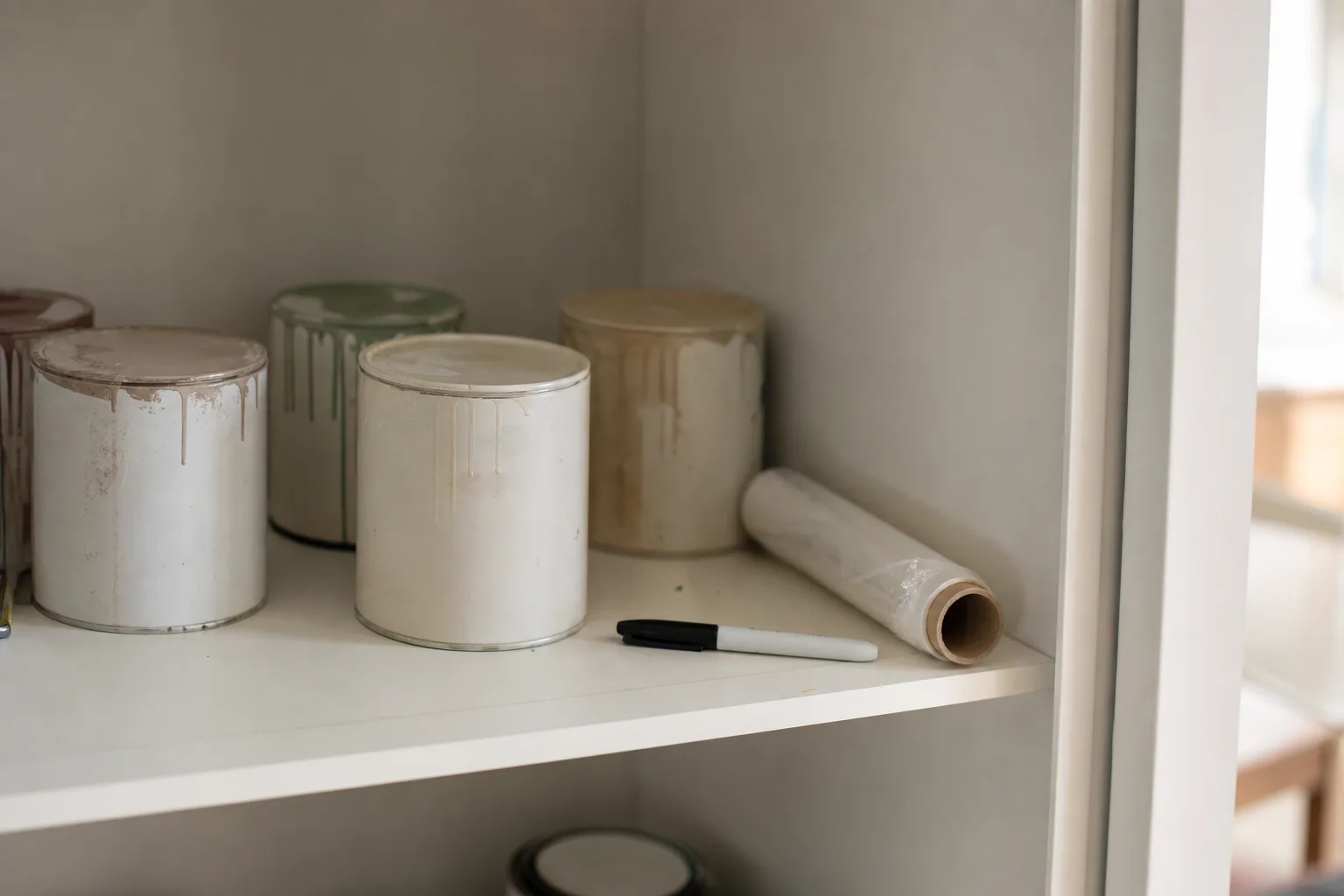
The half-gallon of wall color sitting in your garage is worth more than you think. It's the exact match for every scuff, ding, and nail hole your walls will collect over the next few years — but only if it's still good when you reach for it. And here on the Gulf Coast, a can left in the garage usually isn't. Between summer heat that climbs past 100 in an uninsulated space and the humidity that works at everything, paint that wasn't stored right turns to a skinned-over, lumpy mess long before you need it.
Learning how to store leftover paint the right way is a ten-minute job at the end of a project that saves you a store trip — and a mismatched patch — down the road. The two things that kill stored paint are air getting into the can and temperature swings working on it. Seal out the first, control the second, and a good can of latex will still brush on clean two to five years later. Here's exactly how we put paint away.
Seal the can so air can't get in
The number-one reason leftover paint goes bad is a lid that doesn't seal. Every time air reaches the surface, it dries a rubbery skin over the top and starts to thicken what's underneath. A can that's sealed airtight, by contrast, can sit for years.
The trouble usually starts with the lid groove. Paint drips fill that channel during the job, dry hard, and then hold the lid up a hair so it never seats flat again. So the seal starts with cleanup.
Clean the rim and groove first
Scrape the dried and wet paint out of the lid groove and off the rim, back into the can, so the lid can seat completely flat. A rim packed with crusted paint is why most stored cans skin over — the lid simply can't close airtight over it.Add a plastic-wrap gasket
Lay a square of plastic wrap flat across the can opening, then press the lid down through it. The wrap is a cheap extra gasket that tightens the seal and keeps a skin from forming on the paint.Tap it down — never hammer it
Set the lid level and close it with a rubber mallet, or a hammer tapping over a scrap of wood, working around the whole rim. Striking the lid straight-on dents and bows it, and a warped lid never seals again.Store it upside down
Flip the sealed can over for storage. The paint settles against the lid and forms its own airtight seal, so if any skin forms it sets on the bottom — not on the paint you'll dip your brush into next time.
Where should you store leftover paint?
Where you put the can matters as much as how you sealed it. This is where Gulf-Coast homeowners lose the most paint, because the obvious spot — the garage shelf or the attic — is the worst one.
Paint wants a stable, moderate temperature. An uninsulated garage or attic in Mobile or Baldwin County does the opposite: it bakes past 100 degrees through the summer and can dip below freezing on a hard winter night. Latex paint that freezes can separate for good, and repeated heat-and-cool cycling breaks down the binders so it never mixes back smooth. Humidity rusts the can from the outside, and rust flakes into the paint.
Store leftover paint instead on a shelf inside the conditioned part of your home — an interior closet, a hall storage shelf, or a spot under the stairs all work. Keep cans up off a concrete floor, which stays cold and damp and pulls heat out of the bottom of the can. A stable indoor temperature is the single biggest favor you can do a can you want to keep for touch-ups.
Label every can so you can match it later
A perfectly stored can does you no good in two years if you can't remember which room it went in or what the color was called. Future-you needs the details, and the lid is the wrong place to write them — lids get swapped and stacked.
With a paint pen, write directly on the side of each can: the room or wall it covered, the color name and code, the sheen (flat, eggshell, satin, semi-gloss), the brand and product line, and the date you opened it. Then snap a phone photo of the printed label on the can. That record is exactly what a paint store — or our crew — needs to mix a dead-on match if the can finally gives out, and the sheen note keeps you from buying flat paint to fix a satin wall. When you do go to touch up, getting the repair to actually blend in comes down to using that same paint, in that same sheen, the right way.
A little planning saves the leftovers
Storing paint well actually starts before the project ends — buy close to the right amount and you're not babysitting half-full cans for years. Our guide to how much paint a room really needs keeps the leftovers manageable, and the full interior house painting guide for Mobile and Baldwin County homes covers the rest of doing it right the first time.
When the repaint is bigger than a touch-up can fix, that's where we come in. Our interior painting crews do the prep, the paint, and the cleanup — and we leave your colors sealed and labeled so the next touch-up is easy. Get a free in-home estimate whenever you're ready, with a written quote within 24 hours.