
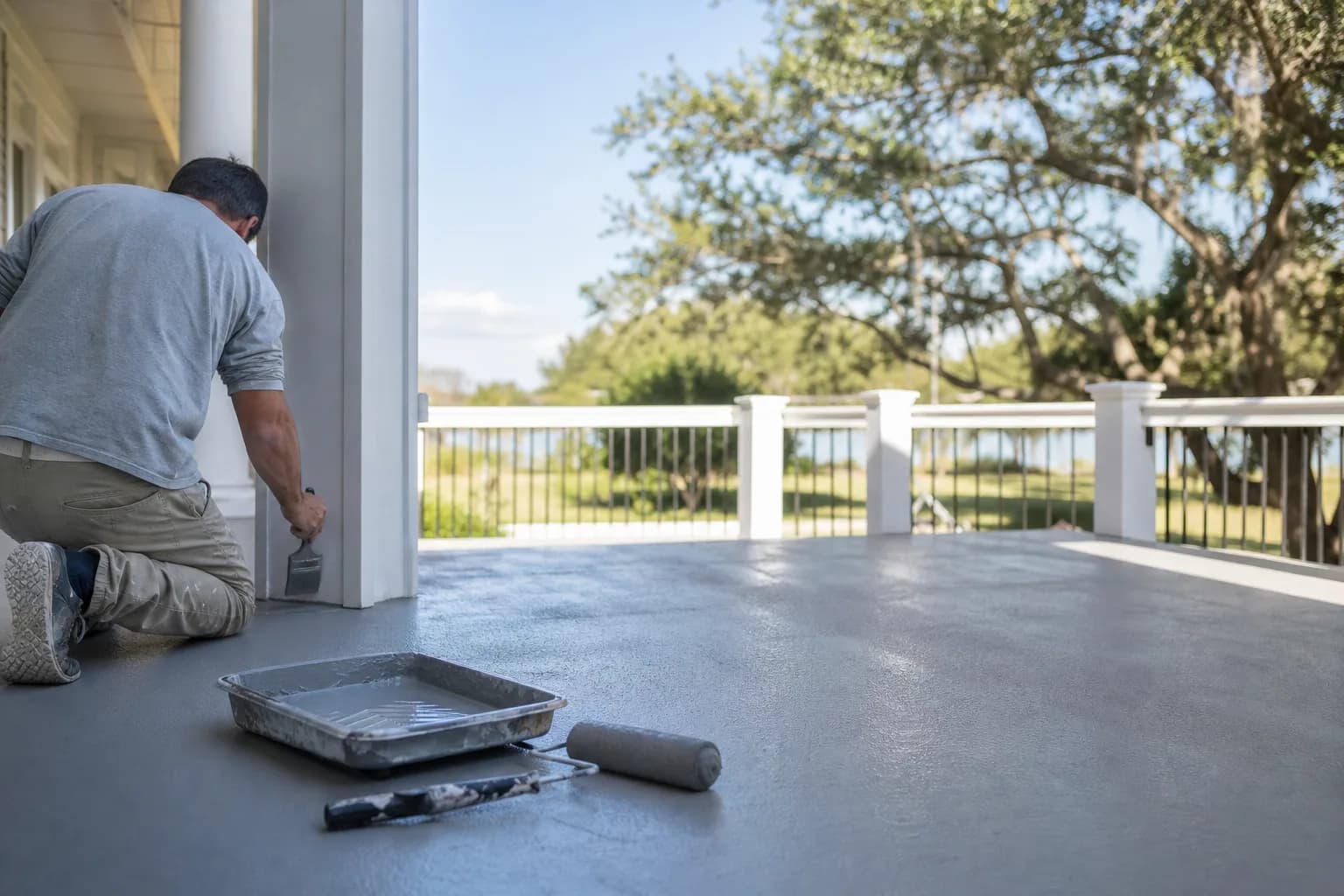
A painted porch floor is one of the fastest, cheapest upgrades a Gulf Coast home can get — a tired gray slab turns crisp and clean in a weekend, and a covered porch frames the whole front of the house. It's also one of the most common floors we see fail early, peeling and tracking within a season, and the reason is almost never the paint. It's the slab underneath and the prep that got skipped. Painting a concrete porch floor that actually lasts here is mostly about what happens before the first coat.
This is the straight, do-it-right version: how we clean, open, and test a concrete porch or patio slab on the coast, what makes floor paint peel, the kind of paint that belongs on a floor, and the cure time most people cut short. Quick note on what this post is and isn't — Pro 1 does floor painting, a quality painted finish on concrete. If you're weighing epoxy against paint for a garage, that's a different question we cover separately.
Why concrete porch and patio floors fail early
Start with the part nobody enjoys hearing: when a painted concrete floor peels, the paint usually did its job and the slab did it in. Two things drive almost every early failure on the Gulf Coast.
The first is moisture from below. A porch or patio slab sits on grade, and concrete wicks ground water up through itself as vapor. If that vapor has nowhere to go because a finish sealed the top, it pushes the paint off from underneath — you get bubbling, then sheets lifting. The second is prep skipped on top: a slab that wasn't degreased keeps invisible grime under the coat, and a smooth, troweled, or previously sealed surface gives floor paint nothing to grip. Either one, and the finish lets go.
Our climate leans on both. Humidity keeps slabs damp longer, our rain keeps the ground wet, and hard sun bakes a covered porch's exposed edge. None of it is a reason not to paint a porch floor — it's the reason to prep it like the climate is trying to lift the paint, because here it is.
Clean and open the slab
A porch or patio floor that's seen a few summers is carrying more than it looks — grease, pollen, mildew, and often a flaking coat someone rolled on years ago. All of it has to come off, because a finish bonds to clean concrete, not to dirt or a failing previous layer. We degrease the whole slab, scrub off mildew and algae, and strip or remove any loose old paint back to a sound, well-bonded surface.
Then comes the step most weekend jobs skip: opening the surface. Smooth, troweled, or sealed concrete has a tight skin that paint can't penetrate, so it has to be etched — acid-etched or mechanically profiled — until it has a little tooth, like fine sandpaper. That profile is what lets the coat grip the pores instead of sitting on top waiting to peel. New slabs and slick old ones especially need it.
Test for moisture before you paint
This is the step that separates a porch floor that lasts from one that bubbles, and it costs almost nothing. Before any paint goes on a slab on grade, confirm it's dry enough to coat. The simple field check is the plastic test: tape a square of plastic sheeting flat to the concrete, leave it a day or so, then lift it. Condensation under the plastic, or a darkened patch on the slab, means the concrete is still passing vapor — and a finish over it will lift from underneath.
On a Gulf Coast slab, this gets skipped constantly, and it's the single most common reason a porch or patio repaint fails. If the slab reads wet, the moisture has to be dealt with before paint, not after. A day of patience here saves the whole job.
| Prep step | What it does | What happens if you skip it |
|---|---|---|
| Degrease and clean | Strips grease, mildew, and grime so paint can bond | The coat sits on contamination and lets go in patches |
| Etch or profile | Opens the tight surface so paint bites into the pores | Smooth concrete sheds the coat — peeling within a season |
| Moisture test | Confirms the slab isn't passing vapor before coating | Ground moisture pushes the finish off from underneath |
| Full cure time | Lets the finish reach real hardness and adhesion | Early traffic scuffs, tracks, and lifts a soft coat |
Use the right paint — and the right amount of patience
Two more things decide the outcome: what you put down and how long you wait. Use a paint made for concrete floors — a porch-and-floor paint built to take foot traffic, moisture, and UV. Wall paint has no business on a slab; it scuffs and fails fast. We prime where the product calls for it, then roll the floor paint on in thin, even coats inside the right temperature and humidity window, because a slab finish is just as sensitive to a hot, damp day as exterior siding is.
Then the hard part for most people: let it cure. Dry-to-touch is not cured. A porch floor that feels dry can still be days from full hardness, and walking or furniture on a soft coat scuffs and tracks it before it ever sets. We give the finish full cure time before traffic, and longer before anything heavy goes back. Here's the full sequence we run.
Clear and degrease the slab
We move everything off the porch or patio and strip out grime, grease, mildew, and any loose old paint. A finish bonds to clean concrete, not to dirt or a flaking previous coat, so this is where the job really starts.Open the surface by etching
We acid-etch or mechanically profile smooth, troweled, or sealed concrete so the floor paint can bite into the pores. A tight surface gives the coat nothing to grip and is a top cause of early peeling, especially on new or slick slabs.Test the slab for moisture
We tape down a plastic square and check for condensation underneath after a day. On a slab on grade, moisture means the concrete is passing vapor and has to be addressed before any paint goes on, not after.Patch cracks and rinse clean
We fill cracks and spalls with a concrete patch, then rinse and vacuum every speck of dust and etch residue. The finish has to bond to concrete, not to debris left in the pores.Prime and apply the right floor paint
We prime where the product calls for it, then roll on a paint made for concrete floors in thin, even coats — never wall paint — working inside the right temperature and humidity window for a clean cure.Let it fully cure before use
We give the finish full cure time before it's walked, and longer before furniture or heavy traffic returns. Rushing cure is how a fresh porch floor scuffs, tracks, or lifts early — patience is the last piece of prep.
Why is prep the real job when painting a concrete porch floor?
A painted concrete porch or patio floor isn't really a paint job — it's a prep job with paint at the end. Clean, open, dry, patched, coated, cured: skip any step and the slab finds it out within a season. Done in order, a quality painted floor brightens a porch or patio for years and recoats easily when it finally wears.
If your question is really about a garage rather than a porch, our guide to epoxy vs. paint for a coastal Alabama garage floor lays out that choice, and for a shop or warehouse slab see commercial shop floor painting on the Gulf Coast. For the bigger picture on slab and surface work, our commercial painting guide for Mobile and Baldwin County and our floor painting service page cover what we do and where.
The bottom line: a painted porch or patio floor lasts as long as the prep underneath it. Clean it, open it, prove it's dry, use a real floor paint, and let it cure — in that order. If you've got a tired slab you'd like to bring back, the next step is simple. Book a free in-home estimate, and we'll check the concrete honestly and email you a written quote within 24 hours.