
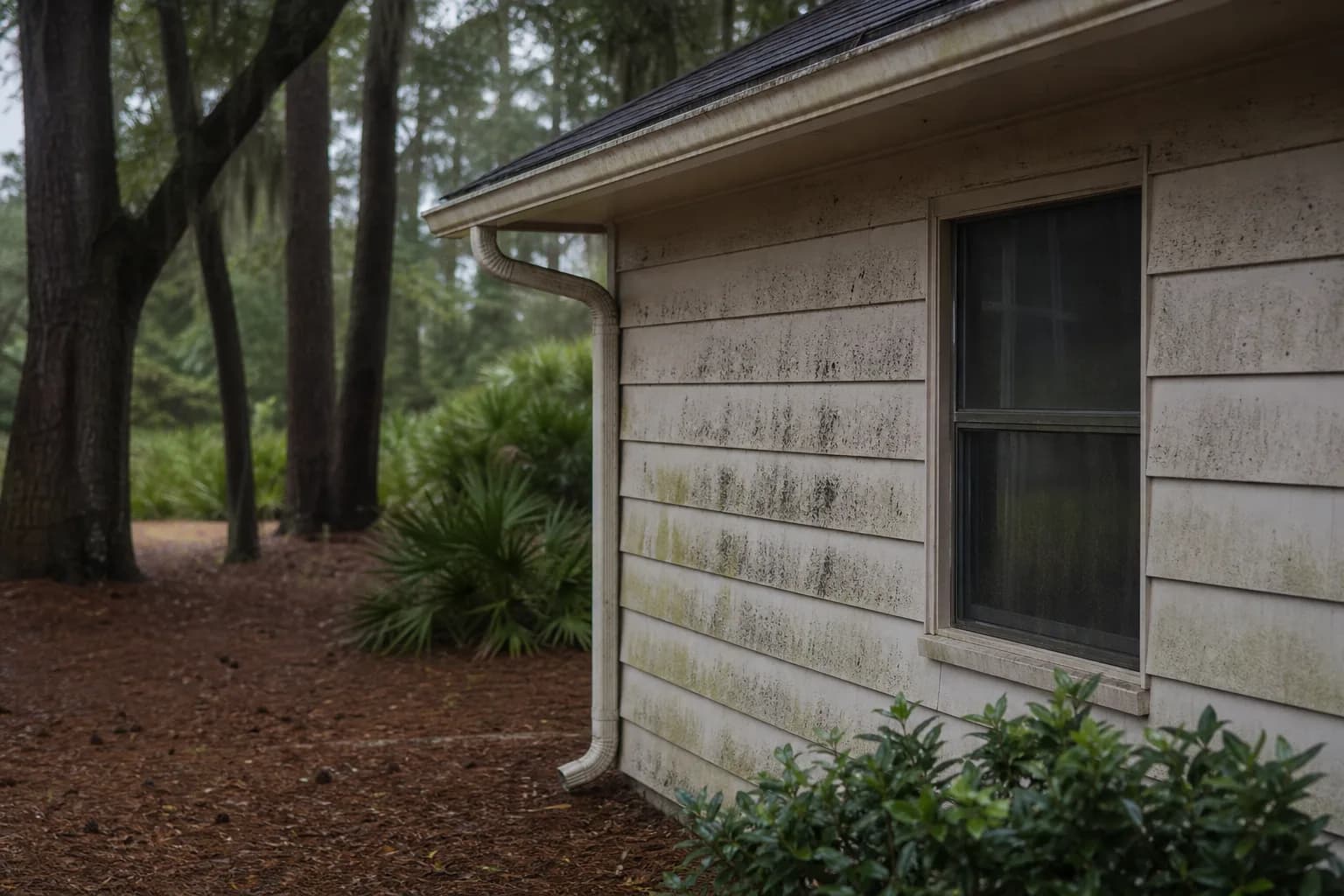
That green film creeping up the north side of your house, or the black speckles streaking the siding under the eaves, isn't dirt — it's alive. And it's the number-one reason a fresh exterior paint job starts failing within a season. Paint simply won't bond to mildew and algae, and worse, the growth keeps living under the new coat and bleeds right back through. On the Gulf Coast, where humidity and shade give it everything it wants, this is the prep step you cannot skip.
The good news: getting rid of it isn't complicated, but there's a right way and a useless way. Here's how to remove mildew and algae from your house exterior before painting — how to actually kill it, not just smear it around, and how to keep it from marching back across your fresh paint.
Why do mildew and algae love Gulf Coast homes?
Mildew and algae need three things to grow: moisture, shade, and a surface to cling to. Our climate hands them all three. Long humid stretches keep siding damp, afternoon shade on the north and east walls slows drying, and overhanging trees and shrubs trap the moisture against the house. That's why the growth almost always shows up worst on the shady side, under eaves, and behind the bushes you keep meaning to trim.
Knowing which is which helps you treat it:
- Algae is the green stuff — a film or streaks, usually on the shadiest, dampest walls.
- Mildew shows up as black or dark gray speckles and streaks, the kind people mistake for plain dirt until they try to wipe it off and it won't budge.
Both are biological growth, and both have to be killed at the root before any paint touches the wall.
The mistake almost everyone makes
Here's the trap: people rent a pressure washer, blast the siding until the green disappears, let it dry, and paint. A few months later it's back.
The reason is simple. Pressure washing rinses off the surface stain, but it doesn't kill the spores rooted in the siding. They're still there, alive, ready to regrow the moment humidity returns — now sealed under your fresh paint. Water alone removes the symptom, not the cause. To actually kill mildew and algae you need a cleaning solution and dwell time. The pressure washer is the rinse step, not the kill step — it comes after the chemistry has done its job.
How to remove mildew from your house exterior before painting
The reliable method is kill first, then rinse, then dry. Work in shade if you can so the solution doesn't dry on the wall before it works.
Identify and inspect
Walk the whole exterior, especially shady north-facing walls and spots under eaves and behind shrubs. Mark every patch of green algae and black mildew so you treat all of it, not just the obvious spots.Protect the surroundings
Wet down landscaping near the wall and cover delicate plants before you start, and put on eye protection and gloves. The solution that kills mildew isn't kind to plants or eyes.Apply a mildew-killing solution
Apply a diluted bleach solution or a dedicated exterior mildewcide to the affected siding, working bottom-up to avoid streaks running down dry siding.Let it dwell
Give it several minutes to kill the growth at the root. Keep the surface wet during that time — if the solution dries, it stops working and you'll have to reapply.Rinse thoroughly
Rinse from the top down with low to moderate pressure, washing off all the dead growth and solution. This is where a pressure washer helps — gently, as the rinse, not a blasting tool.Let it dry completely
Let the siding dry thoroughly — usually a day or more depending on the material, sun, and humidity — before you prime or paint. Painting damp siding traps moisture and invites peeling and new mildew.
A note on pressure: too much force damages wood and fiber-cement siding and drives water behind it, which causes its own problems down the road. Easy does it on the rinse. Cleaning is the first move in a proper prep sequence — there's more to why pressure washing comes first on an exterior paint job than just getting the wall clean.
How to keep mildew and algae from coming back
Killing it before you paint is half the battle. Keeping it gone is about denying it the moisture and shade it needs:
- Open up sun and airflow. Trim back shrubs, branches, and vines touching or shading the walls. More light and air means faster-drying siding and slower regrowth.
- Keep water moving away from the house. Make sure gutters and downspouts drain away from the walls, and fix any drip or splash that keeps a section of siding wet.
- Use the right paint. A quality exterior paint built for a humid coastal climate resists growth far better than a bargain can. Choosing a mold-resistant exterior paint for the humid Gulf Coast buys you years before you see a speck again.
Even done perfectly, our climate means you may eventually see some return on the shadiest walls — but a real kill plus good airflow and the right paint keeps it slow and easy to wash off, instead of a problem eating your new finish.
The bottom line
You can't paint your way out of mildew and algae — you have to kill it first. Treat the growth with a real mildewcide, give it dwell time, rinse it clean, let the siding dry, and only then prime and paint. Skip the kill step and you're just sealing the problem under fresh paint. For the full picture of doing it right in our climate, see our exterior house painting guide for the coast, or read more about the exterior painting service itself.
Don't want to wrestle a pressure washer and a ladder? That's what we're for. Book a free in-home estimate and we'll inspect the growth, handle the prep the right way, and give you a written quote within 24 hours — so the paint goes on a surface that'll actually hold it.