
Specialty coatings are paint systems engineered for one tough job standard wall paint can't handle — bridging cracks, sticking to bare metal, fighting mildew, sealing porous masonry, or taking foot traffic. You step up to one only when the surface has a specific, repeating problem; on a sound surface with ordinary exposure, a quality acrylic over good prep is still the smarter, cheaper call. The skill is matching the product to the real problem instead of over-coating.
Most of the time, the answer to "what should we use on this?" is that quality acrylic and good prep. But every so often we walk a surface and a regular paint is simply the wrong tool — a stucco wall that cracks again every year, a steel handrail bleeding rust through its last coat, a bathroom that grows mildew no matter what goes on it, a chalky concrete-block wall that drinks paint and chalks right back. That's where specialty coatings come in. Here's a plain-English tour of the specialty coatings we actually use on the Gulf Coast — and, just as important, how to tell when a surface really needs one versus when standard paint will do just fine.
What "specialty coating" actually means
A specialty coating is paint built for a specific problem. The binder, the thickness, and the additives are tuned for a demand that would overwhelm ordinary wall paint — flexing over cracks, gripping bare metal, fighting mildew, sealing porous masonry, or taking foot traffic. You brush, roll, or spray them like any paint, but you reach for one when the surface or the exposure is beyond normal.
The Gulf Coast pushes more surfaces past normal than most places. Salt air corrodes metal, humidity feeds mildew, wind-driven rain hunts for cracks, and hard sun punishes everything. So the question we ask on every job is the same: is this a standard-paint surface, or has it got a specific problem that needs a specific tool?
The specialty coatings we actually use
Here's the short list of specialty paint systems worth knowing, what each one solves, and the kind of surface it belongs on.
| Coating | Solves | Belongs on |
|---|---|---|
| Elastomeric | Hairline cracks, wind-driven rain | Sound, dry stucco & masonry |
| Mildew-resistant | Surface mildew in humid rooms | Bathrooms, laundry, wet rooms |
| Direct-to-metal (DTM) | Rust, bare or galvanized steel | Railings, fences, structural steel |
| Masonry / block filler | Chalky, porous, unsealed block | Concrete block, brick, stucco |
| Floor paint | A durable painted floor finish | The right interior & porch floors |
Elastomeric — for stucco that won't stop cracking
Elastomeric is a thick, rubbery, high-build coating that bridges hairline cracks and seals a wall against wind-driven rain. On exposed Gulf Coast stucco and masonry that crack again every season, it's exactly the right tool. The catch: it's far less breathable than standard paint, so over a damp wall or bare wood it traps moisture and peels. It belongs on sound, dry masonry — never wood siding. We go deep on this in elastomeric vs acrylic paint for Gulf Coast stucco and the judgment call of when to use elastomeric coating — and when not to.
Mildew-resistant — for rooms that stay wet
Mildew-resistant paint carries a mildewcide in the film that discourages surface mildew. In a humid Gulf Coast bathroom or laundry room it does real work — but only on a clean, dry, primed surface, and only after the moisture problem is solved. It's a specialty product for the wettest rooms, not a whole-house default. We cover where it pays off in anti-mildew and mold-resistant paint for Gulf Coast homes.
Direct-to-metal (DTM) — for rust and bare steel
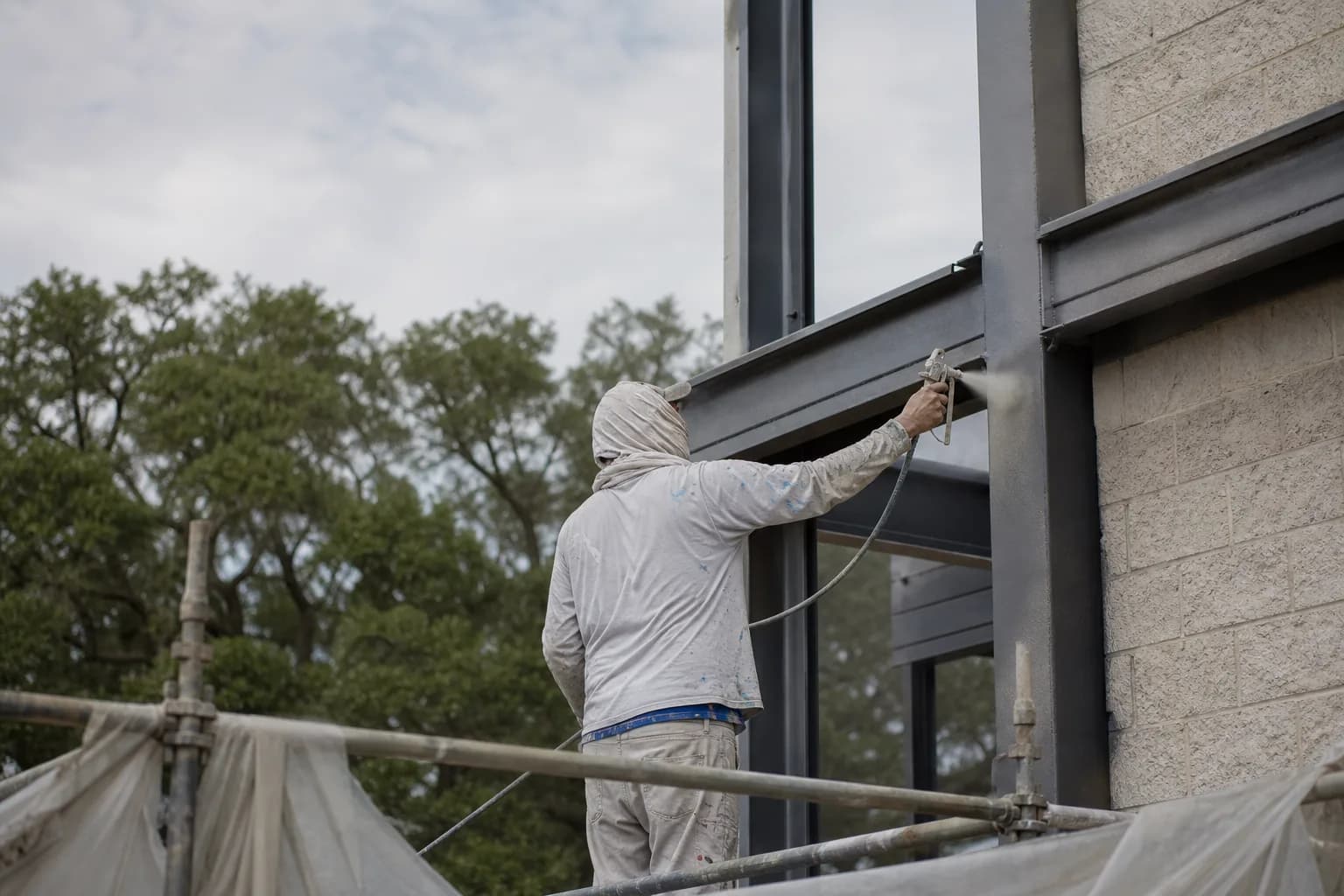
Salt air is brutal on metal. Direct-to-metal coatings are formulated to bond to bare or lightly rusted steel and galvanized surfaces and to slow corrosion, often without a separate primer. Handrails, fences, gates, and structural steel on commercial buildings are the usual candidates. The work is in the prep — knocking rust back to a sound surface — because no DTM film outlasts the rust left underneath it.
Masonry & block filler — for chalky, thirsty walls
Bare concrete block, brick, and stucco are porous and often chalky. A masonry paint or block filler seals and bridges that texture so the topcoat has something sound to grip, instead of soaking in and chalking back. It's a common first step on commercial block walls before a finish coat.
Floor paint — a painted finish for the right floors
Floor paint is a durable painted finish for floors that take foot traffic — the right interior and porch floors. Our floor service is floor painting: a quality painted finish on a floor that's a good candidate for one. We'll tell you honestly when a painted floor is the right call for your space and when it isn't. You can read more on our floor painting page.
How do you tell when standard paint is enough?
The honest truth is that most surfaces don't need a specialty coating. A sound stucco wall, a dry interior, a clean wood-sided home — these are standard-paint jobs, and a quality acrylic over good prep will serve them for years. Reaching for a heavy specialty product where there's no special problem just costs more and, in some cases, creates the very moisture trouble you were trying to avoid.
So the decision comes down to a specific, repeating failure. Use this quick read:
Name the real problem first
Cracking, rust, mildew, chalking masonry, or foot traffic — identify the specific failure the surface keeps having. The problem, not the product label, decides which specialty coating (if any) fits.Confirm the surface is sound and dry
Specialty coatings are demanding about what they bond to. Rule out a moisture source behind the wall, repair active cracks, and knock back rust or chalk before any heavy film goes on.Match the product to the demand
Pick the system built for that exact job — elastomeric for stucco cracks, direct-to-metal for steel, mildew-resistant for wet rooms, masonry paint for porous block, floor paint for the right floors — and skip it where standard paint will do.Prep and apply as a system
Wash, repair, prime where required, and apply in full coats per the product. With specialty coatings the prep and the number of coats matter even more than with ordinary paint.
When in doubt, get a real read on the surface
A specialty coating is a great answer to the right question and an expensive mistake to the wrong one. The whole job is matching the product to the actual problem — and ruling out the cases where standard paint, plus the prep you should've done anyway, is the smarter call. That's a judgment best made standing at the wall, especially in Gulf-Coast humidity where a trapped-moisture mistake shows up fast.
Most of our specialty work shows up on commercial painting jobs — block walls, structural steel, stucco that takes the weather head-on — but it comes up on homes too, on stucco, masonry, metal railings, and wet rooms. If you've got a surface that keeps failing no matter what you put on it, book a free estimate and we'll tell you straight whether it needs a specialty coating, a better standard paint, or just real prep — and put the recommendation in a written quote within 24 hours.